What Unit Is Telescope Aperture Measured in?
How Telescope Aperture Gets Measured
The direct answer is simple: telescope aperture is measured in millimeters (mm). That’s the standard unit used across the industry. If you see a telescope listed as “70mm” or “130mm,” the number refers to the diameter of its main optical element — the lens or mirror — in millimeters.
Sometimes you’ll also see aperture listed in inches, especially in older catalogs or American-made scopes. But millimeters are the go-to unit for the vast majority of modern telescopes. Think of it like tire sizes on a car. Most people use one standard, even if another pops up now and then.
What Aperture Actually Means on a Telescope
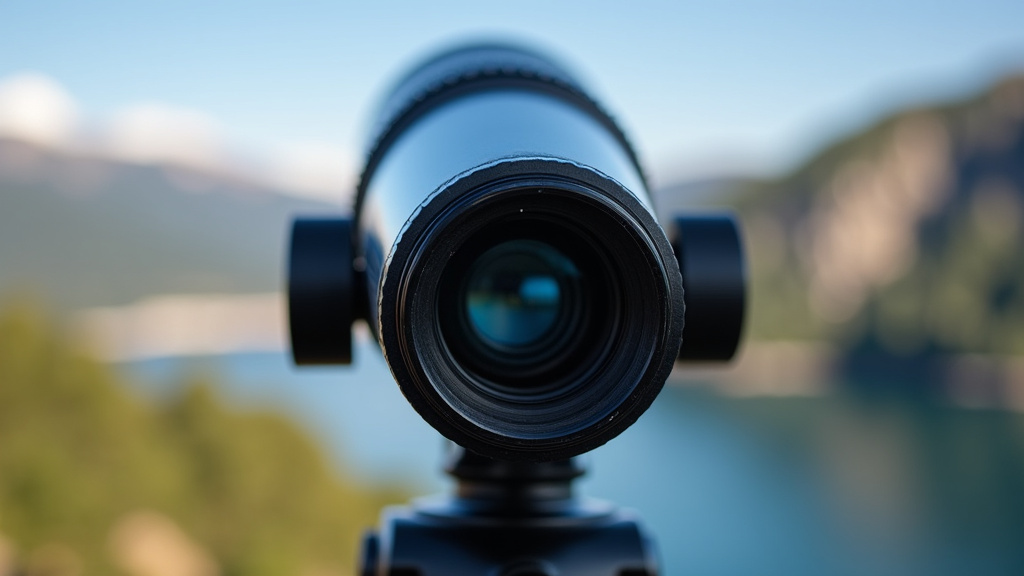
Aperture is the diameter of the opening that collects light. It’s not a depth or a weight. It’s a width across a circle. Picture a bucket catching rainwater. The wider the bucket’s opening, the more water it catches. A telescope’s aperture works the same way. A bigger opening means more light enters the scope.
That light-gathering ability is the single most important job a telescope does. Everything else — the eyepiece, the mount, the camera — builds on what the aperture delivers. Without a solid aperture, even the fanciest accessories can’t save the view.
Why Aperture Beats Magnification Every Time
Many beginners fixate on magnification. They want to zoom in as far as possible. But here’s the truth: a small telescope cranked to high power will look dim, blurry, and disappointing. A larger aperture keeps images sharp and bright. In fact, you can use a low-power eyepiece on a big-aperture scope and still see far more detail than a tiny scope at maximum zoom.
Think of it like a camera. A bigger sensor captures more detail and handles low light better. Aperture is your telescope’s “sensor size.”
The Standard Unit: Millimeters (mm)
Millimeters are the universal measurement for aperture. Every telescope manufacturer — from beginner-friendly brands to professional observatories — lists aperture in mm. It’s a precise, consistent unit that leaves little room for confusion.
A millimeter is about the width of a pencil tip. It’s a small unit, but it adds up fast. A 100mm telescope has an opening about 4 inches across. That’s big enough to see the rings of Saturn and craters on the Moon with great clarity.
When Inches Show Up
You’ll sometimes see aperture described in inches. This is common in the United States and in older telescope catalogs. A “6-inch” telescope, for example, has a 152mm aperture. It’s the same scope — just a different way of saying the same number.
Here’s a quick conversion reference to keep things simple:
| Aperture in Inches | Aperture in Millimeters | Common Use |
|---|---|---|
| 2.4 inches | 60mm | Entry-level, portable |
| 3.1 inches | 80mm | Budget refractors |
| 4.7 inches | 120mm | Mid-range, versatile |
| 6 inches | 152mm | Deep-sky targets |
| 8 inches | 203mm | Intermediate to advanced |
| 12 inches | 305mm | Advanced, serious observing |
So if you’re shopping and see a “5-inch scope,” you can quickly multiply by 25.4 to get the millimeter equivalent. It’s not complicated, but knowing both units helps when you’re comparing models.
Why Aperture Changes Everything
Aperture doesn’t just measure a telescope’s size. It determines what you can see. A bigger aperture gathers more light, which means you can observe fainter objects. Nebulae, galaxies, and star clusters all become visible with more light-gathering power.
Research from amateur astronomy groups confirms this over and over. The Telescope Collectors Forum, for instance, reports that beginners who start with at least 70–80mm aperture tend to stick with the hobby longer. That extra brightness makes stargazing far more rewarding.
Brightness and Image Detail
There are two key benefits to a larger aperture. First, you get a brighter image. Stars and planets look cleaner and more vivid. Second, you get better resolution. The finer details on Jupiter’s cloud bands or the moon’s craters become visible.
Resolution is about how much detail you can distinguish. A 150mm telescope can see features on the Moon that a 60mm telescope simply cannot. The math is baked in — bigger aperture, more detail. No trick needed.
Common Telescope Aperture Sizes for Stargazers
Knowing which aperture size fits your needs makes shopping easier. Here’s a quick checklist to guide you:
- 60–70mm — Great for casual viewing of the Moon and bright planets. Affordable and light.
- 80–100mm — A solid step up. Better for Saturn’s rings and some star clusters.
- 120–150mm — Good for deep-sky objects like the Orion Nebula. A real sweet spot for hobbyists.
- 200mm+ — Serious stargazing territory. You’ll see galaxies and faint nebulae with ease.
- 300mm+ — Advanced gear. More weight and cost, but the views are stunning.
Each size has a sweet spot. The right one depends on your budget, your space, and your goals. A 130mm telescope, for example, is a popular choice for intermediate users who want a balance of portability and performance.
Matching Aperture to Your Goals
Ask yourself a simple question: what do you want to look at? If the answer is “the Moon,” a smaller aperture will work just fine. If you want to spot distant galaxies, you’ll need a larger opening.
Many astronomy clubs recommend starting with at least 80mm if you’re serious about the hobby. That gives you enough light to explore a wide range of targets without breaking the bank. A group in the UK found that 80mm is the lowest threshold where beginners start seeing real detail in deep-sky objects.
How to Find the Aperture on Your Telescope
Look at the telescope’s tube or body. The aperture is usually printed right on the label. You might see something like “D = 100mm” or just “100mm.” That’s your aperture.
If the label is worn or missing, you can measure it yourself. Use a ruler or measuring tape across the widest part of the lens or mirror. Be careful not to scratch anything. The diameter in millimeters is your aperture. Simple as that.
Aperture and Focal Length: Two Sides of the Same Coin
People often confuse aperture with focal length. They’re different things. Aperture is how wide the opening is. Focal length is how far the light travels from the lens or mirror to the eyepiece.
Both matter, but they do different jobs. Focal length affects how zoomed-in an image looks. Aperture affects how bright and sharp it is. A telescope with a 1000mm focal length and 80mm aperture will feel different from one with 1000mm focal length and 130mm aperture.
The F-Ratio Explained
The f-ratio is simply the focal length divided by the aperture. It’s written as f/4, f/6, f/8, and so on. A lower f-ratio (like f/4) means a wider field of view and faster image capture. A higher f-ratio (like f/10) means narrower views and longer exposure times.
For visual stargazing, the f-ratio matters less than the aperture itself. But if you’re getting into astrophotography, the f-ratio becomes more important. A fast f/4 scope will capture light much quicker than an f/10 scope.
Think of it this way: aperture is the size of your pizza. Focal length is the size of your slice. Both shape the experience, but the pizza size (aperture) determines how much pizza you actually have.
Why Millimeters Won Out Over Other Units
Millimeters became the standard for telescope aperture because they’re precise and consistent. The metric system is used in nearly every country, which helps manufacturers and buyers speak the same language. Whether you’re in Ohio or Osaka, “130mm” means the same thing.
Another reason mm works so well is that telescope apertures range from about 50mm to over 4000mm. Using millimeters gives a clean, easy-to-compare number across that range. Inches work too, but they’re less precise for smaller scopes.
Real-World Example: A Common Beginner Scope
Let’s take the popular Celestron AstroMaster 70AZ. Its aperture is 70mm. That’s about 2.8 inches. It’s compact, light, and perfect for beginners who want to see the Moon and basic planets.
Now consider a Celestron NexStar 8SE. Its aperture is 203mm — roughly 8 inches. That’s a whole different level. You’ll see deep-sky objects with more detail. The numbers tell the story, and they’re always in millimeters.
Summary of Key Points
Let’s wrap up with a quick recap. Here’s what you should remember about telescope aperture measurement:
- Aperture is measured in millimeters (mm) — it’s the diameter of the main lens or mirror.
- Conclusion
Telescope aperture is measured in millimeters (mm). This standard unit tells you the diameter of the lens or mirror. You now know that a bigger aperture gathers more light, leading to brighter and more detailed views. This simple measurement is the most important spec for any telescope. It determines what you can see, from lunar craters to distant galaxies.
Your next step is simple. When you shop for a telescope, look for the aperture in millimeters first. Use the guide above to match a size to your stargazing goals. A 70mm scope is great for the Moon, while a 150mm opens up the night sky. Focus on aperture to start your hobby right.
Frequently Asked Questions
How do I measure the aperture on my telescope?
You can measure the aperture by finding the diameter of the main lens or mirror. Use a ruler to measure across the widest part of the opening in millimeters. If the label is missing, this simple measurement gives you the correct aperture size.
Is a telescope’s aperture always in millimeters?
Millimeters are the standard unit, but you may see inches in older or American catalogs. A “6-inch” telescope is the same as a 152mm model. Always check the millimeter number for a precise and consistent comparison between different scopes.
What aperture size should a beginner start with?
We recommend starting with at least 80mm for a rewarding experience. This size provides enough light to see planets and some deep-sky objects clearly. A 70mm scope is fine for casual Moon viewing, but 80mm and above help you see more detail.
Does aperture affect how much I can zoom?
No, aperture and zoom are different. Aperture controls brightness and detail. Zoom (magnification) comes from the eyepiece. A large aperture telescope will give you clearer views at any magnification, while a small one will look dim if you zoom in too much.
What is a good aperture size for seeing galaxies?
For galaxies, you need a larger aperture to gather enough light from faint objects. We found that 200mm (8 inches) or larger is ideal for viewing galaxies like Andromeda. Smaller apertures can show the Moon and planets well, but deep-sky objects require more light.