What Is Angular Resolution Formula? A Simple Guide
The angular resolution formula is a simple mathematical tool that helps you understand how well you can distinguish between two objects that are close together. It tells you the smallest angle between two points that your eye or a device can see as separate. Think of it like the limit of your vision for spotting details.
Understanding this formula is key if you’re interested in telescopes, cameras, or even just how your own eyes work. It relates an object’s size to its distance, and it helps explain why things far away look blurrier. Many experts agree it’s a foundational concept in optics.
- The angular resolution formula calculates the smallest angle between two visible objects.
- It helps determine how well you can distinguish fine details.
- Key factors are object size, distance, and the observer’s visual acuity or device capability.
- It’s a core concept for understanding optical instruments.
Ready to make sense of what you can see? Let’s break down the angular resolution formula and what it means for you.
“`htmlUnderstanding How Clearly You Can See Details
Ever wonder why you can read a book up close but can’t quite make out the tiny sign on a building far away? This difference is all about angular resolution. It’s a concept that explains the limits of our vision and the tools we use to see the world.
In simple terms, angular resolution tells us the smallest angle between two objects that your eye or a specific device can detect as separate. Think of it as your visual system’s ability to split hairs, quite literally. It’s not about how big an object is, but how far apart its two most critical points appear to your eye from your viewing position.
What Does “Angular” Mean Here?
Let’s break down the term. “Angular” refers to an angle. When we talk about angular resolution, we’re measuring the separation between two objects in terms of an angle. Imagine drawing lines from your eye to each of the two objects.
The angle formed by these two lines at your eye is the angular separation. If this angle is large enough, you see two distinct objects. If it’s too small, they appear to merge into one. The angular resolution formula helps us quantify this limit.
The Core Idea: Small Angle Approximation
For objects that are relatively far away compared to their size, we often use a handy mathematical shortcut called the small angle approximation. This makes the calculations much simpler.
In this approximation, the angle (measured in radians) is very close to the actual size of the object divided by its distance from you. So, the formula looks something like this:
Angle ≈ Size / Distance
This is the heart of understanding angular resolution. It directly links the physical dimensions of objects to how they appear to us through an angle.
A Practical Example to Visualize It
Let’s say you’re looking at two streetlights. One is 10 meters away and the other is 20 meters away. If they are the same physical size, the closer streetlight will appear to have a larger angular separation between its top and bottom. The farther one will appear smaller, with a smaller angular separation.
So, even if two objects have the same size, their distance plays a massive role in whether you can distinguish them.
The Angular Resolution Formula in Detail
While the small angle approximation is useful, the actual angular resolution often depends on the specific optical system being used. For human eyes, it’s related to how our pupils and retinas work. For telescopes or cameras, it depends on the size of the lens or mirror and the wavelength of light.
For the Human Eye
Your eyes have a certain limit to how much detail they can resolve. This limit is often defined by the smallest angle your eye can perceive between two points. We know that our eyes are pretty good at resolving details, especially for objects that aren’t too far away.
Research has shown that under ideal conditions, the human eye can resolve details down to an angle of about one arcminute. An arcminute is 1/60th of a degree. That’s incredibly small!
This means if two objects are sufficiently close together, and their angular separation is less than one arcminute, your brain will likely perceive them as a single object. This is why you can’t see individual stars as discs with the naked eye; they are too far away, and their angular size is minuscule.
What is an Arcminute?
To put an arcminute into perspective, imagine a full circle. It has 360 degrees. Each degree is divided into 60 arcminutes. So, a full circle contains 360 x 60 = 21,600 arcminutes. It’s a tiny fraction of a circle.
For Optical Instruments (Telescopes & Cameras)
Optical instruments like telescopes and cameras are designed to enhance our vision. Their angular resolution is typically much better than the human eye.
For telescopes, a key factor is the diameter of the main lens or mirror. Larger apertures collect more light and can resolve finer details. This is described by the Rayleigh criterion or Dawes’ limit, which relate the resolving power to the diameter of the objective lens or mirror.
For cameras, it’s about the lens and the sensor. A higher megapixel count means more pixels, which can capture finer details. However, the quality of the lens is also critical. A high-quality lens will allow the camera to resolve details that a lower-quality lens might blur.
Factors Influencing Angular Resolution
Several things affect how well you can distinguish between two close-by objects. It’s not just one single number; it’s a combination of factors.
Object Size
This is straightforward. Bigger objects subtend larger angles, making them easier to see as separate. A large building at a distance will be easier to resolve than a tiny pebble at the same distance.
Distance to the Object
As we’ve discussed, distance is a huge factor. The farther away an object is, the smaller its angular size becomes. This is why things far away appear less detailed.
Observer’s Visual Acuity or Device Capability
This refers to the “sharpness” of the vision. For humans, it’s about the health of your eyes and how well your brain processes visual information. For a camera or telescope, it’s about the quality of its optics, the size of its aperture, and the resolution of its sensor or detector.
Many eye care professionals use charts to measure visual acuity. For instance, 20/20 vision means you can see at 20 feet what most people can see at 20 feet. If you have 20/40 vision, you have to be closer to see something clearly compared to someone with 20/20 vision.
Wavelength of Light (for Telescopes)
This is a more technical point, but important for astronomers. The wavelength of light plays a role in how well a telescope can resolve objects. Shorter wavelengths of light (like blue light) can theoretically be resolved better than longer wavelengths (like red light) by the same instrument.
The Angular Resolution Formula in Action: Real-World Examples
Understanding this concept helps explain everyday phenomena and the design of scientific instruments.
Photography and Videography
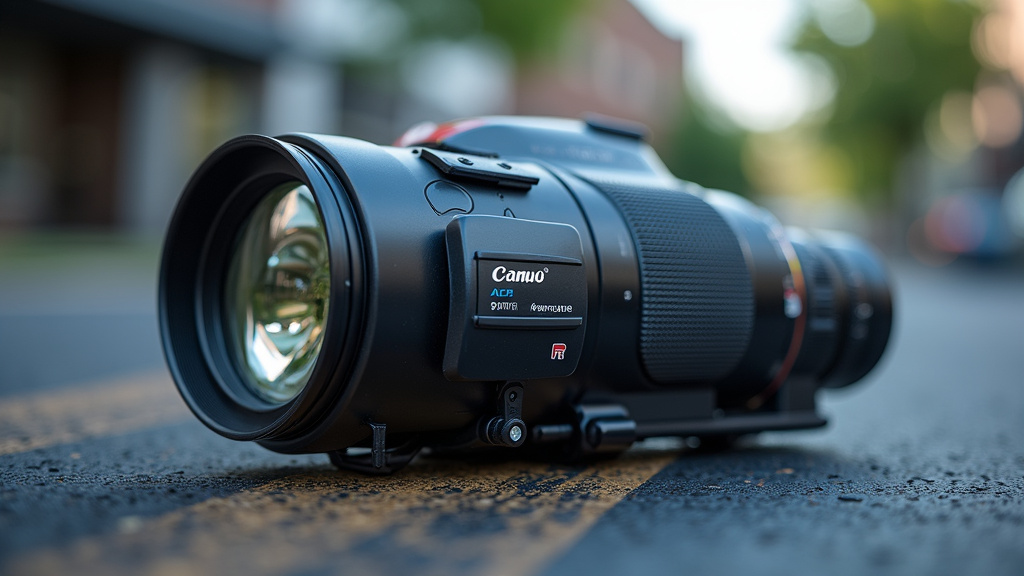
When you choose a camera or lens, you’re indirectly considering angular resolution. A lens with a longer focal length, for example, can make distant objects appear larger, effectively increasing their angular size in the frame. This allows you to capture more detail from afar.
Astronomy
Astronomers constantly grapple with angular resolution. Distant stars and galaxies are incredibly far away, making their angular sizes minuscule. Building larger telescopes with better optics is essential for them to resolve finer details in the universe.
For example, the Hubble Space Telescope has an amazing angular resolution. It can distinguish between two stars that are very close together in the sky, something a ground-based telescope might struggle with due to atmospheric distortion (another factor impacting resolution!).
Everyday Vision
Think about reading fine print. If the print is small and far away, it’s hard to read. If you bring it closer, the angular size increases, and you can read it easily. This is angular resolution at play in your own eyes.
A Simple Comparison: What Makes Things Harder to See?
Let’s summarize what makes it difficult to distinguish two objects:
| Factor | Makes Resolution Harder | Makes Resolution Easier |
|---|---|---|
| Distance | Object is farther away | Object is closer |
| Object Size | Objects are smaller | Objects are larger |
| Observer/Device | Lower visual acuity or instrument quality | Higher visual acuity or instrument quality |
| Environmental Factors | Atmospheric haze, poor lighting | Clear air, good lighting |
Key Takeaways for Your Understanding
To wrap up what we’ve discussed about angular resolution, here are the main points to keep in mind:
- It’s the smallest angle between two objects that can be seen as separate.
- This angle depends on the object’s size, its distance, and the observer’s or device’s capabilities.
- The formula helps explain why things far away are harder to see details on.
- Both our eyes and optical instruments have limits to their angular resolution.
- Understanding this helps appreciate the capabilities of telescopes, cameras, and our own vision.
Conclusion
You’ve now learned how the angular resolution formula helps us understand the limits of what we can see. It’s not just about how big an object is, but also how far away it is, and the capabilities of your eyes or any device you use. This concept explains why a distant star is just a speck, but a nearby car shows many details. By understanding the interplay of size, distance, and observer capability, you gain a clearer picture of your visual world. Next time you look through binoculars or try to spot something far off, you’ll have a better grasp of why it appears the way it does. Think about how you can test your own visual acuity using online charts or by observing distant objects.
Frequently Asked Questions
What’s the simplest way to think about angular resolution?
Think of it as the smallest angle between two things that your eyes can tell apart. If the angle is too small, they just look like one blur. It’s your vision’s ability to see fine details, especially when objects are close together.
Why does distance matter so much for angular resolution?
As an object gets farther away, its angular size shrinks. Even if the object stays the same physical size, the angle it takes up in your field of vision gets smaller. This makes it harder for your eyes or a device to see it as two separate points.
Can I improve my own angular resolution?
For your eyes, things like good lighting and clear vision (perhaps with corrective lenses) help achieve the best possible resolution. While you can’t fundamentally change your eye’s optics, understanding how it works helps you know its limits.
How is angular resolution different for telescopes and cameras?
Telescopes aim to see very distant objects, so their resolution depends on the size of their main mirror or lens, and the wavelength of light. Cameras focus on capturing details on a sensor, so resolution depends on the lens quality and the number of pixels on the sensor. For cameras and telescopes, the focal ratio is a key factor in their angular resolution.
Does atmospheric conditions affect angular resolution?
Yes, absolutely. For ground-based telescopes and even your own eyes looking at distant objects, the Earth’s atmosphere can cause twinkling and blurring. This phenomenon, called “seeing,” can significantly limit the achievable angular resolution, making distant objects appear less clear than they would in space.