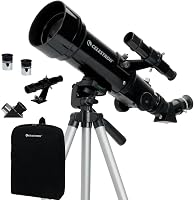
What Is a Refracting Telescope? The Key Facts
On this page (7 sections)
A refracting telescope is a type of telescope that uses lenses to bend and focus light, creating a magnified image. A compact catadioptric design is the Maksutov-Cassegrain telescope. It’s one of the most basic and oldest telescope designs. These telescopes are excellent for viewing bright objects like planets and the moon.
Unlike other telescopes, refractors rely solely on glass lenses to gather and magnify light. This means they have fewer moving parts, making them generally more durable. They are often a great starting point for amateur astronomers and stargazers.
- Refracting telescopes use lenses to magnify.
- They are ideal for viewing planets and the moon.
- They are known for being durable and simple.
- This design is one of the oldest telescope types.
Ready to learn more about how these classic instruments work and what makes them special? Let’s dive into the key facts about refracting telescopes.
Understanding How Refracting Telescopes Work
So, what exactly makes a refracting telescope do its magic? It all boils down to a clever use of glass. These telescopes are built to bend light. They use precisely shaped lenses to gather light from distant objects. Then, they focus that light to create a larger, clearer image. Our guide to what the f-number means in astronomy explains how focal length relates to light gathering.
Think of it like a magnifying glass, but on a much grander scale. You hold a magnifying glass over text, and the letters appear bigger. A refracting telescope does something similar for the stars and planets you want to see. It collects a lot of light and concentrates it so you can see details that are invisible to your naked eye.
The Role of Lenses: Objective and Eyepiece
The heart of any refractor is its lens system. There are two main lenses involved in this process. The first, called the objective lens, is the largest lens at the front of the telescope. Its job is to capture the light coming from space.
This objective lens is specially curved. This curvature is key to bending, or refracting, the light rays. It bends them inward, bringing them to a focal point. The larger the objective lens, the more light it can gather. More light means you can see fainter objects and finer details.
The second lens you’ll interact with is the eyepiece lens. This is the smaller lens you look through. It takes the focused light from the objective lens and magnifies it further. This is what actually makes the distant object appear bigger.
How Light Travels Through a Refractor
Imagine you’re looking at the moon. Light rays from the moon travel in straight lines towards your telescope. These rays enter the front of the telescope and hit the large objective lens. Because of its curved shape, the objective lens bends these incoming light rays.
All the bent rays converge at a single point behind the lens. This point is called the focal point. At this focal point, a small, inverted (upside-down) image of the moon is formed. It’s like a miniature picture created by the telescope.
Next, the eyepiece lens is positioned so that its focal point aligns with the telescope’s focal point. When you look through the eyepiece, it acts like a magnifying glass for that small, inverted image. It enlarges this image, presenting you with a bright, magnified view of the moon.
Key Components and Their Functions
Beyond the lenses, a refracting telescope has a few other important parts. These components work together to hold the lenses and allow you to point and focus the telescope.
The Telescope Tube
The tube is the main body of the telescope. It’s typically a long cylinder made of metal or plastic. The primary purpose of the tube is to hold the objective lens securely at the front and the eyepiece holder at the back.
The tube also plays a critical role in blocking out stray light. Light from other sources, like streetlights or your own porch light, can interfere with your view. A well-designed tube prevents this unwanted light from reaching the objective lens. This ensures a clearer, sharper image of your celestial target.
The Mount and Tripod
You can’t hold a telescope by hand and expect a steady view. That’s where the mount and tripod come in. The tripod provides a stable base on the ground. The mount attaches to the tripod and then holds the telescope tube.
There are different types of mounts. Some are simple and allow you to move the telescope up, down, left, and right. Others are more sophisticated, designed to track the movement of the stars across the sky. A stable mount is absolutely essential for good astronomical viewing. Even the slightest tremor can make your target jiggle out of view.
The Focusing Mechanism
Once you’ve pointed your telescope at an object, you need to bring it into sharp focus. This is done using a focusing mechanism. It’s usually a knob or a set of knobs on the side of the eyepiece holder.
When you turn the knob, it moves the eyepiece back and forth slightly. This adjustment changes the distance between the eyepiece and the focal point created by the objective lens. Finding the sweet spot where the image is sharpest is called focusing. It’s a simple but vital step for getting a clear view.
Advantages of Refracting Telescopes
Refractors have been around for centuries for good reason. They offer several distinct benefits, especially for certain types of observing.
Durability and Low Maintenance
One of the biggest pluses is their durability. Since the lenses are sealed inside the tube, they are protected from dust and moisture. Unlike some other telescope designs, the optics don’t typically need frequent cleaning or alignment.
Many experts say this makes them a great choice for beginners who may not want to fuss with constant adjustments. You can take it out of storage, point it at the sky, and start observing relatively quickly. This simplicity is a huge advantage for casual stargazers.
Excellent Contrast and Sharpness
Refractors are known for producing very sharp and high-contrast images. Because the light path is relatively simple and doesn’t involve mirrors, there’s less chance of optical aberrations, or flaws. This is particularly true for the planets.
You’ll find that planets like Jupiter and Saturn often show striking detail through a good refractor. You can observe the rings of Saturn or the cloud bands on Jupiter with remarkable clarity. This makes them fantastic for planetary astronomy.
Portability for Smaller Models
While large refractors can be quite bulky, smaller models are very portable. A compact refractor can easily fit in a backpack or the trunk of your car. This makes them ideal for taking to dark sky sites away from city lights.
Some smaller refractors are even small enough to be used on a tabletop mount. This adds to their convenience and ease of use for spontaneous observing sessions. You don’t need a lot of setup time.
Limitations of Refracting Telescopes
No telescope design is perfect for every situation. Refractors do have some drawbacks you should be aware of.
Chromatic Aberration: The Color Fringing Problem
The main optical issue with simple refractors is called chromatic aberration. This happens because a simple lens bends different colors of light slightly differently. When light from a bright object passes through the lens, the colors don’t all focus at the exact same point.
What you see is a halo of color, usually purple or blue, around bright objects. It can make images look a bit fuzzy. While more advanced refractors use multiple lens elements to correct this, simpler ones can show this effect quite noticeably. We found this is most common on very bright objects like the moon’s edge.
Cost and Size for Larger Apertures
Getting a large objective lens for a refractor is very expensive. The larger the lens, the more difficult and costly it is to manufacture perfectly. This means that large-aperture refractors are generally much more expensive than comparable-sized reflectors.
For instance, a 6-inch (150mm) refractor will likely cost significantly more than a 6-inch reflector. This price difference often pushes amateur astronomers towards reflector telescopes when they want to gather more light without breaking the bank.
Magnification Limits and Field of View
While refractors offer sharp images, there are practical limits to how much you can magnify. Pushing the magnification too high can make the image dimmer and wash out details. This is true for all telescopes, but it’s a factor to consider.
Additionally, some refractors, especially those with longer focal lengths, can have a narrower field of view. This means you see a smaller patch of the sky at any one time. It can sometimes be harder to locate faint, widespread objects like nebulae.
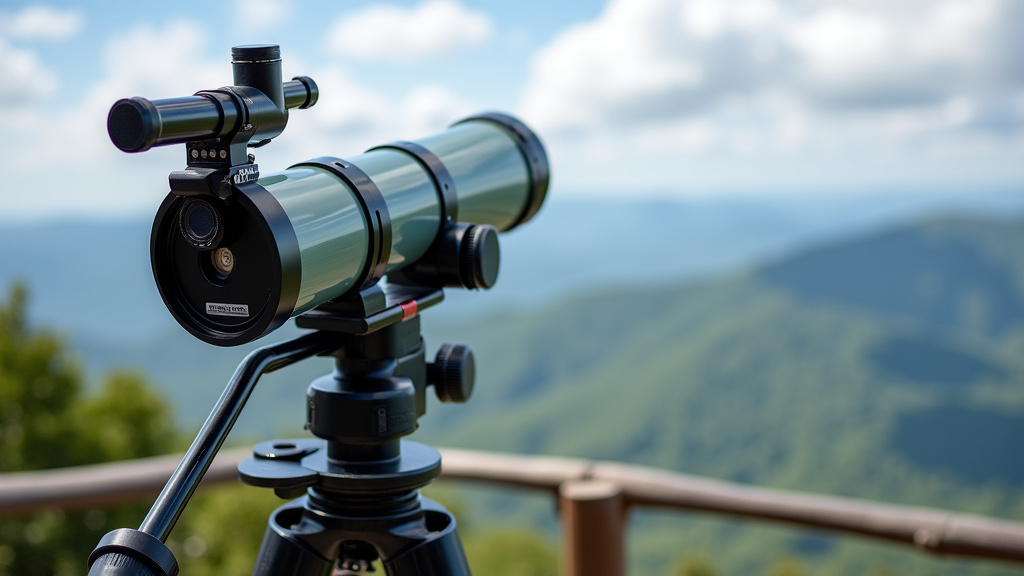
Who Are Refracting Telescopes Best For?
Given their strengths and weaknesses, who should consider a refracting telescope?
Beginners and Casual Stargazers
Their simplicity and durability make them an excellent choice for those just starting out. If you want a telescope you can set up easily and enjoy without a steep learning curve, a refractor is a solid option. We’ve found many beginners appreciate this ease of use.
Planetary and Lunar Observers
For anyone particularly interested in viewing the moon and planets, refractors shine. The high contrast and sharpness they offer are perfect for seeing the details of these bright celestial bodies. If planets are your passion, a refractor is hard to beat.
Those Seeking Low Maintenance
If you prefer a telescope that requires minimal fuss and upkeep, a refractor is ideal. Its sealed optical path means less exposure to the elements and less need for frequent cleaning. It’s a great set-it-and-forget-it type of instrument.
Quick Checklist for Refractor Telescopes
Here’s a quick rundown to help you remember the key features:
- Uses lenses to bend and focus light.
- Features an objective lens and an eyepiece lens.
- Known for sharp, high-contrast images, especially of planets.
- Generally durable and requires less maintenance.
- Can suffer from chromatic aberration (color fringing) in simpler models.
- Larger apertures can become very expensive.
Conclusion
You’ve learned that a refracting telescope is a classic optical instrument. It uses lenses to gather and magnify light, making it great for viewing planets and the moon. We’ve seen how its simple design offers durability and sharp, high-contrast images. While it has limitations like chromatic aberration and higher costs for large sizes, its low maintenance and ease of use make it a favorite for many.
Ready to start your stargazing journey? Consider a refractor if you’re a beginner or love planetary observation. Your next step is to explore different models and find the right refractor that fits your observing goals and budget.
Frequently Asked Questions
What is the main advantage of a refracting telescope for beginners?
Refracting telescopes are generally very durable and require little maintenance. For beginners, this means less time spent on upkeep and more time actually observing the night sky. You can often take them out of storage and use them without much fuss.
Can you see deep-sky objects like galaxies with a refractor?
While refractors excel at viewing bright objects like planets and the moon, they are less ideal for faint, deep-sky objects like galaxies and nebulae. Larger aperture telescopes, often reflectors, gather more light, which is necessary for these fainter targets.
What causes the color fringing seen in some refractors?
This color fringing, known as chromatic aberration, happens because a simple lens bends different colors of light slightly differently. This causes the colors to not focus at precisely the same point, creating a halo around bright objects. More advanced refractors use multiple lens elements to reduce this effect.
Are refracting telescopes good for astrophotography?
Some refractors can be excellent for astrophotography, especially those with good chromatic aberration correction. Their sharp images are a plus. However, for very deep-sky objects, larger aperture telescopes are generally preferred to gather sufficient light.
How does the size of the objective lens affect a refractor’s performance?
The objective lens is the primary light-gathering component. A larger objective lens collects more light, allowing you to see fainter details and objects. It also contributes to higher potential magnification without sacrificing image brightness as much.