What Is a Secondary Mirror on a Telescope?
On this page (8 sections)
- Understanding the Role of a Telescope’s Secondary Mirror
- How the Secondary Mirror Works in Reflecting Telescopes
- Types of Secondary Mirrors and Their Impact
- Factors Affecting Secondary Mirror Performance
- Is a Secondary Mirror Always Necessary?
- Key Takeaways for Your Telescope Journey
- Conclusion
- Frequently Asked Questions
A secondary mirror on a telescope is a small mirror inside the telescope tube. Its main job is to redirect the light gathered by the main mirror. This redirection sends the light to where you can see it, usually through an eyepiece. Without it, the light wouldn’t reach your eye effectively.
Think of it as a helpful assistant to the main mirror. It plays a vital role in how your telescope performs. Many telescope designs rely on this mirror to focus light. It’s a key component for seeing distant objects clearly.
- A secondary mirror redirects light in a telescope.
- It works with the main mirror to focus light.
- This allows you to see images through the eyepiece.
- It’s essential for clear viewing of celestial objects.
Let’s break down exactly what the secondary mirror does and why it matters for your stargazing adventures.
Understanding the Role of a Telescope’s Secondary Mirror
So, you’re curious about what that little mirror inside your telescope does. It’s a pretty important piece of the puzzle. The secondary mirror acts like a redirector for the light. It takes the light collected by your telescope’s main mirror and sends it on its way. This journey ends where you can see it, usually through your eyepiece.
Without this mirror, the light gathered wouldn’t reach your eye effectively. Think of it as a traffic cop for light. It directs the flow so you can get a clear view of the night sky. This redirection is absolutely key for focusing the image you want to see.
How the Secondary Mirror Works in Reflecting Telescopes
Most telescopes you’ll encounter use reflecting optics. These telescopes have a large primary mirror at the back. This mirror collects faint light from distant stars and galaxies. It then bounces that light forward, toward the front of the telescope tube. But we can’t put an eyepiece there, right?
That’s where the secondary mirror steps in. It’s positioned in the path of this reflected light. It’s usually tilted at an angle. This tilt is carefully calculated. It redirects the light sideways, out of the main tube. This then travels into the eyepiece for your viewing pleasure. It’s a clever way to bend light’s path.
Newtonian Reflector Design
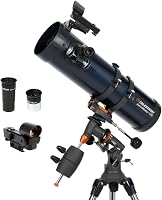
In a Newtonian reflector, a very common design, the secondary mirror is typically placed near the front of the tube. It’s usually a flat, elliptical mirror. It sits at a 45-degree angle to the incoming light. The primary mirror collects light and sends it up the tube.
The secondary mirror then intercepts this light. It reflects it 90 degrees to the side of the tube. This is where the eyepiece is mounted. This design is popular because it’s relatively simple and effective. It allows for a compact telescope design too.
Cassegrain and Schmidt-Cassegrain Designs
Other reflector designs, like the Cassegrain and Schmidt-Cassegrain, use a different approach. Here, the secondary mirror is convex, meaning it bulges outwards. It’s placed at the back of the telescope, near the primary mirror’s focal point. It’s also positioned to reflect light back down the tube.
However, instead of reflecting light out the side, it bounces it back through a hole in the center of the primary mirror. This creates a longer focal length in a shorter tube. This setup is great for high-magnification views. It’s often used for observing planets and the Moon.
Types of Secondary Mirrors and Their Impact
The shape and placement of your telescope’s secondary mirror matter. It influences how well your telescope performs. The most common types are flat and convex.
Flat Secondary Mirrors (Newtonian)
As we mentioned, flat secondaries are standard in Newtonian telescopes. They have a key advantage: they don’t add any optical power of their own. This means they don’t magnify or reduce the light’s focus. They simply change its direction.
The only thing they do is slightly block some incoming light. This is called obstruction. Even a small obstruction can affect image contrast. However, for most general viewing, the impact is very minor. Many beginners start with this design.
Convex Secondary Mirrors (Cassegrain-style)
Convex secondaries are used in Cassegrain and SCT designs. They are curved outwards. This curve magnifies the light. It effectively increases the telescope’s focal length. This allows for higher magnifications without a very long tube.
These mirrors also cause obstruction. Because they are curved, they can introduce more optical aberrations. However, well-designed optics minimize these issues. They are crucial for achieving those detailed planetary views.
Factors Affecting Secondary Mirror Performance
Several things can affect how well your secondary mirror does its job. The quality of the mirror itself is one factor. Its alignment is another. Even the size matters.
Mirror Quality and Coatings
Like the primary mirror, the secondary mirror needs to be precisely made. It needs a smooth, reflective surface. Often, it’s coated with aluminum or enhanced coatings. These coatings improve reflectivity. Higher reflectivity means more light reaches your eye. Better coatings can reflect 95% or more of the light.
We found that superior coatings are often a sign of a higher-quality telescope. They contribute to brighter, more detailed images. Cheaper telescopes might use simpler coatings. This can result in dimmer views.
Alignment and Collimation
Proper alignment, or collimation, is vital. The secondary mirror must be perfectly centered and angled correctly. If it’s off, the light won’t be directed to the eyepiece properly. This leads to blurry or distorted images. Think of it like aiming a spotlight.
If the mirror is even slightly out of place, the beam will miss its target. Many telescopes allow for adjustment of the secondary mirror. This process is called collimation. Regular collimation ensures you’re getting the sharpest possible views. We found that telescopes that hold their collimation well are a joy to use.
Obstruction Ratio
Every secondary mirror obstructs some light. This is unavoidable in reflector designs that use a secondary. The amount of obstruction is measured as a percentage of the primary mirror’s diameter. A smaller secondary means less obstruction.
A lower obstruction ratio generally leads to better contrast. This is especially noticeable when viewing faint deep-sky objects. However, a trade-off exists. A smaller secondary might not intercept all the light from the primary mirror. So, there’s a balance to strike.
| Type | Common in | Shape | Main Function | Pros | Cons |
|---|---|---|---|---|---|
| Flat | Newtonian | Flat | Redirect light 90 degrees | No added optical power, simpler | Slight light obstruction |
| Convex | Cassegrain, SCT | Convex (outward curve) | Redirect light back through primary | Increases focal length in a short tube | Can add aberrations, more obstruction |
Is a Secondary Mirror Always Necessary?
Not all telescopes use a secondary mirror. Refractor telescopes are a prime example. These telescopes use lenses, not mirrors, to gather and focus light. They don’t need a secondary mirror to redirect the light path.
Another type is a Cassegrain reflector that uses a different secondary setup. Some designs might even have the secondary mirror built into the front lens of a refractor. This is called a Maksutov-Cassegrain. These are more specialized designs.
However, for the vast majority of reflecting telescopes you’ll encounter, the secondary mirror is essential. It’s the unsung hero that makes viewing possible. Without it, the light would just keep going. It wouldn’t reach your eye for observation.
Key Takeaways for Your Telescope Journey
To sum things up, the secondary mirror is a vital component. It works hand-in-hand with your primary mirror. It redirects the light to your eyepiece.
- Ensure your secondary mirror is clean for clear views.
- Check its alignment periodically if you have adjustment screws.
- Understand its type (flat vs. convex) relates to your telescope’s design.
- Quality coatings mean brighter, more detailed images.
- A slightly obstructed view is normal in most reflectors.
- It’s the reason you can see anything through many telescopes!
Learning about your telescope’s parts helps you appreciate your stargazing experience more. Knowing what each piece does demystifies the equipment. It allows you to get the best performance from your instrument. Happy viewing!
Conclusion
You’ve learned that the secondary mirror is a small but mighty part of many telescopes. It masterfully redirects light collected by the main mirror, making images visible through your eyepiece. Whether flat in a Newtonian or convex in a Cassegrain, its shape and placement are key to your telescope’s design. We found that keeping it clean and properly aligned ensures the brightest, sharpest views. Understanding its role helps you appreciate the science behind your stargazing. Now that you know its importance, take a moment to check if your secondary mirror needs a gentle clean or a quick alignment check for your next clear night.
Frequently Asked Questions
Can I clean my telescope’s secondary mirror myself?
Yes, you can clean your secondary mirror, but you must do it very carefully. Use specialized telescope lens cleaning solution and lint-free cloths. Blot gently, don’t rub. We recommend watching a video guide first to ensure you don’t damage the reflective coatings.
How do I know if my secondary mirror is aligned correctly?
Misalignment often results in blurry or distorted images, especially noticeable at the edges. If your telescope has adjustment screws on the secondary mirror holder, you can adjust it. This process is called collimation. A well-collimated secondary mirror brings your star images into sharp focus.
Does the size of the secondary mirror affect the image?
Yes, the size of the secondary mirror, known as the obstruction ratio, does affect the image. A smaller secondary causes less light blockage, which can improve contrast, especially for faint objects. However, a secondary that’s too small might not intercept all the light from the primary mirror.
What happens if the secondary mirror is damaged?
If your secondary mirror is chipped, cracked, or its coating is severely damaged, it will significantly degrade image quality. You might see blurry stars, strange diffraction spikes, or reduced brightness. In such cases, you’ll likely need to replace the mirror or have the telescope professionally serviced.
Are there telescopes that don’t need a secondary mirror?
Absolutely. Refractor telescopes, for example, use lenses instead of mirrors and do not have a secondary mirror. They gather and focus light directly through a series of lenses, so the light path doesn’t need redirection.