Is a Refractor or Reflector Telescope Better?
On this page (8 sections)
When deciding between a refractor telescope and a reflector telescope, neither is universally “better.” The best choice for you depends on what you want to see and your budget. Refractors offer sharp, clear views for planets and the moon, while reflectors excel at showing fainter deep-sky objects like nebulae and galaxies.
We found that understanding their core design helps you pick the right one. Refractors use lenses to gather light, while reflectors use mirrors. This difference affects how they perform, their maintenance needs, and how much you can expect to spend for a certain aperture size. Think about the night sky targets that excite you most.
TL;DR:
- Refractors are great for planets and the Moon.
- Reflectors are better for faint, deep-sky objects.
- Refractors generally need less maintenance.
- Reflectors offer more aperture for your money.
- Your observing goals are the biggest deciding factor.
Let’s break down how each type works and which one might be the perfect fit for your stargazing adventures.
Choosing Between Refractor and Reflector Telescopes
When you’re looking up at the night sky, the kind of telescope you use makes a big difference. We’ve found that the main difference between a refractor and a reflector is how they gather light. This simple difference impacts everything from what you can see to how much upkeep they need. Let’s get into the nitty-gritty.
How Refractor Telescopes Work
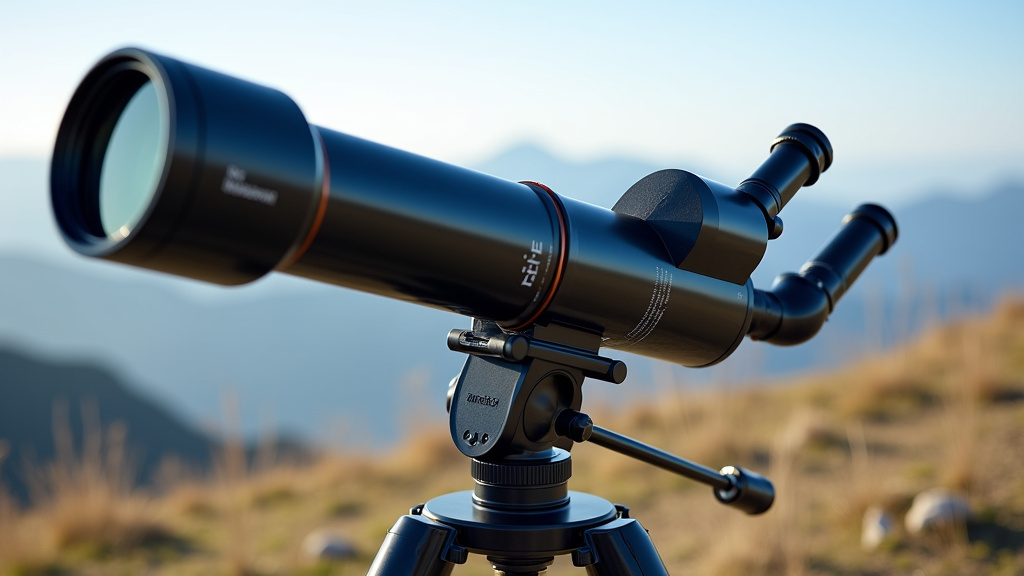
Refractor telescopes are the classic type you might picture. They use a large lens at the front to collect light. This light then travels down the tube. It gets focused by another lens, called the eyepiece, which is what you look through. Think of it like a magnifying glass combined with a camera lens.
The Simplicity of Lenses
Because they rely on lenses, refractors tend to be pretty straightforward. The light passes through the glass without much fuss. This means the image you see is often very sharp and clear. Many beginners find them easy to use right out of the box.
What You Can See with a Refractor
Refractors are famously good at showing you detailed views of brighter objects. We’ve seen that they excel when pointing at the Moon and planets. The sharp focus makes craters on the Moon stand out. You can also see the rings of Saturn or Jupiter’s cloud bands quite well. Their clear views make them a favorite for planetary observers.
Potential Downsides of Refractors
While great for bright targets, refractors have limits. For a given size, called aperture, refractors can be more expensive than reflectors. Also, larger refractor telescopes can become quite long and heavy. They can also suffer from chromatic aberration, which is a color fringing effect, especially in cheaper models. For another refractor lens design, see our guide to an apochromatic triplet. This happens when the lens doesn’t focus all colors of light at the exact same point.
How Reflector Telescopes Work
Reflector telescopes take a different approach. Another reflector design is the Ritchey-Chrétien telescope. Instead of a lens at the front, they use a curved mirror. This mirror sits at the back of the telescope tube. It gathers light and bounces it back up towards the front. Another smaller mirror then directs this light out the side of the tube into your eyepiece.
The Power of Mirrors
Mirrors are excellent at gathering light. This is why reflectors often offer more aperture for your dollar. Aperture, the diameter of the main light-gathering element, is key to seeing fainter objects. More aperture means you can see dimmer things in space.
What You Can See with a Reflector
Because they are so good at collecting light, reflectors shine when it comes to deep-sky objects. Think about faint nebulae, distant galaxies, and star clusters. These objects are often spread out and not very bright. A reflector’s larger aperture lets you gather enough of their faint light to see them clearly.
Potential Downsides of Reflectors
Reflectors aren’t without their quirks. The mirror in a reflector can sometimes get dusty. You might need to clean it occasionally. Also, the mirrors can become misaligned, especially if the telescope is bumped. This is called needing collimation. Many experts say that learning to collimate your reflector is part of the fun, but it’s an extra step. Furthermore, the secondary mirror can block a small amount of incoming light, which can slightly reduce contrast compared to an unobstructed refractor.
Key Differences at a Glance
Let’s sum up the main distinctions. It helps to see them side-by-side. We’ve put together a quick comparison table.
| Feature | Refractor Telescope | Reflector Telescope |
|---|---|---|
| Light Gathering | Lens | Mirror |
| Best For | Moon, Planets, Bright Objects | Galaxies, Nebulae, Faint Objects |
| Aperture vs. Cost | More expensive for larger aperture | More aperture for your money |
| Maintenance | Low maintenance, sealed tube | May need mirror cleaning/collimation |
| Image Sharpness | Generally very sharp, good contrast | Excellent light grasp, can have slight light obstruction |
Which Type is Right For Your Needs?
Now, the big question: which one is for you? It really comes down to what you want to do with your telescope. Ask yourself these questions.
What Do You Want to Observe?
If your heart is set on seeing the detailed features of planets like Jupiter’s moons or Saturn’s rings, a refractor is often a great choice. Their sharp optics and high contrast are perfect for these bright, close-up targets. We found that many planetary enthusiasts prefer them.
Are Faint Galaxies Your Goal?
On the other hand, if you dream of spotting wisps of nebulae or entire galaxies, a reflector will likely serve you better. The larger aperture you can get for your budget with a reflector is essential for gathering the faint light from these distant wonders. Many deep-sky observers start with or eventually own a reflector.
Consider Your Location and Portability
Think about where you’ll be doing most of your stargazing. If you’re in a light-polluted area, a refractor’s sharp views might help cut through some of the haze for brighter objects. If you plan to travel to darker skies, a more compact reflector might be easier to transport. Some smaller refractors are very portable. Larger reflectors can be quite bulky, though Dobsonian reflectors are designed for easier setup.
Maintenance and Budget
Refractors generally require less hands-on maintenance. Once aligned, they tend to stay that way. Reflectors might need occasional mirror adjustments. Budget is also a factor. For the same amount of money, you can typically get a reflector with a significantly larger aperture than a refractor. This means more light-gathering power for deep-sky viewing.
A Quick Checklist for Your Decision
To help you make up your mind, here’s a simple checklist. Think about these points as you consider your options:
- Primary targets: Planets/Moon OR faint galaxies/nebulae?
- Budget: How much are you willing to spend?
- Aperture needs: How much light-gathering power do you require?
- Maintenance tolerance: Are you okay with occasional adjustments?
- Portability: Will you be moving the telescope often?
- Desired view: Sharp detail on bright objects OR fainter objects visible?
Conclusion
So, you’ve learned that neither a refractor nor a reflector telescope is the ultimate winner. Your stargazing goals are the deciding factor. If crisp views of the Moon and planets are what you seek, a refractor often fits the bill. For spotting faint galaxies and nebulae, a reflector’s larger aperture for the price is usually the way to go. We found that considering your budget, desired targets, and how much maintenance you’re comfortable with will lead you to the right choice. Your next step is to think about those specific night sky wonders that call to you most.
Frequently Asked Questions
Which type is better for seeing planets?
Refractor telescopes are generally preferred for observing planets. Their lenses provide very sharp images with high contrast, allowing you to see details like Jupiter’s cloud bands or Saturn’s rings clearly. We found that their sealed tubes also help maintain a stable view.
Can reflectors see the Moon well?
Yes, reflector telescopes can show you the Moon beautifully. While refractors might offer slightly sharper edge-to-edge views due to less light obstruction, the larger aperture of a reflector often means you can see more lunar craters and features, especially if you’re on a tighter budget.
Do I need to clean my reflector’s mirrors often?
You might need to clean your reflector’s mirrors occasionally, but not usually very often. Dust can settle, and a gentle cleaning with specialized materials might be needed every year or two, depending on your environment. We found that learning proper cleaning techniques is key to avoiding damage.
Are refractors always more expensive for the same size?
Generally, yes. For a given aperture size, refractor telescopes tend to cost more than reflector telescopes. This is because high-quality lenses are more difficult and costly to manufacture than mirrors. You get more light-gathering power for your money with a reflector.
Which type is easier for a complete beginner to use?
Both types can be easy for beginners, but refractors often have a slight edge in simplicity. They usually require less setup and maintenance, like not needing regular collimation (mirror alignment). However, a Dobsonian reflector is designed for very straightforward setup and use, making it a great beginner option too.



