What Is a Schmidt Cassegrain Telescope? A Clear Answer
On this page (7 sections)
A Schmidt Cassegrain telescope, often called an SCT, is a type of catadioptric telescope. This means it uses both mirrors and lenses to form an image. They are known for offering long focal lengths in a compact design, making them popular for observing planets and other celestial objects.
Think of it as a clever design that folds light paths. This allows for a long “reach” (focal length) without a tube that’s miles long. It combines a primary mirror and a secondary mirror with a corrector lens at the front. This combination corrects for optical aberrations, giving you clearer views.
- Schmidt Cassegrain telescopes use mirrors and lenses.
- They offer long focal lengths in a short tube.
- Ideal for observing planets and deep-sky objects.
- Compact and portable designs are common.
- They provide sharp, aberration-corrected images.
Ready to understand what makes these telescopes so special? Below, we’ll break down exactly how a Schmidt Cassegrain telescope works and what makes it a favorite among many stargazers.
How Schmidt Cassegrain Telescopes Work
So, what exactly makes a Schmidt Cassegrain telescope (SCT) tick? The term is explained in our guide to telescope power. It’s a clever blend of optics that allows for some pretty amazing views. These telescopes pack a lot of power into a relatively small package. They achieve this by folding the light path. This means you get a long focal length without needing a super long telescope tube.
The Optical Design Explained
At its core, an SCT uses three main optical components. There’s a large primary mirror at the back of the tube. This mirror gathers light. Then, there’s a smaller secondary mirror near the front. This mirror redirects the light back down the tube. Finally, a special corrector lens sits at the very front of the telescope.
The Role of Each Component
The primary mirror is like a giant bowl. It collects light from distant objects. The secondary mirror is positioned to bounce that collected light back towards the center of the primary mirror. But instead of going straight through, it’s directed towards a hole in the primary mirror. The corrector lens is the secret sauce. It sits at the front and corrects for optical flaws.
Why This Design is Smart
This folding of light is key. Imagine trying to get a long hose to reach across your yard. If you just unroll it, it takes up a lot of space. But if you loop it back and forth, you can make it shorter while still covering the same distance. That’s kind of what happens with the light in an SCT. It bounces around inside the tube, effectively lengthening the path light travels. This gives you the high magnification needed for seeing details on planets.
Key Advantages of Using an SCT
Why do so many stargazers choose Schmidt Cassegrains? There are several compelling reasons. These telescopes offer a fantastic balance of features. They are often recommended for both beginners and experienced astronomers.
Compact and Portable Nature
One of the biggest draws of an SCT is its compact design. Because the light path is folded, the tube can be much shorter than a traditional refractor or Newtonian telescope of the same focal length. This makes them easier to transport. You can fit them in a car for trips to darker skies. They are also easier to set up and take down in your backyard.
Versatility for Different Objects
SCTs are incredibly versatile. Their long focal lengths are excellent for observing the planets. You can see details on Jupiter’s clouds or Saturn’s rings. But they aren’t just for our solar system. Many SCTs have optical designs that allow them to perform well on fainter, more distant objects too. These are often called deep-sky objects, like nebulae and galaxies.
Excellent Image Quality
The corrector lens plays a vital role here. It helps to fix optical errors like chromatic aberration (color fringing) and spherical aberration (blurriness). This results in sharper, clearer images. You get to see celestial objects with more detail. Many users find the views to be very pleasing and easy on the eyes.
Understanding the SCT’s Optical Components in More Detail
Let’s dive a little deeper into the parts that make an SCT work. Understanding these components can help you appreciate the engineering behind these popular telescopes.
The Primary Mirror’s Function
The primary mirror is the main light-gathering component. It’s typically made of glass and has a specific curved shape. This curve, often a parabola, focuses incoming light. The larger the mirror, the more light it can collect. More light means you can see fainter objects and finer details. For example, a 6-inch SCT gathers significantly more light than a 4-inch model.
The Role of the Secondary Mirror
The secondary mirror is smaller and is placed in the light path of the primary mirror. Its job is to redirect the focused light from the primary mirror. It sends this light back through a hole in the center of the primary mirror towards the eyepiece. Without the secondary mirror, the light would simply focus at the front of the tube, which isn’t practical for viewing.
The Schmidt Corrector Plate: The Magic Ingredient
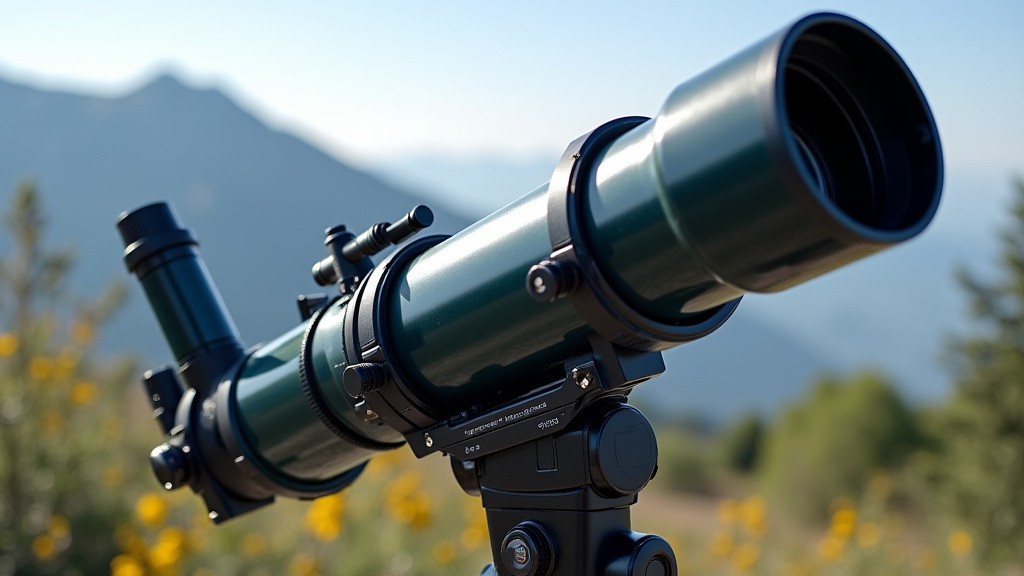
This is arguably the most unique part of the SCT design. The corrector plate is a thin, aspheric lens placed at the front of the telescope. It’s precisely shaped to counteract optical distortions. Specifically, it corrects for coma, a type of aberration that makes stars near the edge of the field of view look like tiny comets. It also helps to flatten the image field, meaning stars stay sharp across a wider area. This is a crucial element for achieving the high-quality images SCTs are known for.
Comparing SCTs to Other Telescope Types
How does an SCT stack up against other popular telescope designs? Knowing the differences can help you decide which type might be best for your needs.
SCT vs. Refractor Telescopes
Refractor telescopes use lenses to focus light. They are known for sharp, high-contrast images, especially good for planets. However, they can be expensive for larger apertures and longer focal lengths. They also suffer from chromatic aberration, though advanced designs minimize this. SCTs, on the other hand, offer larger apertures for their size and price. They have less chromatic aberration than basic refractors.
SCT vs. Newtonian Telescopes
Newtonian telescopes use a primary mirror but typically have a simpler optical path with no corrector plate. They are often the most budget-friendly option for a given aperture. They can provide excellent views of deep-sky objects. However, Newtonians tend to have longer tubes for their focal length. They can also suffer from coma, especially in budget models. SCTs are more compact and usually have better built-in aberration correction.
| Feature | Schmidt Cassegrain (SCT) | Refractor | Newtonian |
|---|---|---|---|
| Portability | Very good, compact | Varies, can be long | Varies, can be long |
| Image Quality | Sharp, good aberration correction | Very sharp, high contrast | Good, coma can be an issue |
| Price per Aperture | Mid-range | Higher | Lower |
| Best For | Planets, deep-sky, general use | Planets, lunar | Deep-sky, general use |
Choosing the Right SCT for You: A Quick Checklist
If you’re considering an SCT, here are a few things to keep in mind. This will help you make a more informed decision about what fits your stargazing goals.
- Consider your budget. SCTs range in price depending on size and features.
- Think about what you want to observe. Planets or galaxies?
- Check the aperture size. Larger apertures gather more light.
- Look at the mount. A sturdy mount is essential for stable views.
- Read reviews from other users. See what real astronomers are saying.
- Factor in accessories. Eyepieces and filters add to the cost.
Conclusion
You’ve learned that a Schmidt Cassegrain telescope (SCT) cleverly combines mirrors and lenses. This design lets you get a long focal length in a compact tube. SCTs are fantastic for viewing planets with their sharp details. They also perform well on fainter deep-sky objects. Their portability and good image quality make them a popular choice for many stargazers. If you’re looking for a versatile telescope that balances performance with convenience, an SCT is definitely worth considering for your next astronomical adventure.
Frequently Asked Questions
Are Schmidt Cassegrain telescopes good for beginners?
Yes, SCTs can be a great choice for beginners looking for a capable telescope. Their compact size makes them easier to handle and set up than longer telescopes. While they offer advanced optics, their operation is straightforward for observing.
What is the main advantage of an SCT’s corrector plate?
The corrector plate is essential for correcting optical aberrations. It helps to reduce issues like coma and spherical aberration and spherical aberration, leading to sharper and clearer views of celestial objects across the entire field of view.
Can I use an SCT for astrophotography?
Many SCTs are well-suited for astrophotography, especially for planetary imaging due to their long focal lengths. For deep-sky astrophotography, you might need accessories like a focal reducer and a robust equatorial mount to achieve the best results.
How does an SCT compare in price to other telescopes?
Generally, SCTs fall into a mid-range price category. They offer a good balance of aperture, optical quality, and portability for their cost. You often get more aperture for your money compared to a refractor telescope of similar quality.
What kind of maintenance do Schmidt Cassegrain telescopes require?
SCTs are relatively low-maintenance. You’ll want to keep the corrector plate clean and protected. Collimation, which is aligning the mirrors, may occasionally be needed to ensure optimal image sharpness.



