8 Best Computer Controlled Telescopes with Cameras (November 2026)
The best computer controlled telescopes with cameras include the ZWO Seestar S30 Pro Smart Telescope for automated deep-sky imaging, the Celestron AstroMaster 130EQ Telescope for Deep-Sky Beginners for manual deep-sky learning, and the Celestron Travel Scope 70mm Beginner Portable Telescope for portable visual observing.
On this page (4 sections)
The best computer controlled telescope with a camera for automated deep-sky imaging is the ZWO Seestar S30 Pro. It combines app control, automatic targeting and tracking, and integrated imaging; for visual observing with computer-guided pointing, the Celestron NexStar 8SE is a different kind of fit.
A camera and computerized mount solve separate problems. The mount helps find and follow a target, while the camera captures it; smart telescopes combine these roles, while traditional computerized scopes usually need a camera added separately.
Our picks at a glance
-
1
 Best for automated deep-sky imaging
ZWO Seestar S30 Pro Smart Telescope
9.7/10 our score
See it on Amazon -
2
 Best for manual deep-sky learning
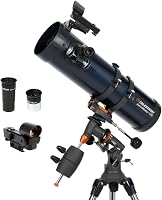
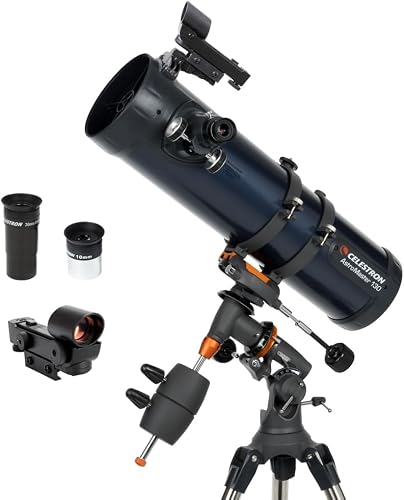
Celestron AstroMaster 130EQ Telescope for Deep-Sky Beginners
9.7/10 our score
See it on Amazon -
3
 Best for portable visual observing
Celestron Travel Scope 70mm Beginner Portable Telescope
9.6/10 our score
See it on Amazon
- 4
 Best for phone snapshotsCheck it
- 5
 Check it
Celestron NexStar 8SE Computerized Telescope
Best for computerized visual observing - 6
 Check it
DWARFLAB Dwarf 3 Smart Telescope
Best for portable app-controlled imaging - 7
 Best for a basic computer camera setupCheck it
- 8
 Check it
SVBONY SV305C Pro Telescope Camera
Best for high-frame-rate planetary capture
How we chose computer controlled telescopes with cameras
We compared the control method, imaging setup and intended use described for each option. The group includes all-in-one smart telescopes, computerized visual scopes, manual telescopes with phone support, and standalone cameras for adding to a compatible telescope.
A smart telescope can be a simpler path to deep-sky images because the camera and automated tracking work together. For a broader checklist of app control, portability and observing goals, see our smart telescope buying guide.
| Product | Best for | Imaging | Control | Weight | Our score |
|---|---|---|---|---|---|
| ZWO Seestar S30 Pro Smart Telescope | automated deep-sky imaging | Dual-camera 4K | App, automatic GoTo and tracking | 3.6 lb | 9.7 |
| Celestron AstroMaster 130EQ Telescope for Deep-Sky Beginners | manual deep-sky learning | Manual equatorial mount | 9.7 | ||
| Celestron Travel Scope 70mm Beginner Portable Telescope | portable visual observing | Manual altazimuth mount | 9.6 | ||
| Gskyer Telescope | phone snapshots | Manual altazimuth mount | 9.5 | ||
| Celestron NexStar 8SE Computerized Telescope | computerized visual observing | Computerized GoTo mount | 9.4 | ||
| DWARFLAB Dwarf 3 Smart Telescope | portable app-controlled imaging | Dual-camera system | App, automatic GoTo and tracking | 3 lb | 9.0 |
| SVBONY SV105 Telescope Camera | a basic computer camera setup | 8.7 | |||
| SVBONY SV305C Pro Telescope Camera | high-frame-rate planetary capture | 8.2 |
The best computer controlled telescopes with cameras
The Seestar S30 Pro is the clearest fit for integrated deep-sky capture, while the other picks serve visual observing, portability or a separate-camera workflow. Match the control style to what you want to do at the telescope.
ZWO Seestar S30 Pro Smart Telescope: Best for automated deep-sky imaging
- App-controlled GoTo targeting and tracking
- Dual-camera 4K imaging
- Built-in light-pollution filters
- Designed for deep-sky objects
An integrated smart telescope for app-guided capture, automatic tracking and deep-sky imaging. Its maker says it is not intended for planetary observation.
Pros
- Automatic targeting and tracking
- One-tap capture and processing
- Light-pollution filters
Cons
- Not intended for planetary observation
- Deep-sky imaging requires a stationary setup
The Seestar S30 Pro is the most direct choice here for automated imaging because it combines app control, GoTo targeting and tracking with a built-in camera system. ZWO describes it as designed for deep-sky objects, with one-tap modes for targets such as nebulae, galaxies and the Moon.
Its built-in light-pollution filters are intended to help with imaging from brighter urban settings. The system also offers automatic mosaic stitching and AI image processing, so you can capture and process images through its app.
This is an integrated imaging instrument rather than a traditional eyepiece telescope with a camera attached. ZWO says it is not intended for planetary observation, so choose another route if close planetary imaging is your main aim.
At 3.6 lb, it is a compact option for trips and outdoor use. Keep it stationary during deep-sky imaging, as stable placement supports accurate tracking.
Choose it when you want an automated smart telescope for deep-sky images with minimal separate gear. Our guide to the best smart telescopes for astrophotography compares more imaging-focused options, and the best smart telescope for beginners page can help if ease of setup is your main concern.
Celestron AstroMaster 130EQ Telescope for Deep-Sky Beginners: Best for manual deep-sky learning
- 130mm Newtonian reflector
- Equatorial mount with slow-motion controls
- 20mm and 10mm eyepieces
- StarPointer red-dot finderscope
A manual telescope for learning to aim and track by hand. Add a compatible camera separately if imaging is part of your plan.
Pros
- 130mm optics
- Slow-motion controls
- Includes 2 eyepieces
Cons
- No computerized GoTo
- Camera not included
The AstroMaster 130EQ is a manual reflector for learning the sky through an eyepiece.
It includes 20mm and 10mm eyepieces plus a StarPointer red-dot finderscope. The mount does not provide computerized GoTo, and the telescope does not include a camera, so plan on manual target finding and separate imaging gear.
That tradeoff can suit a beginner who wants to learn how a telescope points rather than rely on an app to find targets. Its 130mm aperture also makes it a more substantial visual telescope than the compact travel refractors in this guide.
Pick it for manual observing and learning the sky. If an eyepiece remains central to your plans, our guide to choosing a smart telescope with an eyepiece explains how integrated camera designs compare with traditional viewing.
Celestron Travel Scope 70mm Beginner Portable Telescope: Best for portable visual observing
- 70mm refractor
- 20mm and 10mm eyepieces
- Backpack included
- Manual altazimuth mount
A lightweight manual refractor for casual Moon and daytime viewing. It comes with a backpack, but doesn't have built-in computer control or imaging.
Pros
- Portable with included backpack
- Quick no-tool setup
- Day and night use
Cons
- No computerized GoTo
- Camera not included
The Travel Scope 70 suits casual observing where easy transport matters more than computer control. This 70mm refractor has a manual altazimuth mount, two eyepieces, a tripod and a backpack for carrying the scope and accessories.
Its camera is not built in, and it has no automated target finding or tracking. You can use it for visual views of the Moon and planets, or daytime scenery, but it is not the same kind of imaging tool as an integrated smart telescope.
The included 20mm and 10mm eyepieces give you two viewing options. No-tool setup and the backpack make it easier to bring along than a larger computerized telescope.
Choose it for a portable visual scope rather than automated deep-sky imaging. If the price of an all-in-one setup is your main concern, start with what the cheapest smart telescope offers.
Gskyer Telescope: Best for phone snapshots
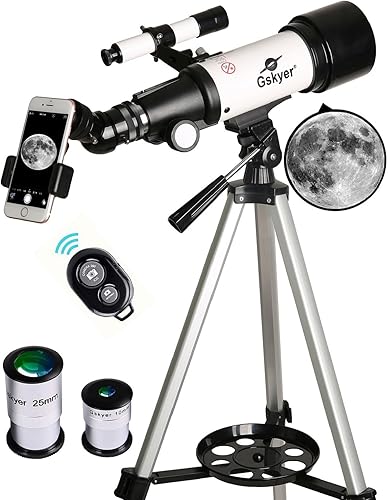
- 70mm refractor
- Smartphone adapter and wireless camera remote
- Two eyepieces and 3x Barlow lens
- Adjustable tripod and carry bag
A manual refractor that includes a phone adapter and wireless remote for simple snapshots. It doesn't offer automatic celestial targeting or tracking.
Pros
- Phone adapter and remote included
- Carry bag included
- Two eyepieces and Barlow lens
Cons
- No computerized GoTo
- Phone imaging depends on manual setup
The Gskyer is a manual 70mm refractor with a smartphone adapter and wireless camera remote. That gives you a way to take basic phone snapshots through the telescope, but it does not automate target finding or tracking.
It includes two eyepieces, a 3x Barlow lens, a finderscope, an adjustable tripod and a carry bag. These accessories make it a broad starter package for manual viewing and simple phone photography.
Phone images through an eyepiece require careful alignment and steady placement.
Choose the Gskyer if you want a manual telescope with phone-photo accessories included. It is not a substitute for a computer-controlled deep-sky imaging system.
Celestron NexStar 8SE Computerized Telescope: Best for computerized visual observing
- 8-inch Schmidt-Cassegrain optics
- Automated GoTo and tracking
- 40,000+ object database
- SkyAlign alignment
A computerized telescope for finding and tracking targets through an eyepiece. It is astroimaging ready, but a camera is a separate purchase.
Pros
- Automated GoTo and tracking
- Large object database
- SkyAlign setup
Cons
- Camera not included
- More involved setup than an all-in-one smart telescope
The NexStar 8SE is the strongest choice here for computerized visual observing. Its 8-inch Schmidt-Cassegrain optics sit on an automated GoTo mount that can find and track targets selected from a database of more than 40,000 objects.
SkyAlign helps set up the mount by centering any 3 bright stars or planets. The included hand control operates the system, so it differs from an app-controlled smart telescope.
The 8SE is described as astroimaging ready, but a camera is not included. You can add imaging equipment separately, though that means learning a more configurable setup than the Seestar’s all-in-one workflow.
Choose it if visual observing and automated target finding are your priorities, with imaging as a possible addition. For planetary capture specifically, compare camera options in our best planetary smart telescope guide.
DWARFLAB Dwarf 3 Smart Telescope: Best for portable app-controlled imaging
- Dual imaging system
- Automatic tracking and GoTo
- App-based processing
- 3 lb design
A compact smart telescope that combines automatic imaging features with a dual-camera system for night and daytime subjects.
Pros
- Lightweight design
- Automatic tracking and GoTo
- In-app image processing
Cons
- Uses app-based control
- Small format may not suit buyers seeking a traditional eyepiece scope
The DWARF 3 is a compact smart telescope for app-based imaging across night and daytime subjects. Its dual imaging system pairs a telephoto lens for distant targets with a wide-angle lens for scenes such as the Milky Way and star trails.
The system includes automatic GoTo and tracking, with image processing through the DWARFLAB app. At 3 lb, it is built for portability, and the included bag makes it easier to carry.
This is an integrated camera system, not a conventional telescope designed around eyepiece viewing. Its smaller format and app workflow make it a distinct choice from the NexStar 8SE, which emphasizes computerized visual observing.
Choose it if you want portable imaging and automatic tracking in one device. For setup tips, see how to use the DWARF 3 smart telescope, and read our DWARFLAB DWARF Mini telescope review for a smaller related model.
SVBONY SV105 Telescope Camera: Best for a basic computer camera setup
- 1.25 in camera
- USB connection to a laptop or PC
- Moon and planetary imaging
- Windows, Linux and Mac laptop support
A separate electronic eyepiece camera for connecting a compatible telescope to a computer. It needs manual focus and does not include a telescope.
Pros
- Connects telescope view to a computer
- 1.25 in format
- Suitable for lunar and planetary imaging
Cons
- Telescope sold separately
- Manual focus required
The SVBONY SV105 is a separate 1.25 in USB camera for a compatible telescope, with a computer or laptop as the display and capture device. It is suited to lunar and planetary imaging rather than serving as an all-in-one smart telescope.
The camera uses an IMX307 color sensor and requires manual focusing through the telescope. Software depends on your computer system, so check that your preferred capture program works with your device before choosing this route.
Because it is a camera accessory, it does not include telescope optics or a computerized mount. Pairing it with a manual telescope also leaves you responsible for aiming and tracking the target.
Choose the SV105 if you want to start computer-based capture with a compatible scope. It is a simpler camera route than the SV305C Pro, but neither option provides the integrated app workflow of a smart telescope.
SVBONY SV305C Pro Telescope Camera: Best for high-frame-rate planetary capture
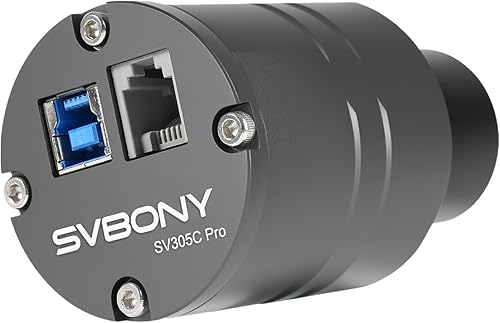
- 2MP IMX662 sensor
- 1920 x 1080 at 107 frames per second
- USB 3.0 connection
- Computer required
A computer-connected camera for planetary imaging and guiding with a compatible telescope. It does not connect to an iPad.
Pros
- High frame rate at 1920 x 1080
- USB 3.0 transfer
- ST4 guiding interface
Cons
- Computer required
- Telescope sold separately
The SVBONY SV305C Pro is a separate camera aimed at high-frame-rate planetary capture and guiding. It records 1920 x 1080 at up to 107 frames per second and connects over USB 3.0 to a computer.
Its ST4 guiding interface supports use with guiding software, while the 128MB buffer supports continuous capture. The camera needs a compatible telescope and computer, and it does not connect to an iPad.
This option offers more configuration than an integrated smart telescope. You will need to manage the telescope, focus, capture software and computer connection as parts of one imaging setup.
Choose it if computer-based planetary imaging and guiding matter more than a one-tap phone workflow. The how to make a smart telescope guide covers the broader idea of building a setup from separate components.
What should you compare before choosing?
The key choice is whether you want one integrated imaging device or a telescope and camera assembled separately. The first is simpler to operate; the second gives you more control over individual components.
Is a smart telescope better for deep sky?
For an automated deep-sky workflow, an integrated smart telescope is the most direct fit in this group. The Seestar S30 Pro combines camera, app control, automatic targeting and tracking, while the DWARF 3 adds a portable dual imaging system.
A traditional telescope can also be used for imaging, but the camera is separate and the mount may need to provide tracking. Check what the telescope automates before assuming that a camera adapter alone will make deep-sky capture simple.
Do you want to look through an eyepiece?
Traditional telescopes such as the NexStar 8SE and AstroMaster 130EQ are built around eyepiece observing. The NexStar automates target finding, while the AstroMaster uses manual controls.
Smart telescopes send the view to an app instead of relying on an eyepiece. If direct visual observing is important, compare that difference before choosing a camera-first device.
What targets do you want to capture?
For deep-sky imaging, look for automated tracking and a workflow made for longer capture sessions. For the Moon and planets, a separate computer camera may give you more control over video capture and focus.
The Seestar S30 Pro is described as not intended for planetary observation. The SV105 and SV305C Pro are designed for camera use with a compatible telescope, while the NexStar 8SE is a computerized visual telescope that can be adapted for imaging.
How much setup do you want?
An integrated smart telescope reduces the number of separate parts you need to connect. A traditional scope with a camera means checking fit, focus, computer support and mount behavior before the session.
If you're deciding between DWARF models, see how to use the DWARF Mini smart telescope. If an older DWARF II stopped working after a firmware update, our guide to fixing a failed DWARF II upgrade covers that separate issue.
Which computer controlled telescope with a camera should you pick?
Choose the Seestar S30 Pro for an integrated, app-controlled route to automated deep-sky imaging. Choose the NexStar 8SE for computerized visual observing and the option to add a separate camera.
For manual learning, the AstroMaster 130EQ gives you an equatorial mount and slow-motion controls. For computer-based planetary capture with a traditional scope, consider a separate camera such as the SV105 or SV305C Pro, after confirming compatibility and computer support.
Our top 3 picks at a glance
-
1
Best for automated deep-sky imaging
ZWO Seestar S30 Pro Smart Telescope
9.7/10 our score
See it on Amazon -
2
Best for manual deep-sky learning
Celestron AstroMaster 130EQ Telescope for Deep-Sky Beginners
9.7/10 our score
See it on Amazon -
3
Best for portable visual observing
Celestron Travel Scope 70mm Beginner Portable Telescope
9.6/10 our score
See it on Amazon
Frequently asked questions
What is a computer controlled telescope with a camera?
It can mean an all-in-one smart telescope that combines optics, camera and automated controls, or a computerized telescope paired with a separate camera. The Seestar S30 Pro combines app control and imaging; the NexStar 8SE automates target finding but needs a separate camera for capture.
Decide whether you want one integrated device or more control over separate parts.
Which smart telescope is best for deep-sky imaging?
The ZWO Seestar S30 Pro is a strong fit for automated deep-sky imaging, with app-based GoTo targeting, tracking, dual-camera capture and built-in light-pollution filters. Its maker says it is designed for deep-sky objects and isn't intended for planetary observation.
Keep the telescope stationary during deep-sky imaging for stable tracking.
Can I add a camera to a regular telescope?
Yes. A compatible telescope can pair with a separate camera, such as a 1.25 in USB camera for computer-based lunar or planetary imaging.
Check camera compatibility and focusing requirements for your telescope before buying.
A camera does not add GoTo or tracking to a manual mount.
Should I buy a smart telescope or a computerized telescope?
Choose a smart telescope if you want an integrated camera, app control and automated capture. Choose a computerized telescope such as the NexStar 8SE if you want automated target finding through an eyepiece and the option to add imaging gear separately.
The right fit depends on whether imaging or visual observing comes first.