DWARFLAB DWARF Mini Smart Telescope Review: Worth It? (November 2026)
The DWARFLAB DWARF Mini suits portable, app-controlled astrophotography, with Auto GOTO, a 360° pivot and exposures up to 90 seconds. Its compact 30 mm objective favors easy travel over the light gathering of a larger telescope.
On this page (8 sections)
- What does the DWARFLAB Mini telescope do?
- How portable is the DWARF Mini?
- Is the DWARF Mini good for astrophotography?
- What are the limitations of the DWARFLAB Mini?
- DWARF Mini versus a traditional portable telescope
- Is the DWARF Mini worth choosing?
- How should you get started with the DWARF Mini?
- DWARFLAB DWARF Mini review: who should buy it?
The DWARFLAB DWARF Mini is a compact smart telescope for automated astrophotography on the go. It weighs 1.85 lb and combines app control, Auto GOTO, a 360° pivot and exposures up to 90 seconds.
Its 30 mm objective and digital imaging workflow shape the trade-off: you get a small, portable setup, not the direct eyepiece view or larger light-gathering aperture of a traditional telescope. We compared the listed features and specs to help you decide which experience fits your observing plans.
What does the DWARFLAB Mini telescope do?
The DWARFLAB Mini uses a smartphone app and built-in sky atlas to help you select targets and capture images. Auto GOTO and tracking handle much of the aiming process, while the sensor records the view for digital processing.
DWARFLAB Dwarf Mini Smart Telescope: Best for portable smart astrophotography
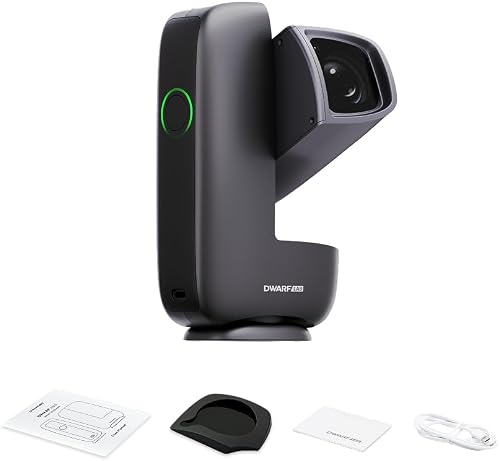
- 30 mm objective lens
- App control and Auto GOTO
- Exposures up to 90 seconds
- Altazimuth and equatorial modes
A compact smart telescope for buyers who value automated imaging and easy transport. Its small objective and app-based approach suit a different observing style from a traditional telescope.
Pros
- Compact 1.85 lb design
- App control with built-in sky atlas
- Auto GOTO and 360° pivot
- Equatorial mode and exposures up to 90 seconds
Cons
- 30 mm objective is small compared with many traditional telescopes
- App and battery power are part of the observing setup
- Designed around digital imaging rather than eyepiece viewing
DWARFLAB describes the Mini as weighing 1.85 lb, with a 30 mm objective and a 150 mm focal length. The app offers an interactive star map, and the telescope supports altazimuth and equatorial modes.
The digital workflow is the key difference from a manual telescope. You choose targets and view images through the app instead of looking through an eyepiece.
How portable is the DWARF Mini?
At 1.85 lb and about 7.23 inches tall, the DWARF Mini is designed for travel and quick packing. It can fit in a backpack, making it easier to carry to a campsite or a darker sky location than a full-size telescope setup.
It comes with a filter, USB-C to USB-C charging cable and cleaning cloth. A smartphone is needed for app control, so include your phone and a way to keep it charged in your observing kit.
Portability also means working with a 30 mm objective. If you are comparing compact telescope choices, our guide to the most powerful portable telescope explains why portability and viewing capability often involve trade-offs.
Is the DWARF Mini good for astrophotography?
The DWARF Mini is aimed at astrophotography, with Auto GOTO, tracking, equatorial mode and exposures up to 90 seconds. It also supports automatic stacking and one-tap processing, according to DWARFLAB.
Its sensor is a Sony IMX662 in a 1/2.8-inch format. The product description also mentions 2 MP RAW output and built-in processing, giving you options to capture and refine digital images.
DWARFLAB describes three filter options: Dark Filter for dark-frame calibration, Astro Filter for nebula contrast and infrared sensitivity, and Duo-Band Filter for H-alpha and OIII wavelengths. The included box contents specify one filter, so confirm which filter configuration is included with the version you intend to buy.
A smart telescope still depends on conditions and setup. A stable surface, a clear view of the target and time to learn the app can all affect the session.
What are the limitations of the DWARFLAB Mini?
The main limitation is the 30 mm objective, which is small compared with the apertures found on many traditional telescopes. It prioritizes compact automated imaging, so it may not fit buyers who want direct eyepiece viewing or a larger aperture for visual observing.
The Mini also depends on a smartphone app and battery power. If you prefer to point a telescope by hand, swap eyepieces and look directly at the Moon, a manual scope may be a better match.
For another approach to computer-guided imaging, compare the best computer-controlled telescopes with cameras. That guide can help you weigh portability against the features of larger systems.
DWARF Mini versus a traditional portable telescope
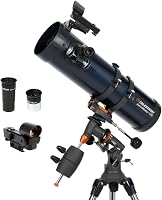
The DWARF Mini is a better fit for app-based imaging, while a traditional portable telescope is better for direct eyepiece viewing. The Celestron Travel Scope 70, for example, has a 70 mm aperture, two eyepieces, a full-height tripod and a backpack.
The Celestron weighs 4.2 lb, more than twice the DWARF Mini's stated 1.85 lb. That added size brings a larger objective and a conventional viewing experience, but it takes more room to carry.
For children focused on looking at lunar craters through an eyepiece, the Blue Marble NASA lunar telescope review covers a simpler manual option. Families choosing a first scope can also compare telescopes for young kids.
Is the DWARF Mini worth choosing?
Choose the DWARF Mini if you want a portable, app-controlled telescope for saving and processing images. Its lightweight body, automated aiming and long exposure support are aimed at that use.
Choose a traditional scope if you want to view objects directly through eyepieces, or if a larger objective is a priority. If budget is the first constraint, our guide to the cheapest smart telescope compares entry points in this category.
A planetary observer should also consider the target. See our guide to the best smart telescope for planets before choosing a system around planetary viewing.
How should you get started with the DWARF Mini?
Start with the app, a charged device and a clear observing spot. The built-in sky atlas helps you select a target, while Auto GOTO can point the telescope toward it.
Our step-by-step guide explains how to use the DWARF Mini smart telescope, including the basic setup flow. If you're comparing it with its sibling, read how to use the DWARF 3 smart telescope to understand that model's workflow too.
DWARFLAB DWARF Mini review: who should buy it?
The DWARFLAB DWARF Mini suits travelers and beginners who want automated digital astrophotography in a compact package. Pick it for app-based imaging and portability; pick a 70 mm manual refractor for direct eyepiece viewing or a child-focused lunar scope for a simple Moon session.
Our score weighs specs, features and buyer feedback against what you're shopping for.
Frequently asked questions
Is the DWARFLAB DWARF Mini a good telescope for beginners?
The DWARFLAB DWARF Mini can suit beginners who want app control, a built-in sky atlas and automated target finding. It is designed around digital imaging, so it differs from a manual telescope where you look through an eyepiece.
Consider which experience you want before choosing.
How portable is the DWARF Mini?
The DWARF Mini weighs 1.85 lb and measures about 2.39 x 3.95 x 7.23 inches. Those dimensions make it easy to pack compared with many full-size telescope setups, though you still need to bring its charging cable and a compatible smartphone.
Can the DWARF Mini take long exposures?
Yes. The DWARF Mini supports single-frame exposures up to 90 seconds and offers an equatorial mode for deep-sky imaging.
Longer exposures depend on the setup and conditions, so allow time to learn the app and choose a stable observing spot.
Can you look through the DWARF Mini like a regular telescope?
The DWARF Mini is an app-controlled digital telescope that captures images with its sensor, rather than a traditional eyepiece telescope. Choose it if viewing and saving images on a phone fits your plans; choose a manual scope if direct eyepiece viewing is a priority.