What Exit Pupil Is Too Small for the Eye?
On this page (8 sections)
Generally, an exit pupil smaller than 2mm might feel too tiny for comfortable viewing, especially in low light. While smaller exit pupils can offer brighter daytime views and sharper images, anything below this can make your eye strain and struggle to gather enough light. So, is there a definitive “too small” exit pupil? For most users, yes, and it’s around the 2mm mark.
The exit pupil is essentially the circle of light you see when looking through binoculars or a telescope. Its size matters for both daytime and nighttime use. A larger exit pupil is better for dim conditions, while a smaller one can be ideal for bright days. Understanding this helps you choose the right optics for your needs, avoiding the frustration of a view that’s just too dim or hard to find.
- Exit pupil is the circle of light you see looking through optics.
- Under 2mm can feel too small and cause eye strain.
- Larger exit pupils are best for low light conditions.
- Smaller exit pupils can work well in bright daylight.
- Choosing the right size depends on when and where you’ll use them.
Let’s break down what exit pupil size means for your viewing experience and what might be too small for your specific needs.
When Is an Exit Pupil Too Tiny to See Comfortably?
For most people, an an exit pupil measuring less than 2 millimeters starts to feel uncomfortably small. This is especially true when you’re trying to view things in dimmer light. While a tiny exit pupil might seem good for bright days, it can make your eyes work harder. It can also make it tough to gather enough light for a clear view.
So, what’s the magic number? Research and common user experiences suggest that around the 2mm mark is where many people begin to notice issues. Below this size, the view can become a struggle. It’s like trying to see through a pinhole – possible, but not very enjoyable for long.
Understanding the Basics of Exit Pupil
Let’s start with what the exit pupil actually is. When you look through binoculars or a telescope, you see a small circle of light. That circle is the exit pupil. It’s formed by the objective lens (the big one at the front) and the eyepiece lens (the one you look through). Its size is calculated by dividing the objective lens diameter by the magnification.
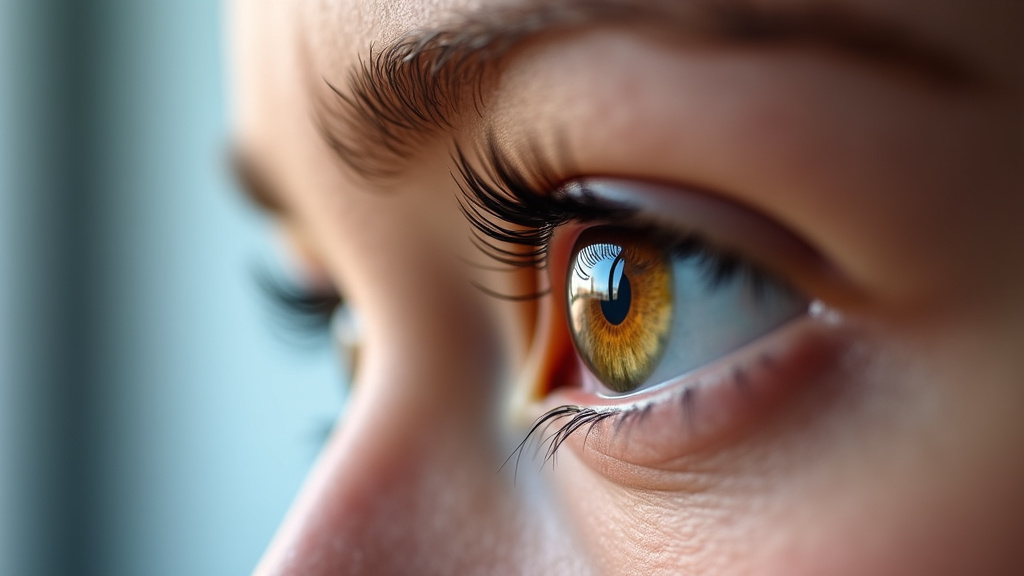
Think of it like a window. A bigger window lets in more light and gives you a wider view. A smaller window lets in less light. Your eye’s pupil works similarly. It gets bigger in the dark to let more light in. It gets smaller in bright light to let less light in. The exit pupil of your binoculars needs to work with your eye’s natural pupil.
How Your Eye’s Pupil Affects Viewing
Your eye’s pupil naturally changes size based on light conditions. In bright daylight, your pupil might shrink down to about 2mm. In dim conditions, like dusk or twilight, it can expand to 5mm, 6mm, or even 7mm or 8mm for some people. This is your eye’s way of trying to see as much as possible.
When you use binoculars, the exit pupil is the beam of light that reaches your eye. If this beam is smaller than your own pupil, your eye can’t use all the light gathered by the binoculars. It’s like trying to catch rain in a bucket, but the opening of the bucket is much smaller than the rain is falling. The extra rain just spills over the sides.
The Relationship Between Exit Pupil and Light
This is where the size of the exit pupil really matters. In bright sunlight, your eye’s pupil is already small, perhaps around 2mm. If your binoculars have an exit pupil of 2mm, it matches your eye’s natural opening well. This means you’re using the light efficiently. You might even get a slightly sharper image because any small imperfections in the lens are less noticeable.
However, as light levels drop, your eye’s pupil gets larger. If your binoculars still have that small 2mm exit pupil, it’s now much smaller than your eye’s pupil. You’re missing out on a lot of potential light. This makes the image appear dim. You might also struggle to keep the small circle of light centered in your eye, leading to frustration.
What Happens When the Exit Pupil is Too Small?
You’ll know the exit pupil is too small for your comfort when you start experiencing certain things. The most common issue is a dim image, especially when you’re not looking in direct sunlight. It feels like the binoculars are simply not bright enough, even if the objective lens is a decent size.
Another common complaint is eye strain. Trying to find and keep that tiny circle of light lined up with your eye’s pupil can be tiring. It requires more concentration and effort than simply looking through a larger, more forgiving circle. This can make extended viewing sessions unpleasant.
The 2mm Threshold and Why It Matters
Many optical guides and expert opinions point to the 2mm mark as a general guideline for when an exit pupil might become too small for comfortable viewing for most adults. This size aligns well with the typical pupil size of an adult eye in moderate to bright lighting conditions.
If you’re using binoculars with an exit pupil smaller than 2mm, like those found on high-magnification, compact models (e.g., 10×25 or 12×30), you’re likely to encounter these issues. While they might be portable, they aren’t ideal for situations where light is less than perfect.
Low Light Viewing Challenges
This is where a small exit pupil really shows its limitations. Imagine trying to watch a deer at dawn or spot birds in a shady forest. In these low-light scenarios, your eye’s pupil opens wide, maybe to 5mm or more. If your binoculars have a 1.5mm exit pupil, you’re getting a very dim view.
You might find yourself constantly moving the binoculars, trying to catch the image. This is because the beam of light is so narrow, it’s easy to lose sight of it. For activities like birdwatching at dawn or dusk, or stargazing, you absolutely need a larger exit pupil to gather sufficient light.
When a Smaller Exit Pupil Might Be Okay
It’s not all bad news for smaller exit pupils. They do have their advantages, especially during the day. If you’re mostly using your optics under bright, sunny skies, a smaller exit pupil can actually be beneficial.
Daytime Use and Bright Conditions
In bright daylight, your eye’s pupil constricts. A smaller exit pupil from your binoculars can effectively match your eye’s natural size. This means you’re using the available light efficiently. It can lead to a brighter-perceived image for some users than if the exit pupil were much larger than needed.
Additionally, a smaller exit pupil can sometimes offer a slightly sharper image. This is because optical aberrations (tiny imperfections in the lenses) are often more pronounced at the edges of a larger light circle. With a smaller circle, you’re looking through the center, where the optics are typically at their best.
Portability and Specific Binocular Types
Binoculars with smaller objective lenses (the front lenses) and higher magnifications often have smaller exit pupils. These are typically the compact, lightweight models. If your main priority is portability – say, for hiking or travel – you might accept a smaller exit pupil.
For example, a 10×25 binocular has an objective lens diameter of 25mm and a magnification of 10x. Its exit pupil is 25mm / 10 = 2.5mm. A 12×30 binocular has an exit pupil of 30mm / 12 = 2.5mm. These are manageable for daytime use. However, models with even smaller objective lenses or higher magnification will have even smaller exit pupils.
Exit Pupil Sizes and Their Use Cases
To help you visualize, let’s look at some common binocular specifications and their resulting exit pupils. Remember, this is a general guide, and your own eye’s pupil size can vary.
| Binocular Specification (Objective Diameter x Magnification) | Calculated Exit Pupil (mm) | Best Use Case |
|---|---|---|
| 7×35 | ~5.0 mm | Good all-around, excellent for low light and general observation. |
| 8×42 | 5.25 mm | Very popular for birding and general use, handles varied light well. |
| 10×42 | 4.2 mm | Good for brighter conditions, offers more magnification. Might be dim for deep twilight. |
| 8×32 | 4.0 mm | Compact, good for daytime, but can be a bit dim as light fades. |
| 10×25 | 2.5 mm | Highly portable, best for bright daylight use only. |
| 12×50 | ~4.17 mm | Good for astronomy and brighter conditions, offers high magnification. |
As you can see, larger objective lenses and lower magnifications generally result in larger exit pupils. This is why 7×50 or 8×42 binoculars are often recommended for stargazing or dawn/dusk birding. For stargazing, you’ll want the largest exit pupil possible, ideally 5mm or more, which is often found on a fast focal ratio telescope.
Matching Exit Pupil to Your Needs
When choosing binoculars, think about when and where you’ll use them most. If you’re a casual observer who mainly watches birds in your backyard during the day, a 10×30 or 8×32 might be perfectly fine. Their exit pupils (3mm and 4mm, respectively) are adequate for those conditions.
However, if you plan to do serious birdwatching at dawn and dusk, or if you’re interested in wildlife observation in shaded forests, you’ll want a larger exit pupil. Look for binoculars with an exit pupil of at least 4mm, preferably 5mm or more. This typically means models like 7×35, 8×40, 8×42, or 10×50.
Tips for Enjoying Your View
Regardless of the exit pupil size, there are ways to make your viewing experience better. The steadiness of your hands and how you hold the binoculars play a role.
Proper Binocular Usage
One common mistake is not holding the binoculars close enough to your eyes. If the binoculars are too far away, you’ll have a hard time catching the exit pupil, even if it’s a decent size. Try to rest the binoculars against your brow bone for stability.
Also, remember to adjust the diopter. This is usually a ring on one of the eyepieces. It corrects for differences between your eyes. Getting this right makes the image clearer and can reduce strain, no matter the exit pupil.
When to Consider a Larger Exit Pupil
If you find yourself squinting, straining, or constantly having to adjust your position to see the image, it’s a strong sign your exit pupil might be too small. This is especially true if it happens frequently, even in daylight.
For those who enjoy nature, wildlife, or astronomy, investing in binoculars with a larger exit pupil (4mm+) is often a worthwhile decision. It can transform a frustrating experience into an enjoyable one. It allows your eyes to relax and take in the details without struggling for light.
Here’s a quick checklist to help you assess if your current binoculars might have too small an exit pupil for your needs:- Do the images look dim, even in good light?
- Do you experience eye strain after only a short viewing period?
- Is it difficult to find and keep the image centered?
- Are you mostly using your binoculars during twilight or in shaded areas?
- Do you feel like you’re “fighting” the binoculars to see?
Conclusion
Understanding your exit pupil is key to truly enjoying your view. While a small exit pupil can be fine for bright, sunny days and portability, it often leads to dim images and eye strain in lower light. For most users, an exit pupil below 2mm can feel like a struggle. If you’re finding your binoculars frustrating, especially during twilight or in shady spots, it’s time to consider an upgrade. Look for optics with a larger exit pupil, like those around 4mm or more, to gather more light and let your eyes relax. Your next step should be checking the specs of your current binoculars and comparing them to your typical viewing conditions.
Frequently Asked Questions
What is the ideal exit pupil for stargazing?
For stargazing, you’ll want the largest exit pupil possible, ideally 5mm or more. This helps your eyes gather as much faint starlight as possible. Binoculars like 7×50 or 10×50 are excellent choices for this purpose. For stargazing, you’ll want the largest exit pupil possible, ideally 5mm or more, which relates to the f-number in astronomy.
Can a small exit pupil actually make images sharper?
Yes, a smaller exit pupil can sometimes offer a slightly sharper image. This is because you’re looking through the center of the lens, where optical imperfections are less noticeable than at the edges.
How do I calculate the exit pupil of my binoculars?
You can easily calculate the exit pupil by dividing the objective lens diameter (the number before the ‘x’, e.g., 42 in 8×42) by the magnification (the number after the ‘x’). So, for 8×42 binoculars, it’s 42mm / 8 = 5.25mm.
Is 3mm a good exit pupil size?
An exit pupil of 3mm is generally considered adequate for daytime use in bright conditions. It might start to feel a bit dim as light fades, especially if your own pupils dilate beyond 3mm.
Will a larger exit pupil make the image brighter in daylight?
Not necessarily. In bright daylight, your eye’s pupil is already small. If your binoculars have a much larger exit pupil than your eye’s pupil, you’re not using all the light gathered, and it can even make the image appear less bright than a well-matched, smaller exit pupil.