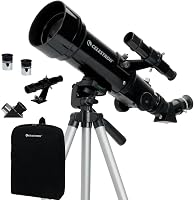
What Is an Apochromatic Refractor? Quick Fixes
On this page (6 sections)
An apochromatic refractor, or apo telescope, is a high-quality optical instrument designed to bring different colors of light into focus at the same point. For more on this topic, see our guide to triplet apochromatic refractor. This corrects for chromatic aberration, producing sharper and more accurate images compared to simpler refractor telescopes. You get a much clearer view of celestial objects without those annoying color fringes.
These telescopes are sought after by astronomers and astrophotographers for their superior performance. They use special lens designs with multiple glass elements to achieve this precise focusing. Owning an apo refractor means enjoying stunning visual clarity and vibrant, true-to-life colors in your stargazing.
- Apo refractors focus all light colors precisely.
- They eliminate annoying color fringing.
- This results in sharper, more accurate images.
- Apo telescopes are great for visual use and astrophotography. Apo telescopes are great for visual use and astrophotography; our guide to a slow focal ratio telescope explains their benefits for planetary viewing.
So, what exactly makes an apochromatic refractor special, and are there any simple tips you should know about them? For more on this topic, see our guide to apochromatic triplet. Let’s break down this fascinating type of telescope.
Understanding Your Apochromatic Refractor Telescope
An apochromatic refractor telescope, often called an ‘apo’ for short, is like the high-definition TV of the telescope world. For more on this topic, see our guide to refractor and reflector telescopes. You get incredibly sharp images with amazing detail. This is thanks to its special design that corrects for a common problem called chromatic aberration.
Think of it this way: a regular telescope lens bends light like a prism. It splits white light into its component colors – red, orange, yellow, green, blue, and violet. These colors have different wavelengths, so they bend at slightly different angles. This can make the colors not quite focus at the same spot, causing a fuzzy rainbow fringe around bright objects like the Moon or Jupiter.
An apo telescope has a clever lens system. It uses multiple lens elements made from different types of glass. This special combination bends all the colors of light to focus at the exact same point. The result? Stunningly clear images without those distracting color fringes. You’ll see stars as sharp pinpricks and planets with crisp detail.
How Apo Telescopes Achieve Color Correction
The secret sauce is the lens design. We’re talking about more than just a simple lens here. Most apo telescopes use a combination of lenses. These are often called an ‘element’ or ‘group’.
The Three-Element APO Design (Triplets)
The most common and effective apo design uses three lens elements. These are typically made from special glass types. One common type of special glass is called ED glass (Extra-low Dispersion). Another is Fluorite crystal.
The three lenses work together. The first lens bends the light. The second lens, made of a different glass, bends it back slightly. The third lens then brings all the colors together perfectly. This precise alignment is what eliminates chromatic aberration.
ED Glass and Fluorite
We found that ED glass and Fluorite are key players. They have unique optical properties. These properties allow them to bend light differently than standard glass. This difference is what makes achieving true apochromatic correction possible. Many manufacturers use these materials to create their high-performance apo objectives.
Other APO Designs (Doublets and Quads)
While triplets are very popular, you might also see two-element (doublets) or four-element (quadruplets) apo designs. Some high-end doublets can perform very well, especially if they use exotic glass. Quadruplets are less common but can offer even more correction, though they tend to be more complex and expensive.
For most users, a well-made three-element apo provides an excellent balance of performance and cost. You’ll get that fantastic color correction you’re looking for.
Why Choose an Apochromatic Refractor?
So, why go through the extra effort and cost for an apo telescope? It all comes down to the quality of the view. You’re investing in a superior optical experience.
Visual Astronomy Benefits
For those who love to just look through the eyepiece, an apo refractor is a treat. You’ll see planets like Jupiter with its bands and moons, or Saturn with its rings, in stunning clarity. The Moon’s craters will pop with detail.
Because color fringing is gone, your eyes can relax. This makes long observing sessions more enjoyable. You can truly appreciate the subtle details of celestial objects without distraction. It’s like comparing a blurry old photograph to a crystal-clear digital image.
Astrophotography Advantages
If you’re into taking pictures of the night sky, an apo telescope is almost a must-have. Astrophotography demands the highest level of optical perfection. Even a small amount of chromatic aberration can ruin a great photo.
Apo telescopes ensure that every color is sharp on your camera sensor. This means nebulae will have vibrant colors, and galaxies will show fine detail. You won’t have to spend hours in post-processing trying to fix color issues.
| Feature | Apochromatic Refractor | Standard Achromatic Refractor |
|---|---|---|
| Chromatic Aberration Correction | Excellent (virtually eliminated) | Good (partially corrected) |
| Lens Elements | 3 or more (often ED glass/Fluorite) | 2 (standard glass) |
| Color Fringing | Minimal to none | Noticeable on bright objects |
| Image Sharpness | Very high | Good |
| Cost | Higher | Lower |
Portability and Ease of Use
Many apo refractors are relatively compact and lightweight. This makes them easy to set up and transport. You can take them to dark sky sites without a struggle. They don’t require the complex alignment or collimation that some other telescope types do. Just set it up, point, and look!
Quick Fixes and Care for Your Apo Telescope
While apo telescopes are built for precision, like any instrument, they can sometimes benefit from a little attention. These aren’t really “fixes” but more like best practices for maintaining peak performance.
Keeping Your Objective Lens Clean
The main lens, called the objective, is crucial. Dust and smudges can reduce image clarity. However, you must be very careful when cleaning it. The coatings on these lenses are delicate.
When to Clean
Only clean your objective lens when you absolutely need to. You’ll notice a visible layer of dust or grime that’s impacting your view. A little dust is usually not a problem and is better than risking damage from over-cleaning.
How to Clean Safely
Start by using a blower bulb or a soft brush designed for optics. This removes loose particles. If smudges remain, use a lens cleaning solution specifically made for camera lenses. Apply a small amount to a clean microfiber cloth, not directly to the lens. Gently wipe in a circular motion, starting from the center and moving outwards. Never use household cleaners or paper towels.
Checking and Securing Lens Cell Components
The objective lens is held in place by a metal ring called a lens cell. Sometimes, tiny screws or retaining rings can loosen slightly over time due to vibrations from transport. This is rare, but if you notice images that seem slightly “off” or less sharp than usual, it’s worth checking.
We found that for most users, these components are factory-set and shouldn’t be adjusted without knowledge. If you suspect a loose lens cell, it’s best to consult your telescope’s manual or contact the manufacturer. Tampering with it incorrectly could cause more harm than good.
Dew Prevention
Condensation, or dew, can form on your telescope’s optics on humid nights. This can obscure your view and, if left for extended periods, could potentially damage coatings. Your apo telescope is no different.
A simple solution is using a dew shield. This is an extension that fits onto the front of your telescope. It helps block stray light and keeps ambient moisture away from the objective lens. For really persistent dew, you can use commercially available dew heaters. These are small, low-power heating strips that gently warm the lens area.
Collimation (Usually Not an Issue for Refractors)
Collimation is the process of aligning the optical components of a telescope. For Newtonian reflectors, it’s essential. For apo refractors, it’s generally not something you need to worry about.
The lenses in an apo refractor are fixed in precise alignment. Unless the telescope has suffered a significant impact, the optics should remain aligned. If you ever suspect a major alignment issue, it’s a sign to seek professional help rather than attempting a DIY fix.
Here’s a quick checklist for keeping your apo in top shape:
- Keep the objective lens clean, but only when necessary.
- Use a blower bulb or lens brush for dust.
- Use approved lens cleaning fluid and microfiber cloths for smudges.
- Employ a dew shield on humid nights.
- Consider dew heaters for persistent dew problems.
- Avoid unnecessary adjustments to lens cells or internal optics.
Conclusion
You’ve learned that an apochromatic refractor is your ticket to incredibly sharp and colorful views of the night sky. By precisely focusing all light colors, it eliminates distracting fringes for a clearer look at planets and nebulae. While these telescopes are precision instruments, keeping their objective lens clean and using a dew shield are simple steps that ensure you always get the best performance. Ready to experience the difference? Consider visiting a local astronomy club or shop to see an apo refractor in action before making your purchase.
Frequently Asked Questions
Are apo telescopes worth the extra cost for a beginner?
For beginners, an apo refractor offers a significantly better visual experience by eliminating color fringing. While more expensive than standard refractors, the improved image quality can make learning celestial objects more enjoyable and rewarding. You’ll get a clearer view right from the start.
How often should I clean my apo telescope’s objective lens?
You should only clean your objective lens when you notice a visible layer of dust or smudges that impacts your view. A small amount of dust is usually not a problem and less risky than over-cleaning. Gentle cleaning methods are key to protecting the delicate lens coatings.
Can I use regular glass cleaner on my apo telescope lens?
No, absolutely not. Regular household glass cleaners can damage the specialized coatings on your apo telescope’s objective lens. Always use lens cleaning solutions specifically designed for camera or telescope optics, and apply them to a microfiber cloth, not directly to the lens.
What is ED glass, and why is it important in an apo refractor?
ED stands for Extra-low Dispersion. ED glass has special optical properties that allow it to bend light in a way that helps bring different colors into focus at the same point. It’s a key component in many apo telescopes, helping to achieve superior color correction and sharper images.
If my apo refractor image looks fuzzy, is it always a cleaning issue?
Not necessarily. While a dirty lens can cause fuzziness, other factors could be at play. Your telescope might need to acclimate to the outside temperature, or atmospheric conditions could be poor. If you suspect an optical alignment issue, it’s best to consult your telescope’s manual or the manufacturer, as refractors rarely need user collimation.