6 Best Smart Telescopes for Planets (November 2026)
The best planetary smart telescopes include the ZWO Seestar S30 Pro Smart Telescope for wide-field sky imaging, the Celestron StarSense Explorer LT 114AZ Newtonian Smartphone for guided planet viewing on a budget, and the Celestron StarSense Explorer DX 130AZ Smartphone Guided for a larger guided reflector.
On this page (8 sections)
- Which smart telescopes work best for planets?
- Best smart telescopes for planets compared
- What makes a telescope suitable for planetary viewing?
- Can smart telescope cameras capture planets?
- Which telescope is best for visual planet viewing?
- Should you choose an eyepiece or a phone screen?
- What limitations should you expect from planetary smart telescopes?
- Which planetary smart telescope should you choose?
The best planetary smart telescope for detailed visual viewing is the Celestron StarSense Explorer 8" Dobsonian, which combines an 8-inch reflector with phone guided target finding. For app based planetary imaging, consider the UNISTELLAR Odyssey; for a smaller guided reflector, choose the Celestron DX 130AZ.
Planet viewing and planetary imaging are different jobs. A telescope with an eyepiece gives you a live visual view, while an app controlled imager builds or displays an image on a phone or tablet.
The best computer controlled telescopes with cameras can make finding and recording targets easier, but automation alone does not guarantee close planetary detail. Aperture, focal length, steady air and the device's intended use all matter.
Our picks at a glance
-
1
 Best for wide-field sky imaging
ZWO Seestar S30 Pro Smart Telescope
9.7/10 our score
See it on Amazon -
2
 Best for guided planet viewing on a budget
Celestron StarSense Explorer LT 114AZ Newtonian Smartphone
9.3/10 our score
See it on Amazon -
3
 Best for a larger guided reflector
Celestron StarSense Explorer DX 130AZ Smartphone Guided
9.2/10 our score
See it on Amazon
- 4
 Check it
Celestron StarSense Explorer 8" Dobsonian Telescope
Best for visual planetary detail - 5
 Check it
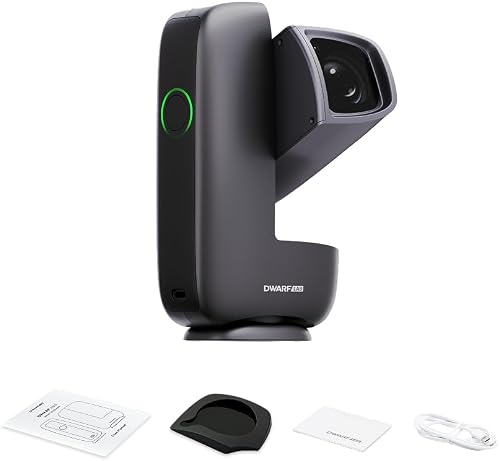
DWARFLAB Dwarf Mini Smart Telescope
Best for pocket-sized imaging - 6
 Check it
UNISTELLAR Odyssey Smart Telescope
Best for app-based planet imaging
Which smart telescopes work best for planets?
The best planetary smart telescope depends on whether you want to look through an eyepiece or collect images on a screen. The Celestron reflectors are visual scopes with phone guidance, while the UNISTELLAR Odyssey is an app viewed imaging model with stated planetary support.
We compared the supplied optical and control features against planetary viewing needs. Our score weighs specs, features and buyer feedback against what you're shopping for.
| Product | Best for | Objective lens | Focal length | Viewing | Our score |
|---|---|---|---|---|---|
| ZWO Seestar S30 Pro Smart Telescope | wide-field sky imaging | 30 mm | 160 mm | Smartphone or tablet | 9.7 |
| Celestron StarSense Explorer LT 114AZ Newtonian Smartphone | guided planet viewing on a budget | 1000 mm | Eyepieces | 9.3 | |
| Celestron StarSense Explorer DX 130AZ Smartphone Guided | a larger guided reflector | 650 mm | Eyepieces | 9.2 | |
| Celestron StarSense Explorer 8" Dobsonian Telescope | visual planetary detail | 1200 mm | Eyepiece | 9.1 | |
| DWARFLAB Dwarf Mini Smart Telescope | pocket-sized imaging | 30 mm | 150 mm | Smartphone | 9.1 |
| UNISTELLAR Odyssey Smart Telescope | app-based planet imaging | 320 mm | Smartphone or tablet | 8.5 |
How we chose the best planetary smart telescope
Aperture, intended use and viewing method matter most when comparing a planetary smart telescope. We favored products whose stated features fit visual planet viewing or planetary imaging, and included clear notes when a model is designed for other targets.
For visual detail, a larger aperture can help resolve small features when the air is steady and the optics are focused. A 203 mm reflector collects more light than 130 mm and 114 mm models, but its manual base still requires you to keep the planet in view.
For electronic imaging, check whether the manufacturer describes planetary use, live stacking or camera output. A device built around wide-field and deep-sky imaging can be automated and portable yet remain a poor match for close planet work.
Also consider how you want to observe. Phone guidance helps find a target; it does not mean the scope will track it automatically.
A motorized imaging telescope can follow targets, but its small optics may not show the same detail as a large reflector through an eyepiece.
Best smart telescopes for planets compared
The Celestron 8-inch Dobsonian is the strongest fit for visual planetary detail, while the Odyssey is the clearest match for app based planet imaging. The Seestar S30 Pro ranks first by its assigned overall score, but ZWO says it is not intended for planetary observation.
ZWO Seestar S30 Pro Smart Telescope: Best for wide-field sky imaging
- App controlled
- Automatic GOTO and tracking
- Dual-camera 4K imaging
- Designed for deep-sky objects
A compact app controlled imager for deep sky, the Moon and wide night landscapes. ZWO says it is not intended for planetary observation.
Pros
- Automatic target finding and tracking
- Built-in light pollution filters
- Portable 3.64 lb design
Cons
- Not intended for planetary observation
- No eyepiece viewing
Celestron StarSense Explorer LT 114AZ Newtonian Smartphone: Best for guided planet viewing on a budget
- 114 mm Newtonian reflector
- 10 mm and 25 mm eyepieces
- Phone guided target finding
- Manual altazimuth mount
A manual reflector that uses phone based sky recognition to guide you to planets and other targets. It offers direct eyepiece views.
Pros
- Eyepiece viewing of Jupiter and Saturn
- Phone guided sky tour
- Two eyepieces included
Cons
- Manual target tracking
- Phone guidance does not capture images
Celestron StarSense Explorer DX 130AZ Smartphone Guided: Best for a larger guided reflector
- 130 mm Newtonian reflector
- Dual-axis slow-motion controls
- Phone guided target finding
- 10 mm and 25 mm eyepieces
A 130 mm reflector with smartphone guidance and manual slow-motion controls. It suits observers who want to find planets with an eyepiece rather than view them on a phone.
Pros
- Larger aperture than the LT 114AZ
- Dual-axis slow-motion controls
- Eyepiece views of planets
Cons
- Manual mount needs user tracking
- No built-in electronic imaging
Celestron StarSense Explorer 8" Dobsonian Telescope: Best for visual planetary detail
- 203 mm Newtonian reflector
- StarSense phone guidance
- Manual Dobsonian base
- 25 mm eyepiece included
A large manual reflector for direct viewing of the Moon and planets, with a phone app that helps locate targets. Its 43.4 lb weight makes it less suited to frequent carrying.
Pros
- Largest aperture in this roundup
- Phone guided target finding
- Stable Dobsonian base
Cons
- Heavy at 43.4 lb
- Manual tracking
DWARFLAB Dwarf Mini Smart Telescope: Best for pocket-sized imaging
- 1.85 lb portable design
- App controlled Auto GOTO
- 360° rotation
- 90-second exposures
An especially portable app controlled imaging telescope for wide sky targets and lunar events. Its short focal length and small objective are less suited to detailed planet views.
Pros
- Very light and compact
- Automated tracking
- Built-in image processing
Cons
- Small 30 mm objective
- No eyepiece viewing
UNISTELLAR Odyssey Smart Telescope: Best for app-based planet imaging
- 85 mm optics
- 320 mm focal length
- Live image stacking
- Automatic tracking and autofocus
An app viewed smart telescope that supports planets and deep sky, with live stacking as images build during observing. It has no eyepiece, and results depend on target, sky conditions and collection time.
Pros
- Planetary and deep-sky modes
- Automatic focus and target finding
- Live image stacking
Cons
- No eyepiece
- Smaller aperture than the Dobsonian
What makes a telescope suitable for planetary viewing?
A planetary telescope needs enough resolving power, a stable view and optics suited to a small bright target. Smart features can simplify finding and following planets, but they do not replace aperture or good observing conditions.
For an eyepiece view, aperture is a useful starting point because it affects how much detail the telescope can resolve. The 203 mm Dobsonian has the largest aperture here, while the 130 mm and 114 mm reflectors trade some light gathering for a more manageable scope.
Focal length also shapes the view, but it is only part of the setup. Magnification depends on both telescope focal length and the eyepiece used, and high magnification can make an unsteady atmosphere look worse rather than reveal more detail.
Can smart telescope cameras capture planets?
Some smart telescopes support planetary imaging, but a deep-sky camera is not automatically a planetary camera. Check the stated target range and whether the device offers planetary modes, image stacking or output suited to capturing small bright objects.
The UNISTELLAR Odyssey is described for planets and deep sky, with live image stacking and automatic tracking. Its app viewing design removes the eyepiece, so it fits people who want a screen based observing session.
The ZWO Seestar S30 Pro and DWARFLAB Dwarf Mini emphasize deep sky, wide scenes, portability and app control. Their listed capabilities do not make them the strongest picks for close planetary detail; ZWO explicitly says the S30 Pro is not intended for planetary observation.
For more camera centered options, see our guide to smart telescopes for astrophotography. If you want to compare the DWARFLAB's compact design with its use cases, read the DWARFLAB Mini telescope review.
Which telescope is best for visual planet viewing?
A reflector with an eyepiece is the better choice when you want to observe a planet directly rather than view a processed image on a screen. Among these options, the 8-inch Dobsonian has the largest aperture, while the 130 mm DX offers a more compact manual reflector setup.
The Dobsonian uses a manual altazimuth base, so you move it to find a planet and keep it centered. Its StarSense app provides sky recognition and on-screen directions, which can make the first step easier without turning the base into a motorized tracker.
The DX 130AZ has dual-axis slow-motion controls and 10 mm and 25 mm eyepieces. The LT 114AZ uses an altitude slow-motion adjustment and includes the same two eyepiece focal lengths, making it a simpler entry point for guided visual observing.
If you want the basics of app guidance, target finding and telescope type in one place, use this smart telescope buying guide. For another beginner focused comparison, see smart telescopes for beginners.
Should you choose an eyepiece or a phone screen?
Choose an eyepiece if you want a direct visual view and are comfortable keeping the target centered by hand. Choose a phone screen if you prefer automated imaging, saved captures or sharing a processed image.
Eyepiece scopes can show a planet as a small bright disk, with visible detail depending on conditions and magnification. The StarSense reflectors pair a physical eyepiece with phone guidance, so the app helps you locate a target while you observe through the telescope.
App viewed telescopes have a different feel. The Odyssey displays and processes images through a compatible phone or tablet, while the DWARF Mini and Seestar S30 Pro are compact imaging systems aimed largely at wide-field and deep-sky work.
If a direct ocular view is a must, read our guide to choosing a smart telescope with an eyepiece. Check whether screen viewing or physical eyepiece viewing is your priority before comparing app features.
What limitations should you expect from planetary smart telescopes?
Planetary views are limited by the telescope's optics, the planet's apparent size, atmospheric steadiness and the viewing method. Smart features can find targets or process images, but they cannot remove those limits.
A small objective can make a telescope portable and easy to set up, yet it gives less resolving potential than a larger reflector. For compact night-sky options, see our guide to small telescopes for stargazing.
Short focal lengths also tend to favor wider views, so compact imaging scopes may be better suited to star fields and deep-sky objects than small planetary disks.
Manual mounts require attention while observing. Even when an app points you toward the planet, you may need to nudge the telescope as the sky appears to move; a manual tracking task can be part of the observing experience.
Planetary imaging also depends on the camera and the software's purpose. A model described for deep-sky imaging may capture the Moon or broad sky scenes, but that does not mean it is designed to record fine detail on Jupiter or Saturn.
Which planetary smart telescope should you choose?
Choose the Celestron 8-inch Dobsonian for the strongest visual detail potential, the UNISTELLAR Odyssey for app based planet imaging, or the DX 130AZ for a guided reflector with manual controls. Pick the Seestar S30 Pro or Dwarf Mini for portable wide-field and deep-sky sessions rather than close planetary observation.
Our top 3 picks at a glance
-
1
Best for wide-field sky imaging
ZWO Seestar S30 Pro Smart Telescope
9.7/10 our score
See it on Amazon -
2
Best for guided planet viewing on a budget
Celestron StarSense Explorer LT 114AZ Newtonian Smartphone
9.3/10 our score
See it on Amazon -
3
Best for a larger guided reflector
Celestron StarSense Explorer DX 130AZ Smartphone Guided
9.2/10 our score
See it on Amazon
Frequently asked questions
Can a smart telescope show planets clearly?
Yes, but clarity depends on the telescope's optics, the planet's apparent size, sky conditions and how you view it. A small smart imager may show the Moon or a bright planet as a compact target, while a larger reflector can provide a more direct eyepiece view.
Check whether a model is designed for planetary observation before choosing it.
Are smart telescopes good for planetary imaging?
Some are, but smart telescopes vary in their intended targets. The UNISTELLAR Odyssey supports planets and live image stacking, while ZWO says the Seestar S30 Pro is designed for deep sky and not intended for planetary observation.
Look for explicit planetary support and suitable optics rather than assuming every automated imager is a planet camera.
Is a larger aperture better for viewing planets?
A larger aperture can gather more light and resolve finer detail when the optics, focus and atmosphere allow it. The 203 mm Celestron Dobsonian has more aperture than the 114 mm and 130 mm reflectors here.
Aperture alone does not guarantee a sharp view on a night with unsteady air.
Do smart telescopes have eyepieces?
Some do and some show the view through a phone or tablet. The Celestron StarSense reflectors in this roundup use eyepieces, while the UNISTELLAR Odyssey is app viewed and has no eyepiece.
Decide whether you want a direct visual view, a saved image, or both before buying.
Can a phone-guided telescope track a planet automatically?
Phone guidance and automatic tracking are different features. The StarSense Explorer scopes use an app to point you toward a target, then you move the manual mount to keep it centered.
Models with motorized tracking handle that movement for you, but their imaging strengths and target limits still matter.