How to Clean Telescope Lenses
Clean telescope lenses only when they need it: blow away loose dust first, then use lens-safe materials with light pressure. Avoid household cleaners, dry rubbing, and touching glass with your fingers.
On this page (11 sections)
- How do you clean telescope lenses safely?
- How often should telescope lenses be cleaned?
- What supplies are safe for telescope optics?
- How do you remove dust without scratching the glass?
- How do you remove fingerprints and smudges?
- Should you clean an eyepiece the same way?
- Can you clean the telescope's objective lens yourself?
- What cleaning mistakes can damage telescope coatings?
- Is CO2 cleaning safe for telescope lenses?
- What should you do if dirt is inside the telescope?
- How should you store a telescope after cleaning?
Clean telescope lenses only when they need it: remove loose dust first, then use lens-safe materials and light pressure for fingerprints or residue. Dry rubbing, household cleaners, and rough cloths can scratch glass or harm optical coatings.
A little dust on an objective lens or eyepiece often has less effect than people expect. Start by checking the view and inspecting the surface under soft light; don't clean just because you can see a few specks.
How do you clean telescope lenses safely?
Use a blower before any cloth or tissue touches the glass. If a mark remains, follow the telescope maker's cleaning instructions and use materials made for coated optics.
- Take the telescope indoors and work in a clean, well-lit area.
- Remove loose dust with a hand blower, keeping its tip away from the lens.
- If marks remain, use optical lens tissue or a clean microfiber cloth approved for optics.
- Moisten the tissue or cloth with a small amount of lens-safe cleaner, if the care instructions allow it.
- Wipe gently from the center outward, using a fresh part of the material for each pass.
- Stop when the mark is gone, then let the surface dry before replacing the cap.
Avoid pressing down or repeatedly wiping the same spot. A small amount of grit can drag across the surface and leave fine scratches.
How often should telescope lenses be cleaned?
Clean only when dirt or residue is affecting the view or clearly needs removal. Routine cleaning adds handling and contact with delicate surfaces without improving a view that is already clear.
Keep the front cap and eyepiece caps on when the telescope isn't in use. After observing, let moisture evaporate in a dry place before storing the telescope, then cap it.
If the image looks soft, dirty glass is only one possible cause. Check focus, atmospheric conditions, and alignment as well; our guide to why a telescope is blurry covers common causes.
What supplies are safe for telescope optics?
Use a hand blower, lens tissue, and cleaner labeled for coated optical glass, following the telescope maker's instructions. A clean microfiber cloth can work if it's intended for optics and hasn't collected grit, skin oil, or dust.
Keep cleaning materials in a closed bag or case. Don't reuse tissue that has touched another surface, and wash microfiber cloths without fabric softener before letting them air dry.
A laboratory lens set can help demonstrate how convex and concave glass changes light, but it isn't a cleaning kit. The EISCO set includes 3 double convex and 3 double concave glass lenses in 200 mm, 300 mm, and 500 mm focal lengths.
Use it for optics demonstrations, not as a replacement lens set or a surface-cleaning tool for your telescope. If your goal is observing, an eyepiece that fits your focuser is more useful than loose demonstration lenses.
How do you remove dust without scratching the glass?
Blow loose particles away before wiping. A hand blower helps move dust without dragging it over the coating.
Hold the telescope so dust can fall away from the glass, and use short puffs from a blower designed for optics. Don't touch the lens with the blower tip, and avoid blowing with your mouth because saliva can leave spots.
Never start with a dry cloth or tissue. If dust remains after blowing, repeat the gentle puffing before considering a damp optical wipe.
How do you remove fingerprints and smudges?
Use the least amount of lens-safe cleaner needed, and wipe with almost no pressure. Apply cleaner to the tissue or cloth rather than spraying the telescope.
Use a fresh optical tissue for each pass. Wipe in a light motion from the center toward the edge, then discard the tissue so grit and oils don't return to the glass.
Don't use paper towels, tissues for the face, shirt fabric, or household glass cleaner. These can contain fibers, grit, or chemicals that aren't suited to coated optics.
If a smudge won't lift with a careful pass, stop. Repeated scrubbing can do more harm than leaving a faint mark until you can get advice from the telescope maker.
Should you clean an eyepiece the same way?
Yes, start with dust removal and use materials approved for coated optics, but take extra care around the small eye lens. Eyepiece lenses are easy to touch and can collect fingerprints during ordinary use.
Keep the eyepiece capped when it's not in the focuser. Hold it by the barrel, and avoid putting fingers near either glass surface.
The SVBONY SV135 is a 7–21 mm zoom eyepiece with a standard 1.25 in barrel and fully multi-coated optics. Its zoom range may suit observers who want to change magnification without swapping eyepieces.
Check your telescope's focuser size before choosing an eyepiece. For more options, compare wide-angle telescope eyepieces or eyepieces for Celestron telescopes.
Can you clean the telescope's objective lens yourself?
You can remove light dust or a fresh fingerprint if the telescope maker's instructions allow it. If the lens is dirty inside, has fungus, or the mark won't lift easily, get guidance before opening or scrubbing the assembly.
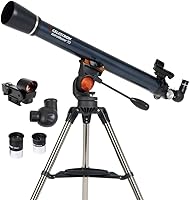
The objective lens is the large lens at the front of a refractor. The Celestron AstroMaster 70AZ is a refractor with a fully coated 70 mm achromatic objective, so its care instructions should guide any cleaning.
Don't take a refractor apart to clean between its lenses. The spacing and alignment of lens elements matter, and disassembly can introduce dust or change how the optics work.
What cleaning mistakes can damage telescope coatings?
Avoid dry rubbing, strong pressure, household cleaners, and disassembly. These shortcuts can turn a small spot into a scratch or a repair problem.
Don't use your breath to fog the glass before wiping. Moisture from breath can carry oils and particles, and a cloth can grind them into the surface.
Don't touch coatings with fingers or use cotton swabs unless the telescope maker's procedure calls for them. If you see oily residue or a stubborn mark, use the recommended optical cleaner and a fresh tissue rather than escalating pressure.
Collimation is a different issue from cleaning. If a Newtonian image is poor after checking the optics, learn how to collimate a Newtonian telescope; for a refractor, see how to collimate a refractor telescope.
Is CO2 cleaning safe for telescope lenses?
CO2 cleaning can remove some particles without wiping, but use a method intended for optical surfaces. Follow the equipment maker's guidance, since pressure, nozzle distance, and the kind of contamination matter.
A CO2 system isn't necessary for ordinary home care. For a few dust particles, a hand blower is simpler; for fingerprints, use lens-safe tissue and cleaner if the telescope instructions permit it.
Read how CO2 cleaning works for telescopes before choosing that approach. Don't point a high-pressure stream at a lens unless the system is designed for delicate optics.
What should you do if dirt is inside the telescope?
Don't open a sealed optical assembly to reach internal dust. A telescope maker or qualified repair shop can advise whether the dust matters and how to address it safely.
Dust between lens elements may be visible under certain lighting but have little effect on the view. Internal fungus, haze, or widespread residue needs more care than ordinary surface dust.
Keep the telescope dry and avoid storing it with moisture trapped under the caps. If you see fungus or a change in the image, contact the manufacturer or a telescope service provider.
How should you store a telescope after cleaning?
Let the optics dry fully, then replace the caps and store the telescope in a dry place. This limits fresh dust and moisture without frequent cleaning.
Keep the telescope away from damp basements, hot cars, and direct sunlight. A case can reduce dust exposure, but don't seal damp equipment inside it.
For routine care, clean only visible marks that affect use, use gentle materials, and stop when a mark resists. Choose a hand blower for loose dust, lens-safe tissue for light residue, and professional advice for internal dirt or fungus.
Frequently asked questions
How often should you clean telescope lenses?
Clean telescope lenses only when dust, fingerprints, or residue noticeably affect viewing. A few dust specks usually matter less than the risk of scratching a coating during unnecessary cleaning.
Keep caps on between sessions and inspect the glass under soft light before deciding.
Can I use glasses cleaner on telescope lenses?
Don't assume glasses cleaner is safe for telescope optics, since its ingredients may not suit a lens coating. Follow the telescope maker's care instructions and use a cleaner labeled for coated optical glass.
Apply it to a lens tissue or cloth, not directly to the lens.
Can I use compressed air to clean a telescope lens?
A hand blower is the safer first choice for loose dust because it doesn't bring a can close to the glass. Canned air can release liquid propellant or force debris across the surface, so avoid it unless your telescope maker specifically recommends a product and method.
What should I do if a telescope lens has fungus?
Don't scrub fungus or use household chemicals on telescope optics. Fungus can damage coatings and may need professional service, especially if it is inside a sealed lens assembly.
Keep the telescope dry, cap it only after it has aired out, and ask the manufacturer or a telescope repair shop for guidance.