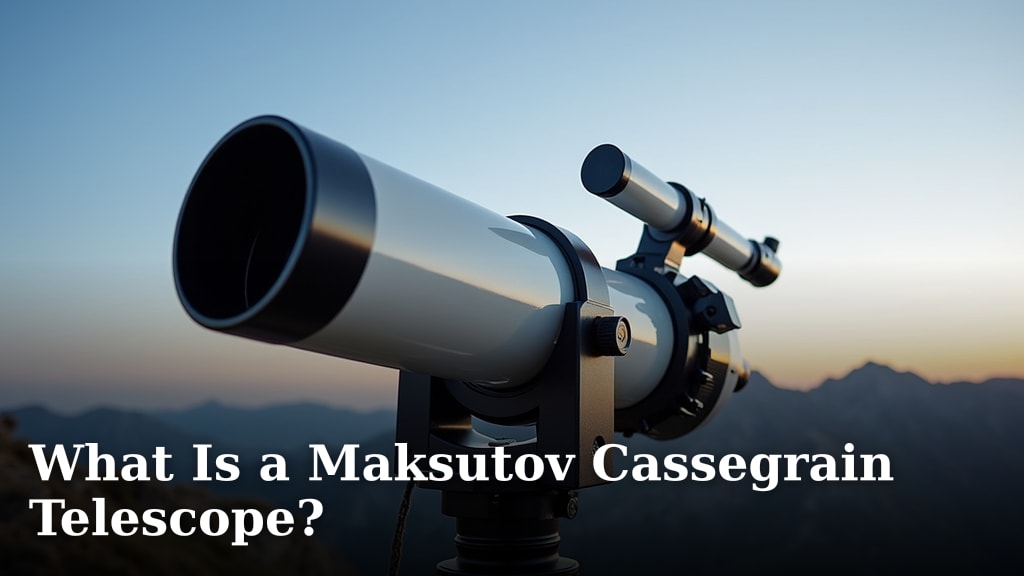
Maksutov-Cassegrain vs Newtonian: Which Should You Choose? (November 2026)
Choose a Maksutov-Cassegrain for a compact tube and a Newtonian reflector for more aperture per dollar and broad views. Your observing targets, storage space and willingness to maintain the optics should decide between them.
On this page (10 sections)
- Maksutov-Cassegrain vs Newtonian reflector: what is the main difference?
- Which telescope is easier to carry and store?
- Which design suits planets, the Moon and deep-sky objects?
- Which telescope is easier to maintain?
- How does the mount change the comparison?
- What do the example Newtonian telescopes show?
- Which design gives better value?
- Who should choose a Maksutov-Cassegrain?
- Who should choose a Newtonian reflector?
- Which telescope should you choose?
Choose a Maksutov-Cassegrain for a compact tube and a Newtonian reflector for more aperture per dollar and broad views. Your observing targets, storage space and tolerance for optical upkeep should guide the Maksutov-Cassegrain vs Newtonian reflector choice.
A Maksutov uses a corrector plate and mirrors to fold a long focal path into a short tube. A Newtonian uses a primary mirror and a small diagonal secondary mirror, with the eyepiece at the side of the tube.
The design affects more than size. It changes how much sky fits in the view, how easily you transport the telescope and how often you may need to adjust the optics.
 Best for adaptable observing setups
NEEWER 22 Inch/60 Centimeter Light Reflector Light

Maksutov-Cassegrain vs Newtonian reflector: what is the main difference?
A Maksutov-Cassegrain folds its light path inside a compact tube, while a Newtonian sends light to a side-mounted eyepiece with two mirrors. That layout gives each design a distinct balance of portability and aperture.
The Maksutov's corrector plate sits at the front of the tube. Its curved shape and secondary mirror direct light back through the primary mirror, then out through the rear focuser.
A Newtonian has an open front and a large primary mirror at the back. A small diagonal mirror near the front redirects the image to the focuser on the side.
For a plain-language overview of the compact design, see What Is a Maksutov Cassegrain Telescope?. A simple guide to Newtonian telescopes explains the reflector's mirror path.
These are both reflecting telescope designs, though a Maksutov is more precisely a catadioptric telescope because it combines lenses and mirrors. If you are comparing broader optical families, Is a Refractor or Reflector Telescope Better? covers that choice.
Which telescope is easier to carry and store?
A Maksutov-Cassegrain usually wins on tube length, while a Newtonian's size grows with its aperture. Remember to consider the mount, tripod and case along with the optical tube.
The Maksutov's folded light path makes a relatively short tube possible. This can help it fit in a closet, car trunk or small observing area.
A Newtonian tube is longer because it holds the primary mirror at one end and the secondary mirror farther up the tube. A larger aperture generally means a wider and heavier optical assembly, which takes more room to move and store.
Compact does not always mean light. Maksutov optics can be dense, and the mount still has to hold the telescope steadily.
How does portability affect observing plans?
The easier telescope to carry is often the one you use more often. If you observe from a balcony or take short trips to a nearby dark site, the Maksutov's short tube can make packing simpler.
A small Newtonian can still travel well, particularly when its tube and mount separate for transport. Check the combined weight and dimensions of the full setup, not just the telescope tube.
If you want a larger Maksutov example, our Sky-Watcher Skymax 180mm Maksutov review discusses a model with a much larger aperture than a typical compact travel scope. Its size also shows why a Maksutov's short tube does not automatically mean a tiny, light package.
Which design suits planets, the Moon and deep-sky objects?
A Maksutov-Cassegrain suits bright, compact targets, while a Newtonian's wider field and aperture can suit a broader range of deep-sky viewing. Both can show the Moon and planets when the optics are aligned and the air is steady.
Maksutovs commonly have long focal lengths relative to their tube length. This makes them a natural choice for lunar and planetary observing, where you often want higher magnification and a narrower view.
Newtonians can have shorter focal ratios, especially in larger Dobsonian models. That makes it easier to fit wide star fields and extended objects into the eyepiece view.
Aperture matters for both designs. A larger mirror or primary optic gathers more light and can reveal fainter details, but it also asks for more from your mount, storage space and transport plan.
What about star clusters and large nebulae?
A wide-field Newtonian is often easier to use for large open clusters and extended nebulae. Its shorter focal length can show more of the surrounding sky in one view.
The Maksutov's narrower field can make a large object difficult to frame completely. It can still show many deep-sky targets, especially smaller objects that fit well at higher magnification.
A useful rule is to choose the telescope around the objects you most want to see. If you often switch between planets and broad star fields, a Newtonian with suitable eyepieces may offer more flexibility.
Which telescope is easier to maintain?
A Newtonian usually needs more regular optical alignment checks, while a Maksutov-Cassegrain's enclosed tube helps protect its mirrors. Neither design is maintenance-free.
Newtonian mirrors can shift slightly from bumps or changes in temperature. Collimation, the process of aligning the mirrors, keeps the optics working together and is a normal part of owning many Newtonians.
The Maksutov's enclosed design protects its primary mirror from dust and casual contact. Its corrector plate still needs careful cleaning, and a closed tube can take time to cool to the outdoor temperature.
Never use household glass cleaner on telescope optics unless the manufacturer specifically allows it. Follow the manual's method and avoid touching mirror surfaces.
If mirror alignment feels like a barrier, you may prefer the Maksutov's lower routine adjustment needs. If you are comfortable learning collimation, a Newtonian's upkeep can be manageable.
How does the mount change the comparison?
A telescope's mount can matter as much as its optical design for steady, comfortable viewing. Include the mount in your budget, setup time and transport calculations.
Both designs are sold with different mounts. A compact Maksutov on a small alt-azimuth mount can be quick to point, while a Newtonian on an equatorial mount may need polar alignment before tracking smoothly.
Larger Newtonians often use Dobsonian mounts. They move by hand in altitude and azimuth, with a simple base that can support substantial aperture.
A mount that shakes at high magnification can make planetary viewing frustrating. Check payload capacity and stability for the exact tube you plan to use.
For another folded-tube comparison, Schmidt-Cassegrain vs Newtonian telescope shows how a related catadioptric design compares with the same reflector family. A Schmidt-Cassegrain uses a different corrector and secondary mirror arrangement from a Maksutov.
What do the example Newtonian telescopes show?
The Newtonian examples here illustrate how aperture, focal length and mounting choices vary within the design. They are examples of the reflector side of this comparison, not direct equivalents to a particular Maksutov.
The Celestron PowerSeeker 127EQ has a 127 mm aperture and 1000 mm focal length. It includes a manual German equatorial mount, 20 mm and 4 mm eyepieces, and a 3x Barlow lens.
The MEEZAA 150EQ has a 150 mm aperture and 650 mm focal length. It comes with an equatorial mount, a carry bag, two eyepieces and a 2x Barlow lens.
The wider aperture of the MEEZAA can gather more light than the 127 mm Celestron, while the shorter focal length points toward a broader-field setup. Actual views depend on eyepiece choice, collimation, atmospheric conditions and the observing site.
For readers who want more mirror aperture in a hand-pushed mount, explore best Dobsonian reflector telescopes. If focusing precision is your concern, our guide to best focusers for Newtonian telescopes can help you compare upgrade options.
Which design gives better value?
A Newtonian often gives more aperture for the money, while a Maksutov charges more for compactness and a long focal length. Compare complete setups at similar aperture and include the mount.
The price gap varies by size and brand, so there is no single rule for every model. A small Newtonian may cost less than a Maksutov of similar aperture, but a sturdy mount can narrow the difference.
A larger Newtonian can also bring added costs. You may need a bigger mount, more storage space and collimation tools.
The Maksutov's compactness can be worth the trade if space is limited or you travel often. The value is not only about aperture, but also about how easily the telescope fits your routine.
Who should choose a Maksutov-Cassegrain?
Choose a Maksutov-Cassegrain if compact storage, a short tube and lunar or planetary viewing are your priorities. It is a practical match when you have limited room or want a focused observing setup.
It can also suit observers who would rather spend less time checking mirror alignment. Its enclosed tube helps keep the internal optics protected between sessions.
Look closely at the complete package before choosing. A large Maksutov still needs a sturdy mount, cooling time and careful handling.
Who should choose a Newtonian reflector?
Choose a Newtonian reflector if you want more aperture for your budget, broader views or a simple Dobsonian mount. It is often a flexible first telescope for observers who have room for a longer tube.
Be ready to learn basic collimation and plan for a more substantial setup as aperture grows. A Newtonian's benefits are strongest when the mount is stable and the mirrors are aligned.
For a 127 mm Newtonian with an equatorial mount, the Celestron PowerSeeker 127EQ is one example. For a wider aperture and shorter focal length, the MEEZAA 150EQ offers another configuration.
Which telescope should you choose?
Pick a Maksutov-Cassegrain for compact storage and bright, narrow-field targets; pick a Newtonian reflector for aperture, broader views and value. Then check the mount, full setup weight and care routine against how you actually observe.
If your main targets are the Moon and planets and you need a short tube, lean toward a Maksutov. If you want to explore clusters and nebulae with more aperture, and can manage the tube size and alignment, a Newtonian is likely the better fit.
For more context on the compact folded design, start with What Is a Schmidt Cassegrain Telescope? A Clear Answer.
The optical details differ, but it can help you compare another short-tube alternative before you decide.
Frequently asked questions
Is a Maksutov-Cassegrain better than a Newtonian?
A Maksutov-Cassegrain is often the easier fit when compact storage and portability matter most. A Newtonian can offer more aperture for the money and a wider field of view, but its tube is usually bulkier and its mirrors may need alignment.
The better choice depends on your targets and setup space.
Which telescope needs more maintenance?
A Newtonian reflector's exposed primary mirror and secondary mirror can need periodic collimation, or optical alignment. A sealed Maksutov usually needs less frequent alignment, though it still needs careful handling and clean optics.
Follow the exact telescope manual for cleaning and adjustment.
Can a Maksutov-Cassegrain show deep-sky objects?
Yes, a Maksutov can show deep-sky objects, but its typically long focal ratio and narrower field can make large objects harder to frame. Bright compact targets such as globular clusters and planetary nebulae are a more natural match than very wide nebulae.
Is a Newtonian reflector good for planets?
Yes, a well-collimated Newtonian can give detailed views of the Moon and planets, especially when its aperture and mount are steady enough for the conditions. Let the telescope cool toward outdoor temperature and use magnification that the atmosphere can support.
Which is easier to travel with?
A Maksutov-Cassegrain is usually easier to pack because its folded optical design makes the tube short for its focal length. A Newtonian's tube can take more room, especially in larger apertures, but the mount and tripod also affect total travel convenience.