Schmidt-Cassegrain vs Newtonian Telescope: Which Is Better? (November 2026)
Choose a Schmidt-Cassegrain for a compact tube and a Newtonian for a simpler optical path and more aperture for the money. Your best fit depends on how you plan to carry, mount and use the telescope.
On this page (9 sections)
- Schmidt-Cassegrain vs Newtonian Telescope: Which Should You Choose?
- Schmidt-Cassegrain telescope vs Newtonian: what is the main difference?
- Which design gives you more aperture for the money?
- Which telescope is easier to store and transport?
- Which mount and setup fit your observing style?
- What views can you expect from each design?
- How much maintenance does each design need?
- What should you compare before buying?
- Schmidt-Cassegrain vs Newtonian: which should you choose?
Schmidt-Cassegrain vs Newtonian Telescope: Which Should You Choose?
Choose a Schmidt-Cassegrain for a compact optical tube, or a Newtonian when aperture and a direct optical design matter more. In a Schmidt-Cassegrain telescope vs Newtonian comparison, the mount and your observing habits can matter as much as the optics.
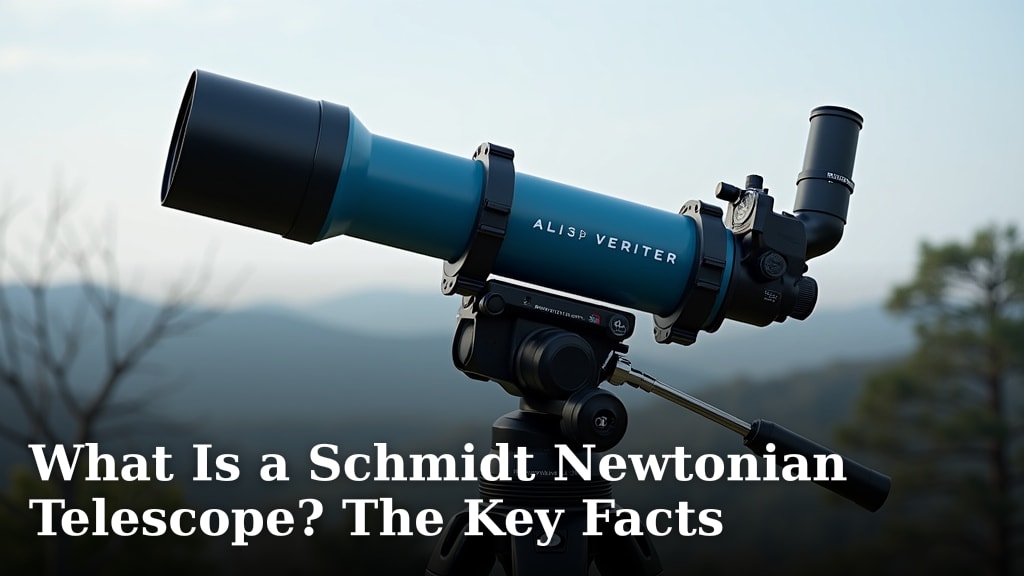
A Schmidt-Cassegrain folds the light path inside a short tube using a corrector plate and mirrors. A Newtonian uses a primary mirror and a smaller diagonal mirror to send the image to the side of the tube.
These designs suit different priorities. Compare tube length, aperture, mount, setup and care before settling on one.
 Best for compact 8-inch aperture
Celestron NexStar 8SE Computerized Telescope
 Best for manual Newtonian viewing
Celestron StarSense Explorer LT 114AZ Newtonian Smartphone
Schmidt-Cassegrain telescope vs Newtonian: what is the main difference?
A Schmidt-Cassegrain folds its optical path, while a Newtonian sends light from its primary mirror to a side-mounted eyepiece. This gives the SCT a shorter tube for its focal length, while a Newtonian uses a more direct arrangement of mirrors.
In an SCT, light passes through a thin corrector plate at the front, reflects from a primary mirror, then from a secondary mirror and back through a hole in the primary. The eyepiece sits at the rear.
Read what a Schmidt-Cassegrain telescope is for a closer look at the design.
A Newtonian's primary mirror reflects light toward a small diagonal mirror near the front of the tube. That mirror sends the image to an eyepiece on the side.
This arrangement is explained in how a Newtonian telescope works.
The optical layout sets up the main tradeoff. SCTs can pack a long focal length into a compact tube, while Newtonians often provide a larger aperture at a given budget.
Which design gives you more aperture for the money?
A Newtonian often delivers more aperture for a given budget because its optical design is comparatively simple. Larger aperture gathers more light, which can help reveal faint deep-sky objects and fine detail when viewing conditions cooperate.
Aperture is the diameter of the main mirror or lens. It affects light gathering and theoretical resolution, but it does not guarantee a sharper image on every night.
Atmospheric turbulence, collimation, thermal changes and mount stability also shape what you see.
An 8-inch Newtonian gathers more light than a 5-inch SCT, but those are different aperture classes, so this isn't a same-size design comparison. For a size decision within Dobsonian Newtonians, see 8-inch vs 10-inch Dobsonian.
An SCT can still be the right buy when portability or tracking is more important than maximum aperture per dollar. The NexStar 8SE combines an 8-inch SCT with a computerized GoTo mount, a database of more than 40,000 objects and SkyAlign.
Which telescope is easier to store and transport?
A Schmidt-Cassegrain optical tube is usually shorter than a Newtonian tube with a similar focal length. That compact shape can make it easier to store and carry, although the full setup still includes its mount and tripod.
The folded light path is the reason for the shorter tube. A long focal length can fit inside a compact optical tube, which helps when you have limited storage or need to carry the telescope in a car.
Newtonians vary widely in size. A small tabletop reflector is easy to move, while a large Dobsonian can be bulky even if its base breaks down from its tube.
Check the packed dimensions and total weight of the complete setup, not just the optical tube. You also need room for accessories, a stable observing spot and a safe route through doors or stairs.
Which mount and setup fit your observing style?
Choose the mount based on how you want to find and follow objects. Either telescope design can be paired with manual or computerized mounts, but the mount changes cost, setup and ease of use.
A manual mount asks you to point the scope and keep the object in view yourself. This can be a straightforward way to learn the sky, but tracking at high magnification takes frequent small adjustments.
A computerized GoTo mount can locate and track selected objects after you align it. That adds electronics and setup steps, and the mount needs power and a suitable alignment process.
Smartphone guidance is another option. The StarSense Explorer LT 114AZ Newtonian is a manual reflector with app-based sky guidance, while the StarSense Explorer DX 5-inch SCT combines a compact SCT design with a manual altazimuth mount and dual-axis slow-motion controls.
These two links explain the telescope types and designs, but the products are distinct models. The LT 114AZ is a 114 mm Newtonian reflector; the DX is a 130 mm Schmidt-Cassegrain.
What views can you expect from each design?
Both designs can show the Moon, planets and deep-sky objects when aperture, optics and observing conditions support the target. The design name alone doesn't tell you which view will look better.
The Moon is bright and detailed in modest telescopes. Jupiter's cloud bands and Saturn's rings are common targets, while galaxies and nebulae generally benefit from dark skies and more aperture.
For deep-sky viewing, aperture helps gather light, but a wider field of view can also make large objects easier to frame. A Newtonian often offers a shorter focal ratio and wider-field options for its aperture, while SCTs commonly have longer focal lengths that suit high magnification.
Magnification comes from the telescope's focal length and the eyepiece. More magnification does not add detail if the atmosphere, optics or target brightness cannot support it.
A large telescope can show more, but it also needs time to adjust to outdoor temperature. Plan setup before a short observing session, especially if you are moving from a warm house to cool air.
How much maintenance does each design need?
A Newtonian may need occasional mirror alignment, while an SCT's closed tube can help limit dust on its mirrors. Both designs still need careful storage and cleaning only when needed.
Newtonian collimation aligns the primary and secondary mirrors. Transport can shift alignment, so check it when views seem soft or before a demanding observing session.
An SCT's corrector plate is exposed at the front and can collect dust or dew. Use the maker's recommended cleaning method, and avoid wiping optics unless they need it.
Either telescope benefits from a stable mount and careful handling. Protect the optics from impact, keep caps on when not observing, and avoid leaving the telescope in a damp storage area.
What should you compare before buying?
Compare complete kits by aperture, mount, portability, setup and included accessories. If daytime viewing is also a priority, compare a telescope vs spotting scope.
The telescope tube is only one part of the cost and the observing experience.
Check the mount's load capacity and stability for the optical tube. A shaky mount can make focusing and high-magnification viewing frustrating, regardless of optical design.
Look at the eyepieces and finder included, then consider whether the mount tracks automatically or requires manual movement. For a wider overview of reflector options, use this guide to types of reflecting telescopes.
Also compare other folded-path designs if compactness is a priority. A Maksutov-Cassegrain vs Newtonian reflector comparison helps explain how the Maksutov's corrector design changes the choice.
Schmidt-Cassegrain vs Newtonian: which should you choose?
Pick a Schmidt-Cassegrain if a compact tube, longer focal length or computerized tracking fits your plans; pick a Newtonian if you want aperture value and a direct manual setup. For a compact alternative, see the Sky-Watcher Skymax 180mm Maksutov review.
Measure your storage and transport limits, then choose the mount that matches how you observe.
For an SCT with automated locating, the NexStar 8SE combines 8-inch optics with GoTo and SkyAlign. For a manual Newtonian with phone guidance, the LT 114AZ is a 114 mm option; for app-guided SCT viewing, the DX 5-inch pairs 130 mm optics with slow-motion controls.
If you are still comparing compact designs, read what a Maksutov-Cassegrain telescope is before deciding. The right telescope is the one whose aperture, setup and portability make you more likely to use it.
Frequently asked questions
Is a Schmidt-Cassegrain better than a Newtonian?
A Schmidt-Cassegrain is often a better fit when a compact tube matters, while a Newtonian can offer more aperture for the money. Neither design is best for every observer.
Compare the full setup, including mount, storage, transport and how you want to find objects.
Which telescope is easier for a beginner?
A beginner may find either design manageable with the right mount and finding aid. A manual Newtonian teaches you to point the telescope yourself, while a computerized Schmidt-Cassegrain can locate and track selected targets after alignment.
Smartphone-guided models offer another way to learn the sky.
Does a Newtonian need collimation?
A Newtonian's mirrors may need alignment checks, known as collimation, to keep the optics working together. How often depends on transport and use.
Follow the telescope's manual and learn the adjustment method for the exact model before changing its mirror position.
Are Schmidt-Cassegrain telescopes good for planets?
Schmidt-Cassegrain telescopes can show the Moon and planets well when the optics are aligned, the air is steady and the telescope has cooled to the outdoor temperature. Aperture, magnification and observing conditions all affect detail, so the design alone cannot guarantee a view.
Which design is easier to carry?
A Schmidt-Cassegrain optical tube is often shorter than a Newtonian with similar aperture, which can make storage and transport easier. The whole setup still matters: mount, tripod, accessories and total weight can change how easy it is to carry.