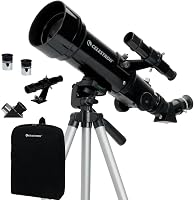
What Is a Dobsonian Telescope Design? What to Know
On this page (6 sections)
A Dobsonian telescope is a type of reflector telescope that uses a simple alt-azimuth mount. This design makes it a popular choice for amateur astronomers. They are known for offering a large aperture for the price.
The Dobsonian design was pioneered by John Dobson. It’s a practical approach to building a powerful telescope that’s easy to use and move. Many beginners find this design to be highly accessible for observing the night sky. It makes observing easier for you.
- Dobsonian telescopes are reflector telescopes.
- They use a simple alt-azimuth mount.
- This design is budget-friendly.
- It offers a large aperture for its cost. A slow focal ratio telescope is often better for planetary viewing, which Dobsonians can excel at.
- Dobsonians are good for beginners.
We found that understanding the Dobsonian design can really help you pick the right telescope. Below, we’ll break down exactly what makes this design special and what you should know before you buy one.
Understanding the Dobsonian Telescope Design
A Dobsonian telescope is a fantastic choice for anyone wanting to gaze at the stars without breaking the bank. It’s a type of reflector telescope that’s known for being powerful yet simple. You might be wondering what makes this design so popular among amateur astronomers. The answer lies in its clever engineering and its focus on usability.
What Exactly Is a Dobsonian Telescope?
At its core, a Dobsonian telescope is a Newtonian reflector telescope. The optical path is explained in our Newtonian telescope guide. This means it uses mirrors to gather light and form an image. What sets it apart is its mount. Instead of a bulky equatorial mount, it uses a simple alt-azimuth mount. This mount moves the telescope up-down (altitude) and left-right (azimuth).
Think of it like pointing a camera. The mount is built from sturdy materials, often wood or plastic, providing a stable base. This simple design is what makes Dobsonians so affordable and user-friendly. It’s a design that John Dobson himself helped popularize because he believed astronomy should be accessible to everyone.
The Mirror and Optics: Seeing Farther
The main point of any telescope is its ability to gather light. This is measured by its aperture, the diameter of its primary mirror. Dobsonians are famous for offering a large aperture for the price. A larger aperture means you can see fainter objects and finer details.
For instance, a 6-inch Dobsonian can show you more than a smaller refractor telescope that costs the same. You can see the rings of Saturn, the moons of Jupiter, and even the craters on the Moon with impressive clarity. We found that the large aperture is a major draw for beginners and experienced observers alike.
The Mount: Simple, Sturdy, and Stable
The alt-azimuth mount is the heart of the Dobsonian design. It’s incredibly intuitive to use. You simply push the telescope in the direction you want to look. This is a far cry from the more complicated equatorial mounts that require alignment with celestial poles. For someone just starting out, this ease of use is a big advantage.
The mount is typically a rocker box. This box is designed to hold the optical tube and allow it to pivot smoothly. The base of the rocker box rests on a rotating turntable. This allows for smooth 360-degree movement. Many Dobsonians are built with wood, which adds stability and a classic look.
We found that the stability of the mount is critical. A wobbly mount makes it hard to keep your target in view. Dobsonian mounts, especially those with a good design, offer excellent stability. This is important when you’re trying to observe distant galaxies.
Key Features and Benefits of a Dobsonian Telescope
Why choose a Dobsonian over other telescope types? The benefits are clear, especially if you’re looking for a telescope that offers great performance without complexity.
Large Aperture for Your Budget
This is perhaps the biggest selling point. You can get a telescope with a 6-inch, 8-inch, or even larger primary mirror for a fraction of the cost of a similarly sized refractor or Schmidt-Cassegrain telescope. This means you’re getting more ‘bang for your buck’ when it comes to light-gathering power. Understanding a fast focal ratio telescope can help you appreciate the trade-offs in Dobsonian design.
For example, many astronomy clubs and experienced observers recommend a 6-inch or 8-inch Dobsonian as an excellent first telescope. You’ll be able to see a wide variety of celestial objects. We found that this aperture range provides a satisfying viewing experience for many years.
Ease of Use for Beginners
The simple alt-azimuth mount makes operating a Dobsonian very straightforward. There’s no complex alignment needed before you start observing. Just set it up, point it, and look. This lack of technical hurdle means you can spend more time enjoying the view and less time fiddling with equipment.
This ease of use is especially helpful when you’re observing with children or friends who are new to astronomy. They can easily take turns pointing the telescope. It makes stargazing a more social and accessible activity.
Portability and Setup
While larger Dobsonians can be a bit heavy, many are designed to be relatively portable. The optical tube and the base of the mount can often be separated. This makes them easier to transport in a car. Setting them up usually involves placing the base on the ground and then setting the tube into the rocker box.
We found that while a very large Dobsonian might require two people to move, most common sizes (like 6 or 8 inches) are manageable for a single person. The quick setup means you can be observing soon after arriving at your stargazing location. This is a big plus compared to telescopes that require extensive assembly.
Versatility for Different Objects
With a Dobsonian, you can observe a vast range of celestial objects. Planets show their details, from Jupiter’s cloud bands and moons to Saturn’s rings. You can also explore deep-sky objects like nebulae, star clusters, and galaxies. These faint, distant wonders are best viewed through telescopes with large apertures, something Dobsonians excel at.
The wide field of view possible with some Dobsonian setups also makes it easier to find and track objects. You can sweep across the sky and stumble upon new wonders. We found that their versatility makes them a long-term asset for any amateur astronomer’s collection.
Things to Consider Before Buying a Dobsonian
While Dobsonians offer many advantages, there are a few things to keep in mind to make sure it’s the right telescope for your needs.
Size and Weight
Larger aperture telescopes gather more light but are also larger and heavier. An 8-inch Dobsonian is a great all-around size, but it’s still a substantial piece of equipment. If you have limited space for storage or travel a long distance to dark skies, you’ll need to consider how you’ll manage the size and weight.
Some Dobsonians are designed with portability in mind. These might have collapsible tubes or lighter materials. We found that it’s important to research the specific model’s dimensions and weight before you commit to a purchase. Think about where you’ll store it and how you’ll transport it.
Tracking Celestial Objects
Because of the simple alt-azimuth mount, tracking a planet or star as it moves across the sky requires you to constantly make small adjustments. This is called “nudging.” While this is generally easy to do, it can become a bit more challenging during high-magnification viewing.
Some modern Dobsonians offer GoTo capabilities. These are computerized mounts that can automatically find and track celestial objects for you. However, these typically add to the cost and complexity of the telescope. For a basic Dobsonian, you’ll be doing the tracking manually.
Eyepiece Considerations
The telescope itself is just part of the equation; the eyepieces are what you look through. Different eyepieces provide different magnifications. Your Dobsonian will likely come with one or two basic eyepieces. To get the most out of your telescope, you’ll probably want to invest in additional, higher-quality eyepieces over time.
The quality of the eyepiece can significantly impact the clarity and sharpness of the image. Good eyepieces can be an investment. We found that starting with a couple of well-chosen eyepieces is a good strategy. This allows you to experiment with different magnifications and fields of view.
Light Pollution and Location
While a Dobsonian’s large aperture is excellent for seeing faint objects, even the best telescope struggles under very light-polluted skies. Light pollution is the artificial light from cities that washes out the fainter stars and galaxies. If you live in a brightly lit area, you may need to travel to darker locations for the best views of deep-sky objects.
The Moon and planets are generally still visible and impressive even in moderately light-polluted areas. However, for nebulae and galaxies, dark skies are essential. We found that understanding your local light pollution levels can help set realistic expectations for what you’ll be able to see.
Types of Dobsonian Mounts
Most Dobsonians use a rocker box mount. However, there are variations designed for enhanced portability or ease of use.
Here’s a quick look at common mount types:
| Mount Type | Description | Pros | Cons |
|---|---|---|---|
| Standard Rocker Box | Classic wooden or plastic base allowing up-down and left-right movement. | Simple, stable, cost-effective. | Can be bulky for larger sizes. |
| Collapsible Dobsonian | Features a tube that collapses or folds, reducing its length for transport. | More portable for larger apertures. | Can be more expensive, potential for slight collimation issues if not handled carefully. |
| Dobsonian with Push-To/GoTo | An alt-azimuth mount that incorporates electronics for finding and tracking objects. | Easier object location and tracking. | More expensive, requires power, more complex setup. |
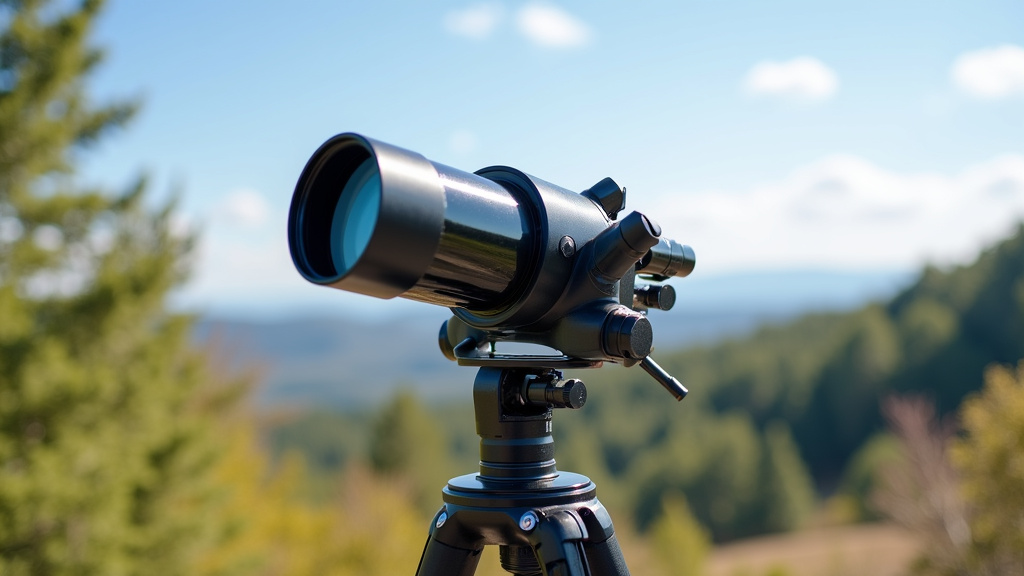
Is a Dobsonian Telescope Right for You?
Let’s summarize who a Dobsonian is best suited for. If you’re looking for a telescope that offers maximum aperture for your money, this is it. If you want a telescope that is simple to operate right out of the box, the Dobsonian excels.
It’s a fantastic option for beginners who want a powerful instrument without a steep learning curve. It’s also great for experienced astronomers who want a large-aperture telescope for visual observation that is relatively easy to set up and use. Many hobbyists find they return to their Dobsonian again and again for its pure viewing pleasure.
Quick Checklist for Choosing Your Dobsonian:
- Consider the aperture size you can handle and afford.
- Think about your storage and transport capabilities.
- Decide if you need manual tracking or electronic assistance (GoTo).
- Research the quality of the eyepieces included or plan to buy separately.
- Factor in your local light pollution for deep-sky viewing expectations.
- Understand that simplicity is its strength, but it means manual adjustments for tracking.
Conclusion
You’ve learned that a Dobsonian telescope offers a fantastic way to see the night sky. Its design prioritizes large aperture for your budget and simple, intuitive operation. We found that this makes it an excellent choice for both new stargazers and seasoned observers. You can enjoy detailed views of planets and even faint galaxies without a steep learning curve. Before you buy, consider your space and how you’ll transport it. Ready to start your celestial journey? Research specific Dobsonian models that fit your needs and budget, and prepare for some amazing nights under the stars.
Frequently Asked Questions
Are Dobsonian telescopes good for beginners?
Yes, Dobsonian telescopes are highly recommended for beginners. Their simple alt-azimuth mount is very easy to use. You can start observing right away without complicated setup or alignment procedures. We found this ease of use is a major benefit for those new to astronomy.
What can I see with a Dobsonian telescope?
With a Dobsonian telescope, you can see a wide variety of celestial objects. You’ll be able to clearly view planets like Saturn’s rings and Jupiter’s moons. Fainter deep-sky objects like nebulae, star clusters, and galaxies are also visible, especially with larger apertures. We found their performance for visual astronomy to be exceptional.
Do Dobsonian telescopes need to be tracked manually?
Basic Dobsonian telescopes have simple alt-azimuth mounts that require manual tracking. As the Earth rotates, you’ll need to gently nudge the telescope to keep your target centered. Some newer models offer computerized “GoTo” mounts, but traditional Dobsonians rely on your hands. We found this manual tracking to be part of the engaging experience.
How portable are Dobsonian telescopes?
Portability varies by size. Smaller Dobsonians (like 4-inch or 6-inch) are relatively easy to carry. Larger ones (8-inch and up) can be heavy and may require two people to move. Many are designed to separate into two main parts for easier transport in a car. We found that planning for storage and transport is important.
Is a Dobsonian telescope better than a refractor telescope?
For visual astronomy, a Dobsonian often offers more aperture for your money compared to a refractor. A lens-based alternative is a triplet apochromatic refractor. This means better light-gathering power and views of fainter objects at a similar price point. Refractors can offer sharper images for planetary viewing and require less maintenance, but they generally cost more for a comparable aperture. We found both have their strengths depending on your priorities.