What Is an Achromatic Lens in a Telescope?
On this page (7 sections)
An achromatic lens in a telescope is a special type of lens designed to correct for chromatic aberration. This means it helps to bring different colors of light into focus at the same point, resulting in a clearer, sharper image of celestial objects. Without it, telescopes often show distracting color fringes.
You’ve likely seen rainbow halos around stars or planets in less advanced telescopes. That’s chromatic aberration at work! An achromatic lens uses two or more pieces of glass with different properties to minimize these unwanted color distortions. It’s a key component for better viewing.
- An achromatic lens corrects color errors in telescopes.
- It uses multiple glass pieces to focus light properly.
- This results in sharper, more colorful images.
- It’s a common upgrade for better stargazing.
Let’s take a closer look at how these clever lenses work to improve your view of the night sky.
Understanding the Achromatic Lens in Telescopes
So, you’re looking into telescopes and keep seeing the term “achromatic lens.” What exactly is it, and why should you care? Simply put, an achromatic lens is a smart piece of optical engineering. It’s designed to fix a common problem in simple lenses that distorts your view of the stars and planets.
Think of it like this: a basic telescope lens is like a single pair of glasses. It works okay for one type of vision, but not perfectly for everything. An achromatic lens is more like custom-made bifocals for your telescope. It corrects for specific flaws, giving you a much better picture of the cosmos.
The Problem: Chromatic Aberration Explained
Before we dive into how an achromatic lens works, let’s understand the problem it solves: chromatic aberration. Have you ever looked at a bright object through a simple magnifying glass, or even some older cameras, and seen a colorful halo around the edges? That’s chromatic aberration.
How Light Behaves with Simple Lenses
Light seems like it travels in a straight line, right? Well, not always. When light passes through a lens, it bends. This bending is what magnifies the image. However, different colors of light bend at slightly different angles.
For example, blue light bends more than red light when it hits a lens. Violet light bends even more. This is a property of light itself, known as dispersion. It’s the same reason a prism splits white light into a rainbow.
The Result in Telescopes: Blurry Colors
In a basic telescope with a single lens, this difference in bending means that each color of light focuses at a slightly different distance. Red light might focus here, while blue light focuses a little further away. Violet light focuses even further still.
This causes a problem for your telescope. Instead of all the colors coming together to form a single sharp point, you get several slightly fuzzy points. This results in those distracting rainbow-like fringes around bright objects like the Moon or Jupiter. It makes the image look less sharp and colorful than it should be.
Many astronomers and stargazing enthusiasts report that this chromatic aberration can really detract from the viewing experience. It’s like looking at a beautiful painting through a smudged window. You can see the shapes, but the fine details and true colors are lost.
The Solution: How an Achromatic Lens Works
An achromatic lens is the clever solution to chromatic aberration. It doesn’t use just one piece of glass. Instead, it combines two or more lenses made from different types of glass. This is the key to its success.
Combining Different Glass Types
The magic happens because different types of glass have different dispersive properties. We call these different types “crown glass” and “flint glass.” Crown glass is typically less dispersive, while flint glass is more dispersive.
An achromatic lens usually consists of two elements: a positive lens (which magnifies) made of crown glass, and a negative lens (which spreads light) made of flint glass. They are shaped and combined in a specific way.
The Principle of Doublet Lenses
This combination of two lenses is often called a doublet. The positive crown lens bends light inward to magnify the image. As the light passes through, it starts to spread out by color. Then, the negative flint lens, positioned right behind it, bends the light outward. But here’s the genius part: it bends the light less than the crown lens bent it inward.
Crucially, the flint lens has a stronger dispersive effect. It spreads the colors out more than the crown lens, but because it’s a negative lens, it effectively cancels out much of the chromatic aberration introduced by the positive lens. The combination is designed so that two different colors of light (typically red and blue) are brought to focus at the same point.
Reducing Color Fringing for Sharper Views
By bringing these colors together, the achromatic lens significantly reduces those annoying color halos. You get a much clearer and sharper image. While it may not perfectly correct all colors (green light is often left slightly out of focus), the improvement is dramatic compared to a single lens.
This means when you look at the Moon, you see its craters without those purple or blue edges. When you observe Jupiter, its cloud bands appear more distinct. The stars look like tiny points of light, not little fuzzy colored blobs. It truly enhances your viewing experience.
| Lens Type | Correction for Chromatic Aberration | Image Quality Example |
|---|---|---|
| Single Lens (e.g., in basic refractors) | Poor. Significant color fringing. | Objects have noticeable purple or blue edges. |
| Achromatic Doublet Lens | Good. Significantly reduces color fringing. | Objects appear sharper with much less color distortion. |
Why Achromatic Lenses Matter for Your Telescope
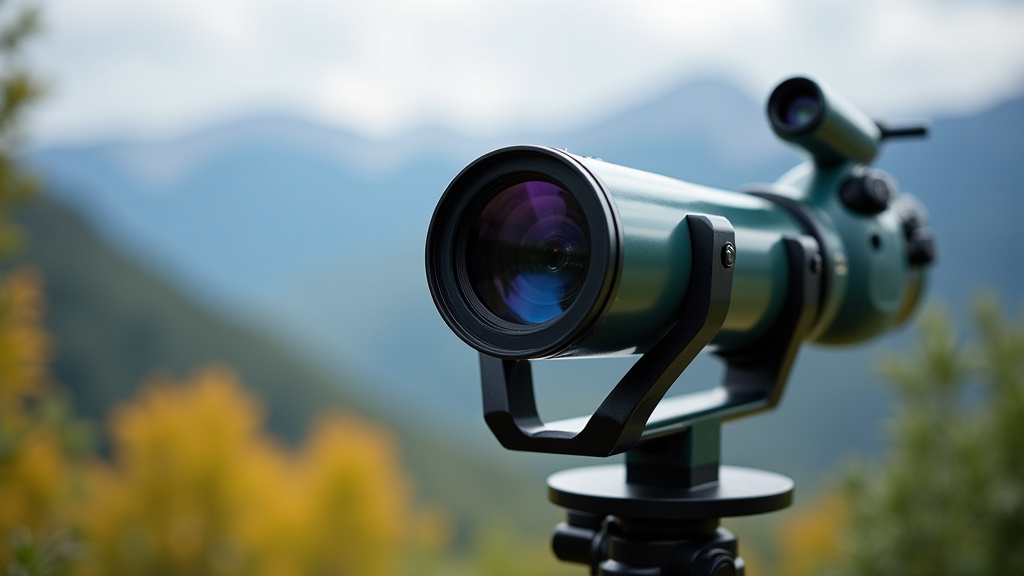
If you’re serious about stargazing, understanding lens types is important. An achromatic lens is a mark of a telescope that offers better performance for its class.
Better Color Rendition and Sharpness
The primary benefit is the improvement in image quality. When colors are properly focused, your telescope can show you more detail. Subtle variations in color on planets or nebulae become visible. The overall picture is more true to what’s out there.
Think about astrophotography. Even casual users might want to snap a picture of the Moon. With chromatic aberration, your photos will have those distracting color fringes. An achromatic lens helps you capture cleaner, more accurate images from the start.
A Common Feature in Quality Telescopes
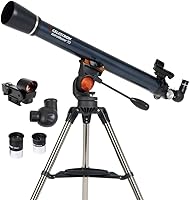
Many telescope designs incorporate achromatic lenses. Refracting telescopes, which use lenses to gather light, often feature them. You’ll find them in mid-range and higher-quality refractors. This is one reason why some refractors cost more than others. The quality of the optics, including the use of an achromatic lens, plays a big role.
When you see a telescope advertised with an “achromatic objective lens,” it’s a good sign. It means the manufacturer has taken steps to provide you with a better viewing experience. They are addressing a fundamental optical challenge.
Understanding Different Achromat Designs
While the basic principle is the same, there are variations. Some telescopes use an apochromatic (APO) lens. These are even more advanced and use three or more lens elements made from special glass. APO lenses correct for chromatic aberration even better, bringing all visible colors into focus at the same point.
However, APO lenses are more complex and expensive. For many general observers and amateur astronomers, a well-made achromatic lens offers a fantastic balance of performance and cost. Many experts agree that for its price point, an achromatic refractor is a solid choice (Astronomy Magazine).
Key Takeaways for Shoppers
When you’re browsing for a telescope, keep these points about achromatic lenses in mind:
- Look for telescopes that mention an “achromatic lens” or “achromatic objective.”
- Understand that this feature corrects for color fringing.
- This correction leads to sharper, clearer images of celestial objects.
- It’s a common upgrade from basic, single-lens designs.
- Achromatic lenses are standard in many good quality refractor telescopes.
- They offer a significant improvement without the high cost of apochromatic lenses.
Conclusion
You’ve learned how an achromatic lens is a smart upgrade for your telescope. By combining different types of glass, it effectively corrects chromatic aberration. This means you’ll see sharper images with far less distracting color fringing. It’s a key feature that boosts image quality without the high cost of more advanced optics. When you’re ready for a clearer view of the night sky, look for telescopes that highlight their achromatic objective lens. You’ll be glad you did for your stargazing adventures.
Frequently Asked Questions
Do I need an achromatic lens for casual stargazing?
For casual stargazing, a telescope with an achromatic lens offers a noticeable improvement. You’ll see sharper details and fewer color halos around bright objects like the Moon or planets. While not strictly necessary for a basic view, it makes the experience much more enjoyable and visually satisfying.
How is an achromatic lens different from an apochromatic lens?
An achromatic lens corrects for two main colors of light, significantly reducing color fringing. An apochromatic (APO) lens is more advanced and uses three or more elements to correct for virtually all colors of light. APO lenses provide the sharpest images but come at a higher cost.
Can I upgrade a telescope to have an achromatic lens?
Generally, you cannot easily upgrade a basic telescope’s single lens to an achromatic one. The lens cell and entire optical system are designed specifically for the type of lens they contain. It’s usually better to purchase a telescope that is manufactured with an achromatic lens from the start.
Will an achromatic lens make fainter objects easier to see?
An achromatic lens primarily improves the sharpness and color accuracy of the image. While sharper images can help you discern more detail on brighter objects, it doesn’t directly increase the amount of light gathered. Fainter objects are more dependent on the telescope’s aperture (lens diameter).
Are achromatic lenses only found in refracting telescopes?
Yes, achromatic lenses are specifically a feature of refracting telescopes, which use lenses to form an image. Reflecting telescopes, on the other hand, use mirrors and do not suffer from chromatic aberration in the same way, so they don’t require achromatic lens designs.