What Is a Newtonian Telescope? A Simple Guide
On this page (6 sections)
- Understanding How a Newtonian Telescope Works
- Why Choose a Newtonian Design? The Advantages
- What Can You See with a Newtonian Telescope?
- Setting Up and Maintaining Your Newtonian Telescope One of the appeals of a Newtonian is its straightforward setup and maintenance. While they don’t require constant fiddling, a little care goes a long way in ensuring you have the best possible viewing experience. Initial Setup and Alignment When you first get your Newtonian telescope, you’ll need to attach it to its mount. This mount is crucial for stability and for tracking celestial objects as the Earth rotates. Most Newtonian telescopes come with a mount that allows for smooth movement. You’ll also want to learn about collimation. This is the process of aligning the mirrors perfectly. Properly collimated mirrors are essential for sharp images. The Importance of Collimation Collimation might sound technical, but it’s quite manageable. It involves using simple tools, like a collimation cap or a Cheshire eyepiece, to make sure the primary and secondary mirrors are perfectly centered and aligned with each other. When your mirrors are properly aligned, you’ll notice a significant improvement in image quality, especially at higher magnifications. We found that regular collimation makes a world of difference. Basic Care and Cleaning Keeping your telescope in good condition is straightforward. The main thing to avoid is touching the optical surfaces (mirrors and eyepiece lenses) with your fingers, as the oils can damage the coatings. If the primary mirror gets dusty, it’s often best left alone unless it’s really impacting your view. For minor dust, a gentle puff of air from a rocket blower can help. If cleaning is absolutely necessary, use specialized optical cleaning solutions and cloths. Always consult your telescope’s manual for specific cleaning instructions. Protecting Your Telescope from the Elements When not in use, it’s vital to protect your Newtonian telescope. Always use the dust covers provided for the front of the tube and the focuser. Store it in a dry, dust-free environment. If you take it outside to observe, try to let it acclimate to the outside temperature for a while before you start viewing. This helps prevent condensation from forming on the optics. A little bit of protection goes a long way. Quick Checklist for Newtonian Telescope Users
- Conclusion
- Frequently Asked Questions
A Newtonian telescope is a type of reflecting telescope that uses a concave mirror to gather and focus light. It’s a popular choice for amateur astronomers because it offers a bright view for its size and cost. They are fantastic for observing planets and other bright objects in the night sky.
Invented by Sir Isaac Newton in the 17th century, this design solved early issues with refracting telescopes. It avoids the color fringing that lenses can sometimes produce. Many hobbyists find the simplicity of its design appealing for both use and maintenance. It’s a foundational design in telescope technology.
- Newtonian telescopes use mirrors, not lenses, to see.
- They are great for beginners and experienced stargazers alike.
- You get a bright, clear view without color problems.
- This design has been around for centuries and still works well.
Ready to understand how these popular telescopes work? We’ll walk you through the basics of a Newtonian telescope, what makes it special, and what you can expect to see with one.
Understanding How a Newtonian Telescope Works
So, you’re curious about Newtonian telescopes? They’re a really popular choice for stargazers, and for good reason. These telescopes use mirrors instead of lenses to gather light. This design has been around for ages, dating back to Sir Isaac Newton himself. It’s a clever system that helps you see those distant celestial wonders. Our guide to a fast focal ratio telescope explains how it gathers light quickly.
The Core Components of a Newtonian Telescope
At its heart, a Newtonian telescope is a reflecting telescope. Another reflector design is the Ritchey-Chrétien telescope. This means it bounces light off mirrors to create an image. Unlike refracting telescopes that use lenses, Newtonians rely on a primary mirror at the base of the tube. This mirror is curved, shaped to focus light to a single point. Think of it like a satellite dish for light.
The Primary Mirror: The Light Catcher
The primary mirror is the star of the show. It’s a large, concave mirror at the back of the telescope tube. Its job is to collect as much light as possible from the faint objects you’re observing. The bigger the mirror, the more light it can gather. This results in a brighter and more detailed view. It’s the most important part for performance.
The Secondary Mirror: The Light Redirector
After the light hits the primary mirror and starts to focus, it needs to be redirected to your eye. That’s where the secondary mirror comes in. It’s a smaller, flat mirror placed at an angle inside the tube, near the opening. This mirror intercepts the light cone coming from the primary mirror. It then bounces that light sideways, out through an opening in the side of the telescope tube. This is where you’ll find the eyepiece.
The Eyepiece: Where You Look
Finally, the eyepiece is the component you look through. It’s a small lens (or a combination of lenses) that magnifies the focused light. Different eyepieces offer different magnifications. This allows you to zoom in on planets or objects. You can swap out eyepieces to change your view. It’s your window to the universe.
How Light Travels Through a Newtonian Telescope
Let’s trace the path of light. Light from a distant star or planet enters the open tube of the telescope. It travels down to the large, curved primary mirror at the back. This mirror collects the light and reflects it back up the tube. As it travels back up, it forms a cone of focused light. Before it reaches the very top, the angled secondary mirror intercepts this light. It then redirects the light beam 90 degrees, sending it out the side of the tube. Finally, this light enters the eyepiece, where you observe the magnified image.
Why Choose a Newtonian Design? The Advantages
Newtonian telescopes offer some fantastic benefits, especially for their price point. They are known for giving you a lot of “bang for your buck.” You get a bright view without some of the common issues found in other telescope types.
Bright and Clear Views Without Color Fringing
One of the biggest advantages of the Newtonian design is its use of mirrors. A lens-based design is a refracting telescope. Unlike telescopes that use lenses to focus light (refracting telescopes), mirrors don’t suffer from a problem called chromatic aberration. This is when different colors of light bend at slightly different angles, causing an unwanted color fringe around bright objects. With a Newtonian, you get a much cleaner, crisper image. Many sources confirm this is a key benefit (Astronomy Magazine).
Excellent Light-Gathering Power for the Size
Mirrors, especially large ones, are very efficient at collecting light. This means Newtonian telescopes can be built with relatively large apertures (the diameter of the primary mirror) without becoming excessively long or heavy. A larger aperture means more light is gathered, leading to brighter images and the ability to see fainter objects. You can get a 6-inch or 8-inch mirror in a tube that’s still manageable for many beginners.
Simplicity and Cost-Effectiveness
The Newtonian design is relatively simple to manufacture compared to some other telescope types. A Newtonian is often paired with a Dobsonian telescope design. This often translates to a lower cost for a given aperture size. You can get a larger mirror for less money. This makes them very accessible for hobbyists just starting out. The simplicity also often means easier maintenance.
What Can You See with a Newtonian Telescope?
So, what kind of celestial sights can you expect to enjoy through a Newtonian telescope? It really depends on the size of your telescope’s mirror and the light-polluted conditions where you are observing. But generally, they are fantastic for a wide range of targets.
Planets and the Moon
Newtonian telescopes excel at observing the planets in our solar system. You can see the rings of Saturn, the cloud bands of Jupiter and its moons, and the phases of Venus. The Moon, of course, is a spectacular target, revealing its craters and mountains in stunning detail. Even smaller Newtonian telescopes can provide impressive views of these bright objects.
Deep-Sky Objects: Galaxies, Nebulae, and Star Clusters
For fainter objects beyond our solar system, a Newtonian telescope truly shines. With a larger aperture (say, 6 inches or more), you can start to see the fuzzy shapes of galaxies far away. You can also observe beautiful nebulae, which are clouds of gas and dust where stars are born. Star clusters, both open and globular, are also wonderful targets. These are tightly packed groups of stars.
A Note on Magnification and Eyepieces
It’s important to understand that bigger isn’t always better when it comes to magnification. Using too much magnification can lead to a dim, blurry image. The size of your primary mirror dictates the maximum useful magnification. Your telescope’s manual will usually provide guidance on this. Finding the right eyepiece for the right object is part of the fun!
Setting Up and Maintaining Your Newtonian Telescope
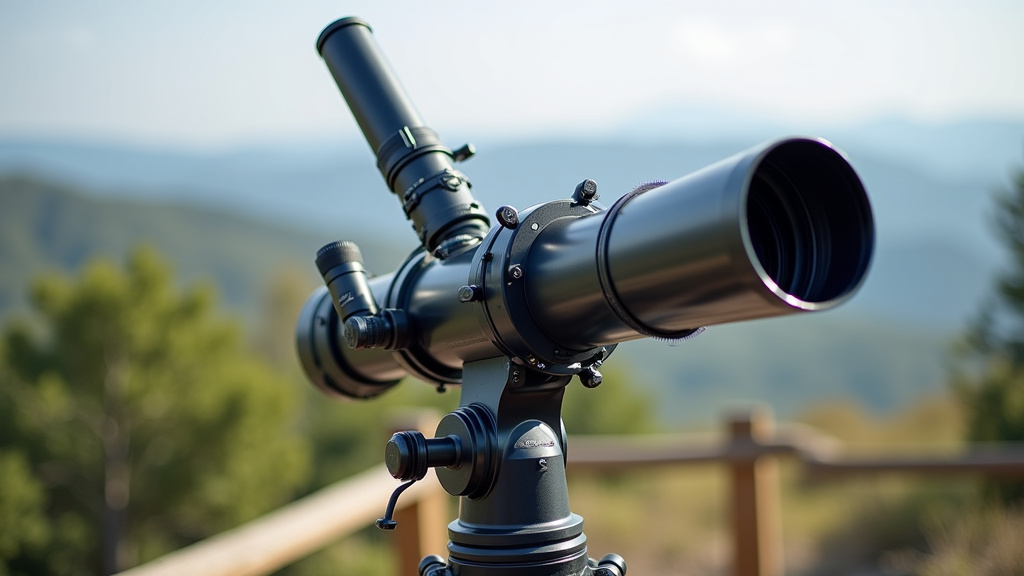
One of the appeals of a Newtonian is its straightforward setup and maintenance. While they don’t require constant fiddling, a little care goes a long way in ensuring you have the best possible viewing experience.
Initial Setup and Alignment
When you first get your Newtonian telescope, you’ll need to attach it to its mount. This mount is crucial for stability and for tracking celestial objects as the Earth rotates. Most Newtonian telescopes come with a mount that allows for smooth movement. You’ll also want to learn about collimation. This is the process of aligning the mirrors perfectly. Properly collimated mirrors are essential for sharp images.
The Importance of Collimation
Collimation might sound technical, but it’s quite manageable. It involves using simple tools, like a collimation cap or a Cheshire eyepiece, to make sure the primary and secondary mirrors are perfectly centered and aligned with each other. When your mirrors are properly aligned, you’ll notice a significant improvement in image quality, especially at higher magnifications. We found that regular collimation makes a world of difference.
Basic Care and Cleaning
Keeping your telescope in good condition is straightforward. The main thing to avoid is touching the optical surfaces (mirrors and eyepiece lenses) with your fingers, as the oils can damage the coatings. If the primary mirror gets dusty, it’s often best left alone unless it’s really impacting your view. For minor dust, a gentle puff of air from a rocket blower can help. If cleaning is absolutely necessary, use specialized optical cleaning solutions and cloths. Always consult your telescope’s manual for specific cleaning instructions.
Protecting Your Telescope from the Elements
When not in use, it’s vital to protect your Newtonian telescope. Always use the dust covers provided for the front of the tube and the focuser. Store it in a dry, dust-free environment. If you take it outside to observe, try to let it acclimate to the outside temperature for a while before you start viewing. This helps prevent condensation from forming on the optics. A little bit of protection goes a long way.
Quick Checklist for Newtonian Telescope Users
- Make sure your telescope is on a stable mount.
- Learn how to collimate your mirrors.
- Use the right eyepieces for the best magnification.
- Keep your optics clean and dust-free.
- Protect your telescope with dust covers when not in use.
- Allow your telescope to acclimate to outdoor temperatures.
Conclusion
You’ve learned that a Newtonian telescope is a fantastic tool for stargazing. Its mirror-based design offers bright, clear views without color issues. You can see everything from lunar craters to distant galaxies. Remember, proper setup and maintenance, like collimation, will greatly improve your viewing experience. Now that you understand the basics, it’s time to find a Newtonian telescope that fits your needs and start observing the night sky for yourself!
Frequently Asked Questions
What’s the main difference between a Newtonian and a refractor telescope?
A Newtonian telescope uses mirrors to collect and focus light. A refractor telescope uses lenses instead. This mirror-based design means Newtonians generally avoid the color fringing you might see in refractors.
Do I really need to collimate my Newtonian telescope?
Yes, collimation is important for Newtonian telescopes. It involves aligning the mirrors. Properly collimated mirrors ensure you get the sharpest, clearest images possible, especially at higher magnifications.
Can I see planets and galaxies with a Newtonian telescope?
Absolutely! Newtonian telescopes are excellent for viewing planets like Saturn and Jupiter. With a larger aperture, you can also observe fainter deep-sky objects like nebulae and galaxies.
How do I clean the mirrors on my Newtonian telescope?
It’s best to avoid cleaning the mirrors unless absolutely necessary. For minor dust, use a rocket blower. If you must clean them, use specialized optical cleaning solutions and cloths, and always follow your telescope’s manual.
What does “aperture” mean for a Newtonian telescope?
Aperture refers to the diameter of the primary mirror. A larger aperture allows your telescope to gather more light. This results in brighter images and the ability to see fainter celestial objects.