9 Best Telescopes with Glass Lenses (November 2026)
The best telescopes with glass lenses include the Gskyer Telescope for a portable astronomy starter, the SVBONY SV135 Zoom Eyepiece for changing magnification, and the Celestron AstroMaster 70AZ Refractor Telescope for Moon for Moon and planet viewing.
On this page (6 sections)
The best telescope with glass lens optics for most beginners is the Gskyer Telescope, a 70mm refractor with fully coated glass optics. The Celestron AstroMaster 70AZ is another complete refractor, while the eyepieces below are accessories for telescopes you already own.
A glass objective lens gathers and focuses light; the eyepiece is the part you look through. That distinction matters because this list includes both complete telescopes and glass-optic eyepieces, plus several handheld spyglasses that are better for daytime use.
Our picks at a glance
-
1
-
2

-
3
 Best for Moon and planet viewing
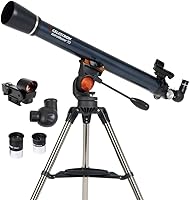
Celestron AstroMaster 70AZ Refractor Telescope for Moon
9.3/10 our score
See it on Amazon
- 4
 Check it
Laupha Retro Pirate Telescope Zoomable 25x30 Pocket
Best for a compact pocket spyglass - 5
 Check it
Celestron 8-24mm Zoom Telescope Eyepiece with Fully
Best for a versatile 1.25-inch eyepiece - 6
 Check it
SVBONY Telescope Eyepiece 40mm
Best for wide-field eyepiece viewing - 7
 Check it
Laupha Retro Pirate Telescope Zoomable 25x30 Spyglass
Best for a spyglass with compass - 8
 Check it
SSZS Pirate Spyglass Telescope Pocket Compass Set
Best for a portable compass set - 9
 Check it
ALADEAN Scout Regiment Brass Telescope 19" Spyglass
Best for a vintage brass spyglass
Best telescopes with glass lenses for astronomy and viewing
The Gskyer and AstroMaster are the complete astronomy refractors in this roundup. The remaining picks are eyepieces or handheld monoculars, so match each item to the equipment and viewing you have in mind.
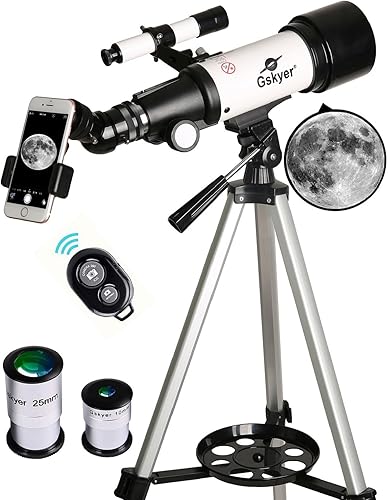
Gskyer Telescope: Best for a portable astronomy starter
- 70mm aperture
- 400mm focal length
- Fully coated glass optics
- Carry bag and smartphone adapter
A 70mm refractor with fully coated glass optics, two eyepieces and a 3x Barlow lens. Its carry bag, adjustable tripod and smartphone adapter suit portable use.
Pros
- Fully coated glass optics
- Two eyepieces and a 3x Barlow lens
- Carry bag included
Cons
- Manual alt-azimuth mount
- Do not aim at the Sun
The Gskyer is the clearest fit if you want a complete beginner refractor with glass optics. Its 70mm aperture and fully coated glass lens pair with a 400mm focal length, two replaceable eyepieces and a 3x Barlow lens.
The adjustable aluminum tripod supports different viewing positions, and the carry bag holds the telescope and tripod for travel or storage. A smartphone adapter and wireless camera remote are included for capturing images through the phone.
This telescope is an alt-azimuth refractor, so you point it by moving the mount up, down and side to side. Gskyer's product information warns against aiming it at the Sun, even near the Sun.
Choose it if you want a portable kit for beginner astronomy and lunar viewing. The glass optics and included eyepieces make it a more direct match for this search than a standalone eyepiece or a decorative spyglass.
SVBONY SV135 Zoom Eyepiece: Best for changing magnification
- 7–21mm zoom range
- Fully multi-coated
- 1.25-inch barrel
- 40–57 degree field of view
This fully multi-coated zoom eyepiece covers focal lengths from 7mm to 21mm. It fits telescopes that accept standard 1.25-inch eyepieces.
Pros
- Adjustable focal length
- 1.25-inch barrel
- Rubber eye guard
Cons
- Requires a telescope with a 1.25-inch eyepiece holder
- Does not replace the telescope's objective lens
The SVBONY SV135 is an eyepiece accessory, not a complete telescope. Its 7–21mm zoom range lets you change focal length without swapping between separate eyepieces, and it fits telescopes that accept a standard 1.25-inch barrel.
SVBONY describes a six-element, four-group optical design with fully multi-coated surfaces. The eyepiece also has a rubber eye guard and a 40–57 degree field of view.
Consider it if your telescope already has a compatible 1.25-inch focuser or diagonal and you want one zoom eyepiece for different views. For a fixed longer focal length, the SVBONY 40mm eyepiece offers a separate option.
Celestron AstroMaster 70AZ Refractor Telescope for Moon: Best for Moon and planet viewing
- 70mm achromatic refractor
- Fully coated optics
- Manual alt-azimuth mount
- 20mm and 10mm eyepieces
A 70mm achromatic refractor with fully coated optics, two eyepieces and a manual alt-azimuth mount. It is suited to Moon, planet and terrestrial viewing.
Pros
- Fully coated 70mm objective
- 20mm and 10mm eyepieces included
- Manual panhandle mount
Cons
- Manual mount requires hand control
- Optical design is achromatic, not apochromatic
The Celestron AstroMaster 70AZ is a complete refractor for buyers who want a longer focal length than the Gskyer. Its 70mm fully coated achromatic objective and 900mm focal length suit Moon, planet and terrestrial viewing.
Celestron includes 20mm and 10mm eyepieces, an erect image diagonal and a StarPointer red dot finder. The manual alt-azimuth mount uses a panhandle for moving the telescope up, down and side to side.
An achromatic objective is a useful design detail when comparing refractors. See what an achromatic lens is in a telescope for a plain explanation of color correction.
Laupha Retro Pirate Telescope Zoomable 25x30 Pocket: Best for a compact pocket spyglass
- 25x magnification
- 30mm objective diameter
- Blue-coated lenses
- Collapsible eyepiece
A collapsible handheld monocular with a 30mm objective and blue-coated lenses. Its compact form is aimed at portable daytime viewing and pretend play.
Pros
- Collapsible for compact storage
- 30mm objective
- Case and lens cloth included
Cons
- Handheld monocular, not an astronomy telescope
- Small objective compared with the refractors
The Laupha pocket spyglass is a handheld monocular for portable viewing, rather than a night-sky telescope. It has 25x magnification, a 30mm objective and blue-coated lenses, with a collapsible eyepiece for compact storage.
Its metal body has a leather-covered hand grip, and the set includes a case and lens cloth. The small objective and handheld format make it a different choice from a tripod-mounted refractor.
Choose it for a compact daytime monocular or a pirate-themed gift. If your goal is astronomy, use a refractor with a larger objective and a mount that can hold a target steadily.
Celestron 8-24mm Zoom Telescope Eyepiece with Fully: Best for a versatile 1.25-inch eyepiece
- 8–24mm zoom range
- Fully multi-coated optics
- Fits 1.25-inch holders
- Accepts 1.25-inch filters
A fully multi-coated zoom eyepiece that adjusts from 8mm to 24mm. It fits telescope and spotting-scope holders designed for standard 1.25-inch eyepieces.
Pros
- Variable focal length
- Fully multi-coated
- Filter threads
Cons
- Accessory only, not a complete telescope
- Requires a compatible 1.25-inch holder
The Celestron 8–24mm zoom is another eyepiece, designed for telescopes and spotting scopes with a standard 1.25-inch holder. Its fully multi-coated optics and variable focal length help you move between lower and higher magnification without changing eyepieces.
The eyepiece accepts standard 1.25-inch filters and has a removable rubber eyecup. Celestron also includes T-threads for astrophotography accessories.
Choose this if you already have a compatible telescope and want a zoom range in an accessory. It does not provide the front glass objective that defines a refractor telescope.
SVBONY Telescope Eyepiece 40mm: Best for wide-field eyepiece viewing
- 40mm focal length
- 40-degree apparent field of view
- Fully multi-coated
- 1.25-inch barrel
A 40mm Plossl eyepiece with fully multi-coated optics and a 1.25-inch barrel. It is made for broad-field lunar, star-cluster and deep-sky viewing.
Pros
- 40mm focal length
- Fold-down rubber eye guard
- Filter threads
Cons
- Accessory only, not a complete telescope
- Requires a compatible 1.25-inch holder
The SVBONY 40mm Plossl is a fixed-focal-length eyepiece for broad-field viewing. It has fully multi-coated optics, a 40-degree apparent field of view and a standard 1.25-inch barrel.
Its fold-down rubber eye guard can suit eyeglass wearers, and the eyepiece has threads for 1.25-inch filters. Check your telescope's focuser or diagonal for a matching barrel size before buying an accessory.
Choose it when you want a 40mm eyepiece for lunar, star-cluster or deep-sky views. It is a companion optic, not a standalone telescope.
Laupha Retro Pirate Telescope Zoomable 25x30 Spyglass: Best for a spyglass with compass
- 25x magnification
- 30mm objective diameter
- Blue-coated lenses
- Compass included
This collapsible handheld monocular pairs 25x magnification with a 30mm objective and a pocket compass. Its blue-coated lenses are intended for portable viewing.
Pros
- Compass included
- Collapsible eyepiece
- Case and lens cloth included
Cons
- Handheld monocular, not an astronomy telescope
- Small objective compared with the refractors
This Laupha spyglass pairs a 30mm objective and 25x magnification with a pocket compass. Blue-coated lenses and a collapsible design make it a portable handheld option for daytime viewing.
The kit includes a leatherette case, lens cloth and compass. Its retro styling and handheld format are different from the tripod-mounted refractors that are better suited to observing the night sky.
Choose it if portability and the compass matter more than astronomy use. Treat it as a monocular for outdoor viewing, not as a replacement for a glass-objective refractor.
SSZS Pirate Spyglass Telescope Pocket Compass Set: Best for a portable compass set
- 25x magnification
- 30mm objective diameter
- Multi-coated optics
- Pocket compass included
A collapsible handheld monocular with multi-coated optics and a pocket compass. It is a compact set for outdoor viewing, not a telescope for astronomy.
Pros
- Compass included
- Collapsible body
- Lens cloth included
Cons
- Handheld monocular, not an astronomy telescope
- Small objective compared with the refractors
The SSZS pocket set is a collapsible monocular with 25x magnification, a 30mm objective and multi-coated optics. It also includes a pocket compass, poncho, lens cloth and user manual.
Its small objective and handheld design suit compact outdoor viewing. For lunar or planetary observing, a refractor on a tripod gives you a more appropriate setup than a pocket spyglass.
Consider this set if the compass and portable format are part of the appeal. Choose one of the complete refractors above if astronomy is the main goal.
ALADEAN Scout Regiment Brass Telescope 19" Spyglass: Best for a vintage brass spyglass
- 19-inch focal length
- Brass construction
- Hand-stitched leather case
- Manual focusing
A brass handheld spyglass with a 19-inch focal length and a hand-stitched leather case. The eyepiece position moves inward or outward to focus.
Pros
- Brass construction
- Leather case included
- Manual focus adjustment
Cons
- Handheld spyglass, not an astronomy telescope
- Use in daylight
The ALADEAN Scout Regiment is a brass handheld spyglass with a 19-inch focal length and a hand-stitched leather case. It focuses by moving the eyepiece inward or outward after extending the barrels.
This is a vintage-style daylight spyglass, not a conventional astronomy refractor with a stated objective aperture. Its focus also requires manual adjustment as you change viewing distance.
Choose it for the brass look and traditional handheld format. For astronomy, compare the glass-objective refractors higher on this list.
How should you compare glass telescope optics?
Compare the full optical system, starting with the objective aperture, optical design and intended use. A glass lens by itself does not tell you how much light the telescope gathers or how well it will suit astronomy.
The Gskyer and AstroMaster both have 70mm objectives, but their focal lengths differ: 400mm for Gskyer and 900mm for Celestron. For camera framing, compare focal lengths for astrophotography.
The Celestron is specifically described as achromatic, while Gskyer's product information identifies fully coated glass optics.
Coatings are another detail to check. Fully coated and fully multi-coated describe lens surface treatments, while achromatic refers to an optical design intended to reduce color fringing.
Eyepiece focal length affects magnification when paired with a telescope. For the related measurement, see how to calculate telescope focal length.
A zoom eyepiece changes the eyepiece focal length, but it cannot increase the objective's aperture or turn a handheld monocular into an astronomical refractor.
For an overview of how a refractor's lenses work, read what an achromatic lens does in a telescope. If you're also comparing optical tools for close-up work, see telescope vs microscope.
Which glass lens telescope should you choose?
Choose the Gskyer if you want a complete portable starter telescope with a 70mm fully coated glass objective, eyepieces and a carry bag. Pick the Celestron AstroMaster 70AZ if you prefer a 900mm achromatic refractor with included eyepieces and a manual panhandle mount.
Choose one of the zoom or 40mm eyepieces only if you already own a telescope with a compatible 1.25-inch holder. The pocket spyglasses fit compact daytime viewing and gift use, while a Seestar S30 Pro review can help if you're considering a different kind of observing setup.
How do you care for glass telescope lenses?
Keep dust off the optics when you can, and use a method made for telescope lenses when cleaning becomes necessary. Frequent wiping can risk scratching a lens if grit remains on its surface.
Use a blower to remove loose dust before touching glass, and follow the scope maker's care instructions. Our guide explains how to clean telescope lenses, including steps for avoiding damage.
CO2 cleaning is another method used for delicate optics, but it is specialized and may not suit every telescope or situation. Learn how CO2 cleaning works for telescopes before considering it.
Does back focus matter with a glass telescope?
Back focus matters when you attach cameras or other accessories, because the optical system needs the sensor or accessory at the right distance from the telescope. This is a setup detail for imaging, rather than a way to judge whether an objective is glass.
If you plan to attach a camera to a Celestron 8SE, read the back focus guide for the Celestron 8 SE before choosing adapters. For solar observing, first learn how solar telescopes work and use equipment designed for safe solar viewing.
Verdict: which telescope with glass lens fits you?
The Gskyer is the best match for most beginners who want a complete glass-optic refractor with portable accessories. Choose the Celestron AstroMaster for its 900mm achromatic design, or select an eyepiece accessory only when you already have a compatible telescope.
A pocket spyglass can make sense for handheld daytime use, but it serves a different job from an astronomy telescope. Match the optic to your viewing goal before choosing by lens material alone.
Our top 3 picks at a glance
-
1
-
2
-
3
Best for Moon and planet viewing
Celestron AstroMaster 70AZ Refractor Telescope for Moon
9.3/10 our score
See it on Amazon
Frequently asked questions
What does glass lens mean on a telescope?
A glass lens is an optical element made from glass rather than plastic. In a refractor telescope, the objective lens at the front gathers and focuses light, while the eyepiece helps you view the image.
Check whether a description refers to the objective lens or an eyepiece, since those are different parts.
Are glass lenses better than plastic telescope lenses?
Glass optics are common in astronomy refractors, and coatings can reduce light loss at lens surfaces. Material alone does not determine image quality, though: aperture, optical design, alignment and viewing conditions matter too.
For a refractor, check the objective size and whether it is achromatic or another design.
What is an achromatic telescope lens?
An achromatic objective uses multiple lens elements to bring different colors closer to the same focus, which helps reduce color fringing. The Celestron AstroMaster 70AZ is described as an achromatic refractor.
Read what an achromatic lens does in a telescope for more on this design.
Can I use a zoom eyepiece with any telescope?
A zoom eyepiece works only if its barrel fits the telescope's eyepiece holder. The SVBONY SV135 and Celestron zoom listed here use standard 1.25-inch barrels, so check your focuser or diagonal before choosing one.
Eyepieces change magnification; they do not replace the front objective lens.
Can I look at the Sun through a glass-lens telescope?
Never point an ordinary telescope at the Sun without a purpose-built solar filter designed to fit securely over the front aperture. Eyepiece filters are not a safe substitute.
Learn how solar telescopes work before choosing equipment for solar viewing.